- Written & Reviewed by Jeremy
- Published
- Last Updated Oct 23, 2026
Getting leads is only one part of growing a financial advisory business. The bigger challenge is turning those inquiries into meaningful conversations with people who need your services.
A prospect might visit your website, download a retirement guide, or register for a webinar. But if they do not receive relevant follow-ups or understand the next step, they may lose interest before booking a consultation.
An AI-powered client acquisition funnel helps financial advisors organize these interactions, automate repetitive marketing tasks, and guide prospects toward a consultation. When combined with a clear marketing strategy and human oversight, AI can make the acquisition process more consistent and easier to measure.
The goal is not to automate every conversation. It is to help your team spend less time managing repetitive tasks and more time connecting with the right prospects.
In this guide, we explain how financial advisors can build an AI-powered acquisition funnel, which tasks to automate, what tools to consider, and how to measure whether the process is working.
What Is an AI-Powered Client Acquisition Funnel?
An AI-powered client acquisition funnel is a marketing and follow-up system that uses artificial intelligence, automation, and customer relationship management (CRM) software to help move potential clients from initial awareness toward a meaningful business conversation.
A traditional funnel may depend heavily on manual lead sorting, individual follow-up reminders, and separate marketing tools. An AI-assisted funnel can connect these activities and use available data to support more timely, relevant communication.
For example, someone might find your website through a search for retirement planning, download a relevant guide, and receive a follow-up email with related educational information. If the prospect requests a consultation, the system can direct them to a scheduling page and send an appointment confirmation.
AI may help classify the inquiry, suggest relevant content, or identify engagement patterns. The advisor or marketing team remains responsible for reviewing important decisions and communications.
Traditional acquisition funnel | AI-powered acquisition funnel |
Manual lead organization | Automated organization with AI-assisted classification |
Repetitive follow-up tasks | Scheduled, segmented communication |
Separate marketing systems | Connected CRM and marketing workflows |
Limited insight into prospect engagement | Engagement tracking and funnel reporting |
Manual appointment reminders | Automated confirmations and reminders |
Decisions based on incomplete reports | Data-assisted insights with human review |
AI does not automatically make a funnel more effective. Its value depends on the quality of your data, your marketing strategy, the tools you select, and how well your team manages the process.
Why Do Financial Advisors Need an AI-Powered Client Acquisition Funnel?
Financial advisors often attract prospects through several channels, including search engines, referrals, paid advertising, email campaigns, and webinars. Managing inquiries from all these sources can become difficult when processes rely entirely on manual work.
An AI-powered funnel can help address several common challenges.
Delayed follow-ups: Prospects may lose interest when inquiries go unanswered. Automated notifications and approved follow-up sequences help teams respond more consistently.
Inconsistent lead nurturing: Not every prospect is ready to schedule a consultation immediately. Educational email sequences can keep your firm visible while prospects evaluate their options.
Limited visibility into lead quality: A high number of inquiries does not necessarily mean a high number of suitable prospects. A structured funnel helps distinguish general interest from service fit and appointment readiness.
Time-consuming administration: Marketing teams can use automation for tasks such as organizing contact records, assigning follow-up tasks, and sending scheduling reminders.
Difficulty measuring performance: Connected systems make it easier to understand which channels generate inquiries, which leads book appointments, and where prospects stop engaging.
These benefits support a broader financial advisor marketing strategy that focuses on meaningful business outcomes rather than activity alone.
What Are the Key Stages of an AI-Powered Client Acquisition Funnel?
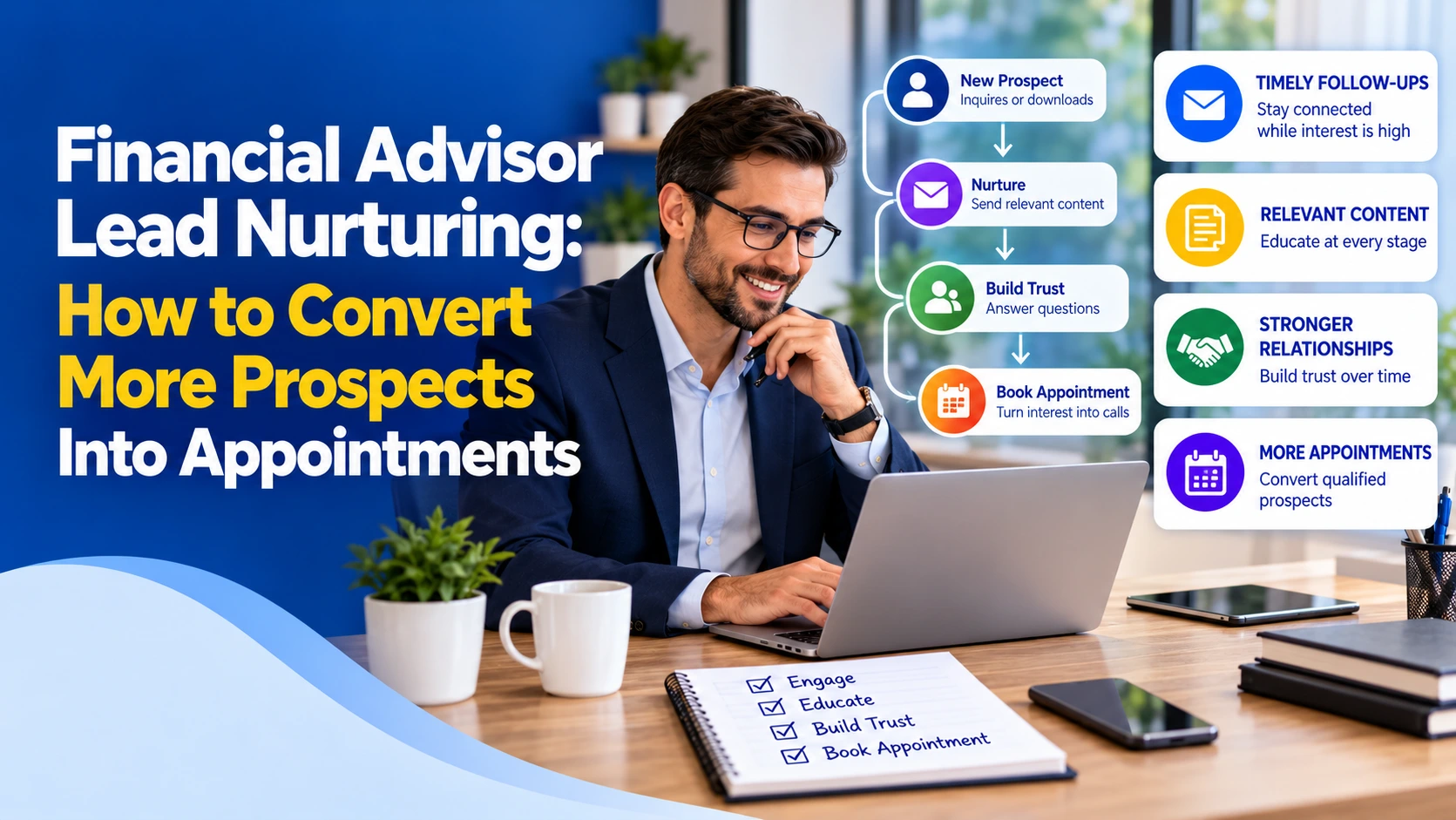
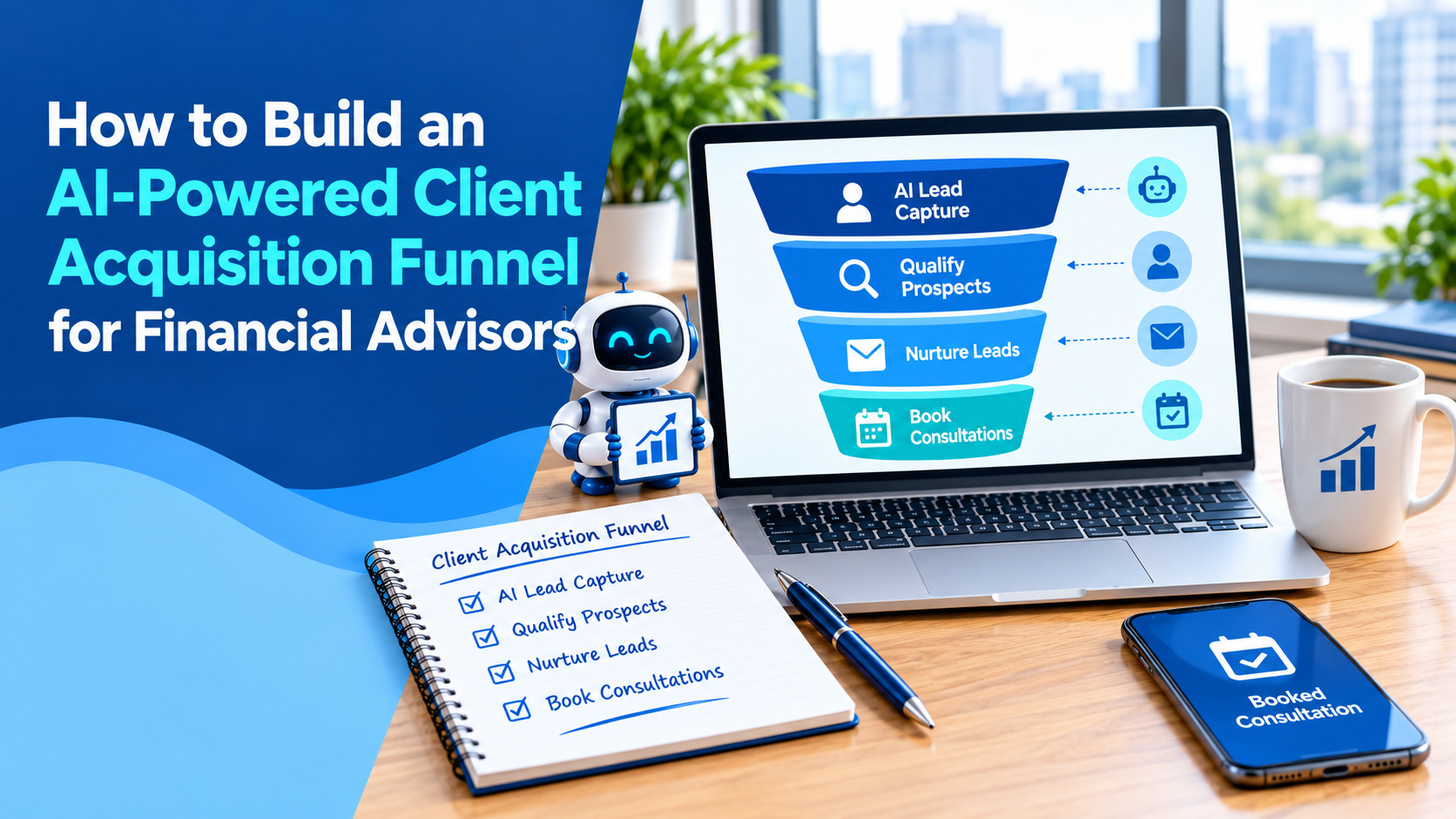
An AI-powered funnel helps financial advisors attract prospects, manage inquiries, nurture leads, and generate qualified appointments.
1. Attract the Right Prospects
Use SEO, blogs, webinars, email newsletters, and paid campaigns to reach relevant audiences. AI can help identify content topics and audience interests.
2. Capture and Organize Leads
Use landing pages, contact forms, and webinar registrations to collect inquiries. Connect these channels to a CRM to organize leads and automate notifications.
3. Qualify Leads With AI
Use predefined criteria and AI-assisted lead scoring to prioritize inquiries based on service needs, interests, and engagement. Keep human review involved in qualification decisions.
4. Nurture Leads With Personalized Communication
Send relevant educational emails, webinar invitations, and follow-ups based on prospects’ stated interests. Ensure communications follow applicable consent and compliance requirements. Learn more about financial email marketing compliance.
5. Convert Prospects Into Booked Appointments
Make booking easy with scheduling links, automated confirmations, and reminders. Track booked appointments separately from attended meetings and qualified opportunities.
6. Measure and Improve the Funnel
Monitor lead quality, conversion rates, appointment attendance, and cost per booked appointment. Use these insights to identify gaps and improve funnel performance over time.
Which AI Tools Can Financial Advisors Use at Each Funnel Stage?
Financial advisors do not necessarily need a large collection of AI applications. Start with the problems your team needs to solve and choose tools that work together.
Tool category | How it supports the funnel | What to check |
AI content tools | Assist with topic research, outlines, and content drafts | Accuracy, review processes, and approved use |
CRM software | Organizes leads, contact records, and follow-up tasks | Access controls, integrations, and data handling |
Marketing automation | Manages approved email sequences and reminders | Consent management, unsubscribe handling, and reporting |
AI chatbots | Answers basic questions and directs visitors to relevant resources | Data collection, transparency, and escalation to staff |
Scheduling software | Manages available times, confirmations, and reminders | Calendar integration and booking accuracy |
Analytics tools | Tracks funnel activity and conversion patterns | Data quality, attribution, and reporting accuracy |
Before selecting a platform, assess its security practices, data retention policies, vendor terms, integration capabilities, and suitability for your regulatory environment.
Avoid entering sensitive client or prospect information into AI tools unless their use has been reviewed and authorized by your firm.
How Can Financial Advisors Personalize Lead Nurturing Without Losing the Human Touch?
Personalization works best when it makes communication more relevant without making prospects feel monitored or pressured.
Start by organizing contacts according to information they have provided, such as the services they are interested in or the resources they requested. Use those categories to deliver relevant educational information.
For instance, someone who registers for a retirement planning webinar could receive the presentation materials and a follow-up addressing questions covered during the session.
Someone who requests an introductory meeting may instead need confirmation details and information about what to expect.
AI can help draft different versions of approved communications, summarize engagement patterns, or suggest useful content topics. Advisors should still review important messages and personally handle questions that require professional judgment.
The objective is to make the experience more helpful and responsive not to create the impression that every interaction is personal when it is actually automated.
What Should Financial Advisors Automate and What Should Stay Human?
Automation is most useful for repeatable tasks with clear rules. Human involvement remains important when a situation requires judgment, context, or a personal relationship.
Activity | What AI or automation can do | What people should handle |
Content creation | Suggest topics and prepare initial drafts | Verify facts and approve publication |
Lead routing | Organize inquiries by predefined criteria | Review unusual cases and service fit |
Email follow-ups | Deliver approved sequences | Handle individual questions and sensitive discussions |
Appointment scheduling | Send booking links and reminders | Conduct consultations and build relationships |
Lead prioritization | Highlight engagement patterns | Review context before deciding next steps |
Reporting | Identify trends and funnel drop-offs | Interpret results and choose improvements |
Financial advisory relationships depend on trust. AI-powered marketing technology for financial advisors should support the process of building that trust rather than replace meaningful communication with prospects.
What Common Mistakes Should Financial Advisors Avoid?
An AI-powered client acquisition funnel can become inefficient when firms automate an unclear or poorly designed process.
Automating before defining the target audience: If your firm cannot clearly explain whom it serves, automation may simply increase the number of irrelevant inquiries.
Focusing only on lead volume: More inquiries do not necessarily produce more qualified appointments. Track service fit, booking rates, attendance, and acquisition costs.
Using generic AI-generated content: Repetitive messages and broad content can make your firm less distinctive. Review every asset for relevance, accuracy, and tone.
Ignoring data quality: Duplicate records, outdated contact information, and inconsistent lead statuses can undermine automation and reporting.
Using too many disconnected tools: If your CRM, email platform, and scheduling software do not share accurate information, your team may still need manual work to manage the process.
Overlooking compliance and privacy: Automation does not remove existing obligations. Review consent, advertising claims, data security, recordkeeping, and applicable communication rules.
Expecting immediate results: AI may reduce administrative work, but sustainable acquisition also depends on audience targeting, offer quality, campaign performance, and follow-up consistency.
Address these issues before expanding automation across additional channels.
How Can Financial Advisors Build a Compliant AI-Powered Acquisition Funnel?
Financial advisors should use AI responsibly while protecting prospect data and following applicable marketing regulations.They should also ensure their website turns traffic into leads by addressing why financial advisor websites get traffic but no leads
- Review AI content: Verify facts, claims, and financial information before publishing.
- Protect data: Use approved tools and restrict access to prospect information.
- Check vendors: Review third-party security and data-handling practices.
- Manage consent: Follow applicable email marketing and communication preferences.
- Maintain records: Meet relevant documentation and supervision requirements.
- Keep human oversight: Review sensitive communications and important decisions.
- Avoid misleading claims: Never guarantee investment outcomes or marketing results.
Common cost factors include:
- Copywriting and audience research
- Design and development
- Mobile optimization and performance improvements
- Forms, CRM integration, and calendar booking
- Analytics and conversion tracking
- Compliance review and revisions
- Ongoing testing and maintenance
Tip: Consult qualified compliance or legal professionals to ensure your funnel meets the requirements applicable to your firm.
How Do You Measure the Success of an AI-Powered Client Acquisition Funnel?
A useful measurement framework follows the prospect from initial interest through appointment scheduling and attendance.
Metric | What it tells you |
Lead-to-qualified-lead rate | How many inquiries meet your initial qualification criteria |
Qualified-lead-to-booked-appointment rate | How effectively qualified prospects schedule meetings |
Appointment attendance rate | How many scheduled meetings actually take place |
Qualified appointment rate | How many appointments meet your defined quality criteria |
Cost per qualified lead | How much it costs to acquire a qualified lead |
Cost per booked appointment | How much it costs to generate a scheduled appointment |
Lead response time | How quickly your team responds to inquiries |
Funnel-stage conversion rate | Where prospects continue or drop out of the process |
For example, if a campaign generates many leads but few qualified appointments, review the audience, offer, qualification criteria, and follow-up process. If qualified prospects book meetings but frequently fail to attend, review reminders and appointment expectations.
Compare results over consistent periods and account for differences in channel, campaign spend, and AI appointment setting for financial advisors lead volume.
Your reporting should distinguish between booked appointments, attended meetings, qualified opportunities, and actual clients. These are different outcomes and should not be treated as interchangeable.
When Should a Financial Advisor Invest in AI-Powered Client Acquisition?
AI may be worth considering when your firm already has a defined marketing process but struggles to manage it consistently.
Signs that automation could help include:
- Your team receives more inquiries than it can follow up with efficiently.
- Prospects receive inconsistent or delayed responses.
- Your firm regularly publishes content but lacks a structured nurturing process.
- Multiple marketing channels generate leads, but their results are difficult to compare.
- Appointment scheduling and reminders consume substantial administrative time.
- You cannot clearly identify where qualified prospects drop out of the funnel.
However, AI is not always the first solution. If your website has unclear messaging, your campaigns attract the wrong audience, or your consultation offer is difficult to understand, address those issues before investing in more automation.
A clear process is the foundation. AI can help make that process easier to manage and improve.
How to Build Your AI-Powered Client Acquisition Funnel Step by Step
- Define Your Audience: Identify your ideal clients, services, and their needs.
- Map the Customer Journey: Outline the steps from discovering your firm to booking a consultation.
- Choose Lead Capture Channels: Use SEO, blogs, webinars, and landing pages to attract prospects.
- Connect Your CRM: Organize leads, track inquiries, and manage follow-ups.
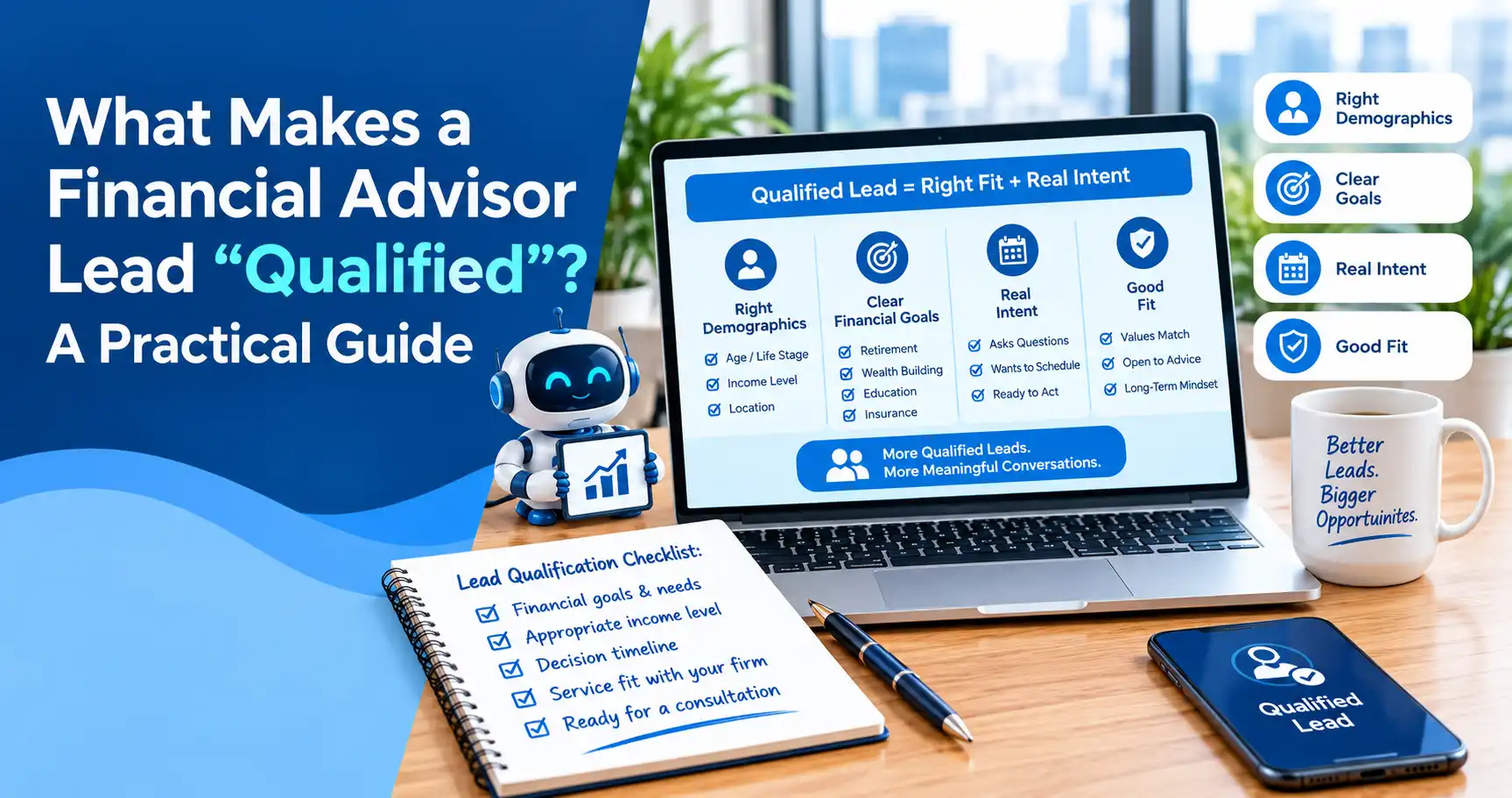
- Set Qualification Criteria: Define what makes a lead and appointment qualified.
- Automate Follow-Ups: Create relevant email sequences and reminders.
- Integrate Scheduling: Simplify appointment booking and confirmations.
- Review Compliance: Check data security, marketing communications, and applicable regulations.
- Track Performance: Measure lead quality, conversion rates, and appointment costs.
- Optimize the Funnel: Identify weak points, test improvements, and refine your process.
Tip: Start with one audience and one acquisition channel, measure the results, and expand once your process works consistently.
Final Thoughts: Building a Smarter Client Acquisition Process With AI
An AI-powered client acquisition funnel can help financial advisors organize inquiries, improve follow-up consistency, and understand how prospects move toward a consultation.
But technology alone will not solve every acquisition problem. Results still depend on attracting the right audience, providing useful information, communicating appropriately, and making it easy for qualified prospects to take the next step.
The most effective approach combines AI-assisted workflows with reliable data, clear qualification criteria, meaningful human interaction, and ongoing measurement.
For advisors and insurance agents, the priority should be building a repeatable process that connects marketing activity to qualified booked appointments.
Revenx helps financial firms explore how content, digital marketing, and appointment generation can work together. For agencies and IMOs, reviewing your current funnel is a practical first step toward identifying where better coordination, follow-up, or measurement may improve the prospect experience.
FAQs About AI-Powered Client Acquisition Funnels
1. What is an AI-powered client acquisition funnel?
An AI-powered client acquisition funnel uses artificial intelligence and marketing automation to guide prospects from initial interest to a consultation. It can help financial advisors organize leads, personalize follow-ups, nurture prospects, and schedule appointments more efficiently.
2. How can AI help financial advisors generate qualified leads?
AI can help financial advisors identify audience interests, organize inquiries, prioritize follow-ups, and analyze prospect engagement. However, lead quality still depends on targeting the right audience, defining clear qualification criteria, and ensuring prospects need the services the firm provides.
3. What AI tools do financial advisors need to build an acquisition funnel?
Financial advisors can use CRM software, AI content tools, marketing automation platforms, lead capture systems, appointment scheduling tools, and analytics software. The right combination depends on the firm’s goals, budget, existing systems, data security requirements, and compliance obligations.
4. Is an AI-powered client acquisition funnel compliant?
An AI-powered funnel must follow the applicable advertising, privacy, email marketing, data security, and recordkeeping requirements for the firm. AI does not automatically ensure compliance. Financial advisors should review their workflows, third-party tools, and marketing communications with appropriate compliance or legal professionals.
5. How long does it take to see results from an AI-powered acquisition funnel?
The timeline depends on website traffic, campaign quality, lead volume, follow-up processes, and implementation. Automation may improve operational consistency relatively quickly, but improvements in qualified leads and booked appointments require ongoing measurement and testing. Results vary, and no specific outcome is guaranteed.
Disclaimer:
This article is for educational and informational purposes only and does not constitute legal, financial, investment, or regulatory advice. Financial firms should review applicable requirements before implementing AI-powered marketing systems. Results vary based on strategy, execution, audience, and other factors; no leads, appointments, rankings, or revenue are guaranteed.