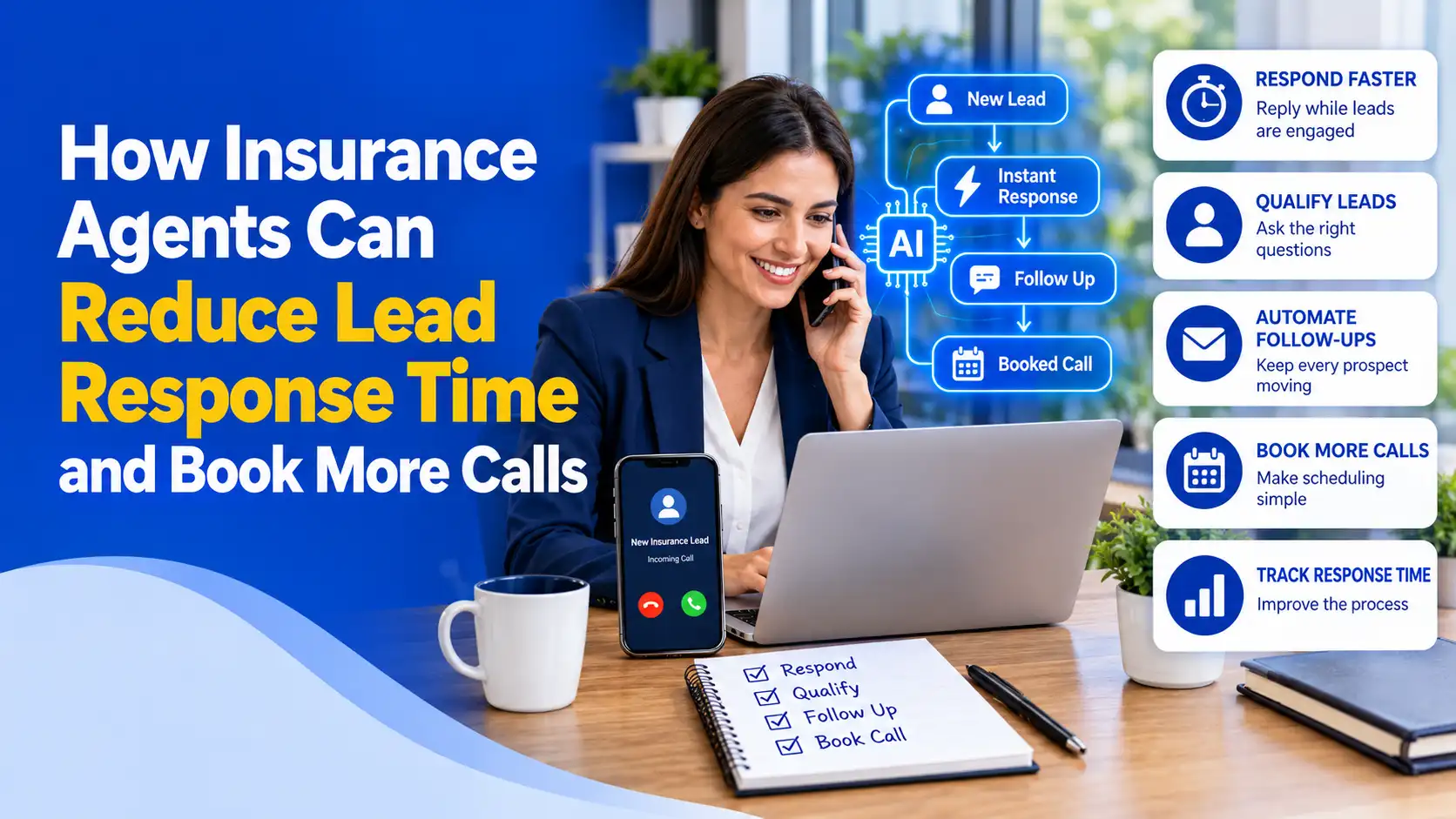
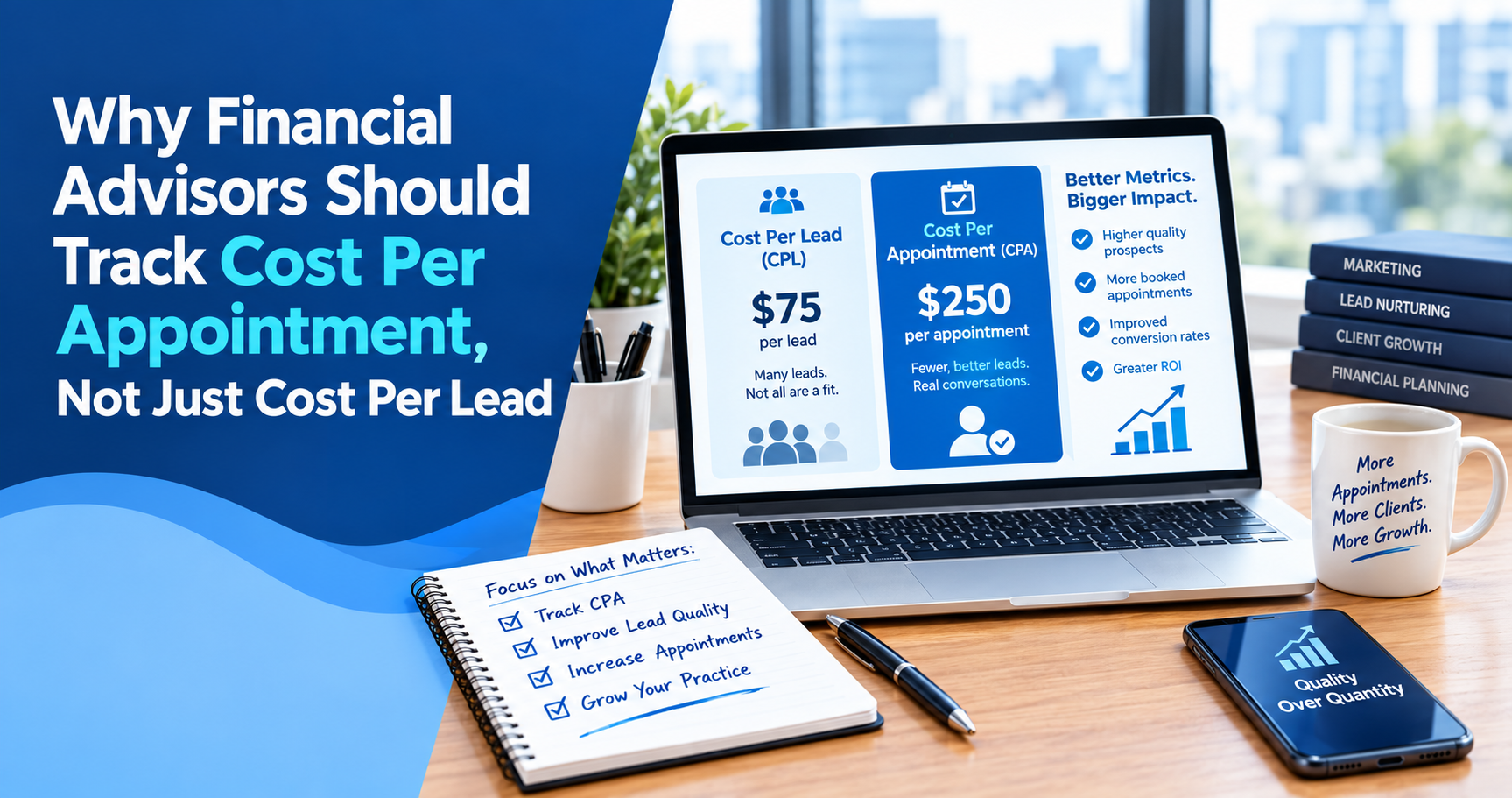
Generating leads is one thing. Getting those leads to schedule an appointment is another.
A financial advisor may receive inquiries through paid ads, website forms, referrals, or educational webinars. But not every prospect is ready to speak with an advisor immediately. Some are comparing options, some have questions about fees, and others are still deciding whether they need professional financial guidance.
A structured nurturing process helps advisors stay connected with interested prospects, provide relevant information, and make it easier for qualified individuals to schedule a conversation when they are ready.
The goal is not to pressure every lead into booking. It is to turn genuine interest into meaningful appointments through timely, relevant, and consistent communication.
Financial advisor lead nurturing is the process of building relationships with potential clients through personalized follow-ups, educational content, and relevant communication until they are ready to schedule an appointment.
Unlike lead generation, which focuses on attracting new prospects, lead nurturing focuses on maintaining engagement after someone has expressed interest.
For example, a person who downloads a retirement planning guide may not be ready to book a consultation that day. However, receiving a helpful follow-up email about retirement income planning could encourage them to learn more about an advisor’s services.
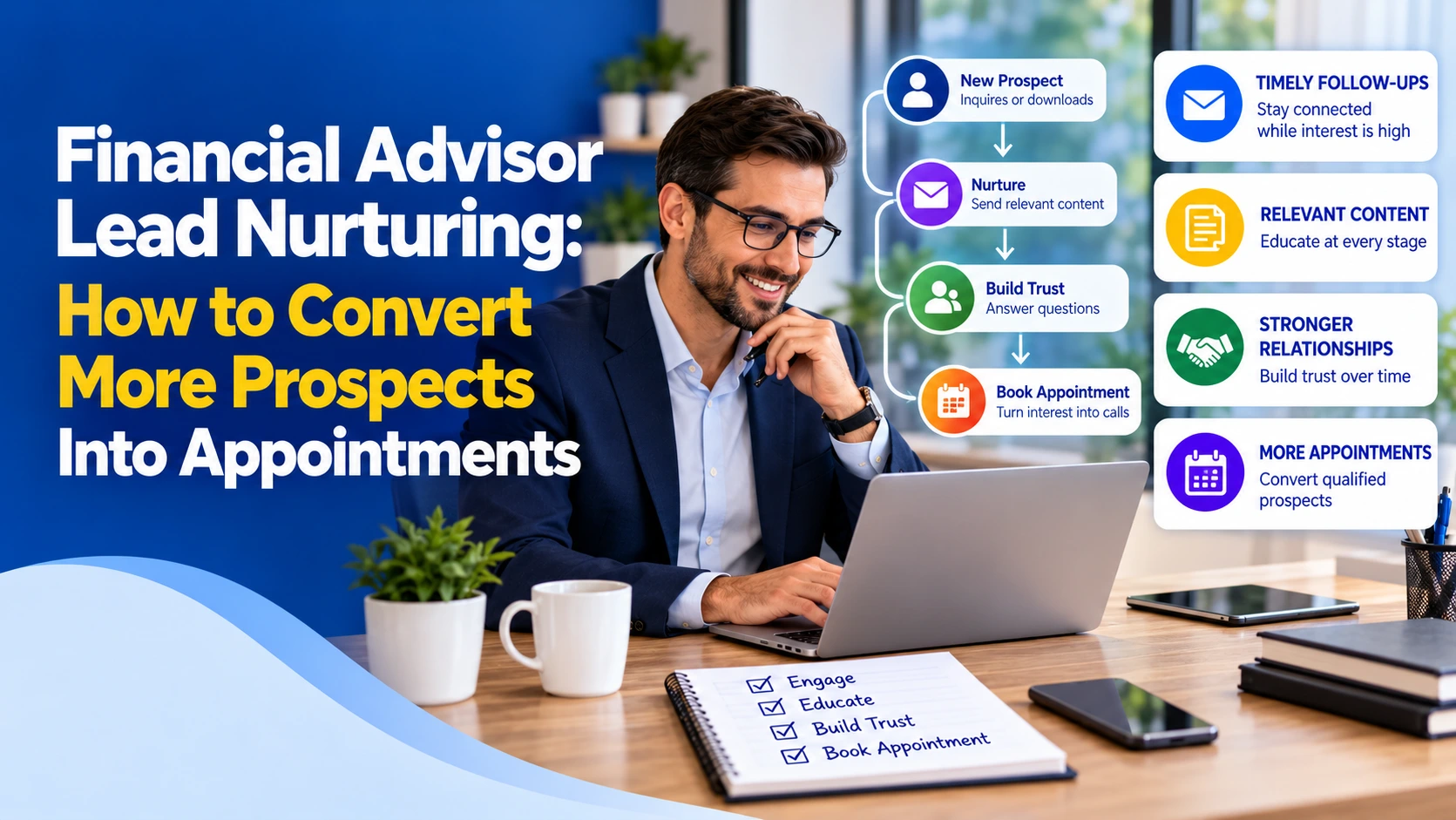
A typical nurturing journey looks like this:
Each stage should help the prospect understand the next step without creating unnecessary pressure.
Financial planning decisions often require consideration and trust.
Prospective clients may want to understand an advisor’s experience, services, fees, and approach before agreeing to a meeting.
Without a clear follow-up process, advisors risk losing contact with prospects who may have been interested but were not ready to take immediate action.
Someone exploring retirement planning services may be months away from retirement. Another person may be reviewing several financial advisory firms before choosing whom to contact.
Both could be legitimate prospects, but their timelines are different.
Lead nurturing allows advisors to maintain appropriate communication while respecting those differences.
A single introductory email rarely answers every question a prospect may have.
Relevant educational emails, service explanations, and opportunities to ask questions can help people become more familiar with an advisory firm.
Consistency matters, but communication should remain useful rather than repetitive.
Not every inquiry is a good fit.
Some prospects may need services the firm does not offer, while others may fall outside its target audience.
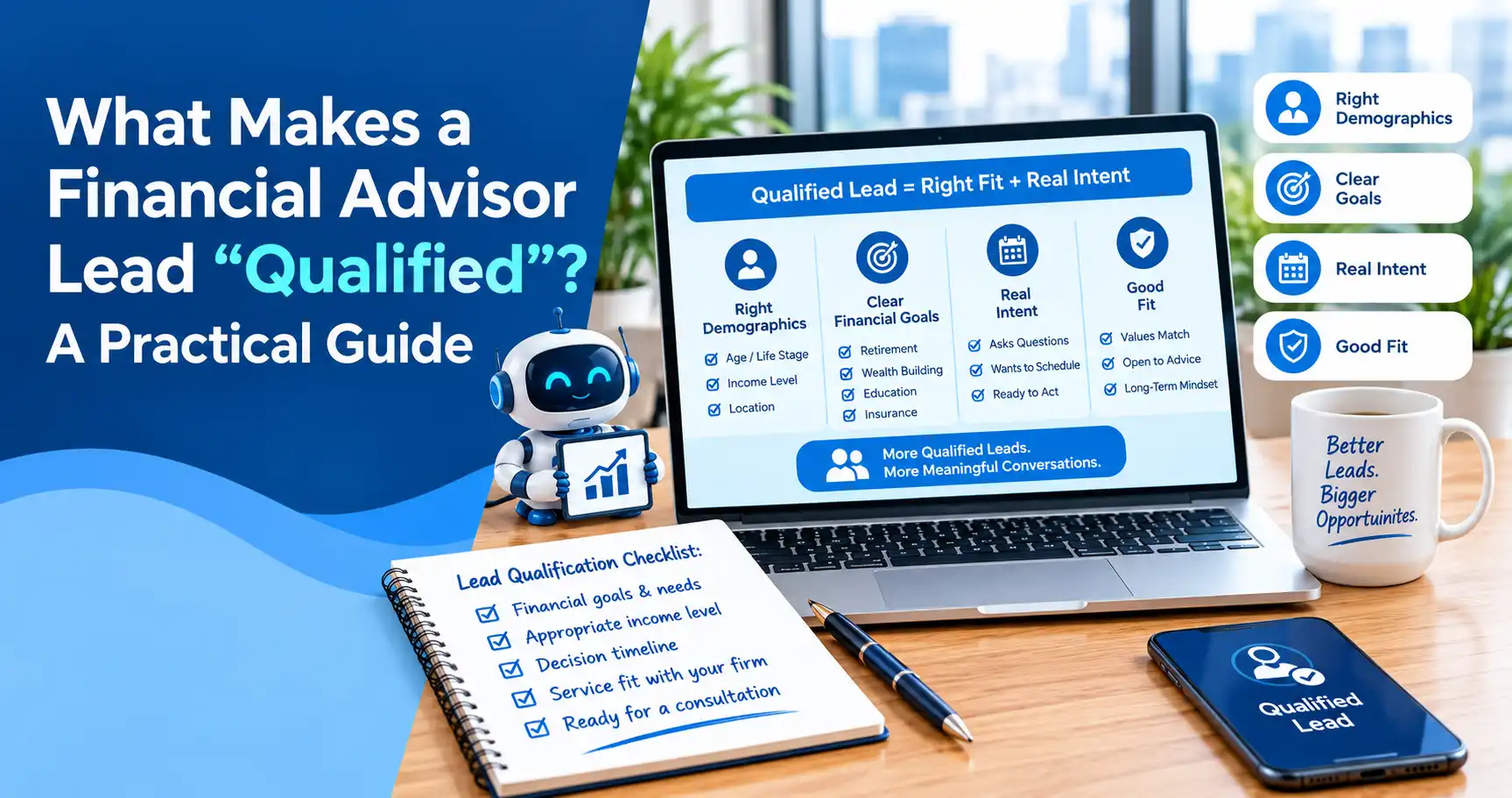
Nurturing and qualification help identify prospects whose needs align with the advisor’s services before scheduling a consultation.
When follow-ups depend entirely on manual reminders, inquiries can be overlooked.
A documented process helps ensure that each eligible prospect receives an appropriate response and that interested individuals have a clear way to book.
An effective nurturing strategy connects lead qualification, personalized communication, educational content, and appointment scheduling.
The following steps provide a practical framework.
The first interaction sets expectations for the relationship.
When someone submits an appointment request or asks about a service, acknowledge the inquiry promptly.
An initial response should:
“Thank you for reaching out about retirement planning. We’d be happy to explain our planning process and answer your initial questions. You can select a convenient time for an introductory conversation using the link below.
An automated acknowledgment can help provide an immediate response, but detailed financial questions should be directed to an appropriately qualified professional.
Sending identical follow-up messages to every prospect can make communication feel irrelevant.
Instead, advisors can organize leads according to the information prospects have voluntarily shared.
Segmentation helps advisors send information that reflects each prospect’s interests. For firms serving federal, state, university, or K–12 employees, messaging can also address the general retirement planning questions relevant to those audiences without assuming individual eligibility or benefits.
A lead nurturing sequence provides a consistent communication plan rather than relying on occasional reminders.
The sequence should vary depending on whether the prospect requested a consultation, downloaded a resource, or attended an event.
Here is an illustrative seven-day sequence for a prospect who has opted to receive follow-up communications:
This is a starting framework, not a universally optimal schedule.
Advisors should adjust frequency based on prospect preferences, communication permissions, engagement, and applicable compliance requirements.
If someone requests no further contact, the firm should honor that request.
Lead nurturing should provide value before asking for an appointment repeatedly.
A retirement planning prospect may have questions such as:
Educational content can address these questions without providing individualized recommendations.
Advisors can use short articles, email explanations, videos, or webinar recordings to help prospects understand the planning process.
The content should support informed decisions rather than create unnecessary urgency.
Personalization involves more than inserting someone’s first name into an email.
It means responding to the information a prospect has actually provided.
For example, if someone expressed interest in retirement income planning, a follow-up about that topic is more relevant than a generic message promoting every service offered by the firm.
A useful message might say:
“You mentioned that you’re beginning to explore retirement income planning. We have a short resource explaining the questions people commonly discuss during an introductory planning meeting. Would you like us to send it?”
This approach gives the prospect a choice and creates a natural opportunity for further engagement.
Avoid implying that you know someone’s financial circumstances, investment holdings, or retirement readiness without sufficient information.
A prospect may be interested in speaking with an advisor but abandon the process if booking requires several emails or complicated forms.
An effective appointment scheduling experience should include:
For example, instead of using a vague call to action such as “Contact us,” an advisor might use:
The language should accurately describe what the prospect can expect. A clear appointment invitation is often more useful than a broad sales message.
A prospect who stops responding is not necessarily uninterested.
Their circumstances may have changed, or they may simply need more time.
A re-engagement message should offer a relevant reason to reconnect rather than repeatedly asking whether they are ready to book.
“We previously shared information about our financial planning process. If you’re still exploring your options, we’re happy to answer general questions or explain what an introductory meeting involves.”
For prospects who have consented to ongoing communication, firms may also share occasional educational updates.
Re-engagement should respect opt-out requests and applicable communication rules.
A practical email sequence should gradually move from acknowledgment to education and then to an optional appointment invitation.
Subject: Thank You for Your Interest in Retirement Planning
Thank you for your interest in learning more about retirement planning.
We understand that preparing for retirement can raise questions about income, timelines, and available planning options.
Subject: Questions to Consider Before Retirement
As you explore your retirement plans, it may help to think about your expected retirement timeline, income sources, and the questions you would like to discuss with a professional.
We’ve prepared a resource covering common considerations before an initial retirement planning meeting.
If you have general questions about our services, feel free to reply.
Subject: Would an Introductory Conversation Be Helpful?
If you’re still exploring your retirement planning options, an introductory conversation may help you understand our services and whether they align with your needs.
During the meeting, we can explain our planning process, answer questions about how we work, and discuss potential next steps.
You can choose a convenient time here:
These templates are examples and should be adapted to the firm’s audience, communication permissions, and compliance review process.
A customer relationship management (CRM) system helps financial advisory firms organize prospect information and manage follow-up activities.
Rather than tracking inquiries across separate inboxes and spreadsheets, advisors can use a CRM to maintain a consistent record of each prospect’s journey.
Useful CRM capabilities include:
Automation can support routine activities such as sending acknowledgments, creating follow-up tasks, and delivering appointment reminders.
However, automation should not replace professional judgment or personalized conversations.
The number of emails sent is not a reliable measure of nurturing success.
Advisors should focus on whether their follow-up process helps qualified prospects move toward meaningful conversations.
For example, suppose a firm receives 100 leads and 20 schedule an appointment.
Its lead-to-appointment rate is:
If 15 of those prospects attend, the appointment show rate is:
These are illustrative calculations, not industry benchmarks.
Firms should compare their results over time, distinguish between different lead sources, and use consistent definitions.
A higher appointment booking rate is not necessarily better if the resulting meetings are poorly qualified.
Even a well-designed marketing campaign can underperform when follow-up communication is inconsistent or poorly targeted.
A person who requested a consultation should not necessarily receive the same messages as someone who downloaded a general educational guide.
Match communication to the prospect’s intent and readiness.
Repeated messages without useful information can frustrate prospects.
Use a reasonable communication schedule and respect their preferences.
Some prospects are ready to book immediately. Others want to understand the advisor’s services first. Provide a scheduling option without making every interaction a sales pitch.
Email opens and clicks can provide limited engagement signals, but they do not prove that a prospect is qualified or ready to meet.
Track meaningful actions such as responses, qualification outcomes, booked appointments, and attended meetings.
Financial advisor marketing communications may be subject to SEC, FINRA, state regulatory, privacy, and electronic communication requirements, depending on the firm and its activities.
Firms should review applicable obligations, including recordkeeping, advertising standards, consent requirements, and restrictions on misleading claims.
For example, SEC-registered investment advisers must consider the Investment Advisers Act marketing rule when communications fall within its scope.
Compliance requirements should be assessed based on the firm’s regulatory status and the communication involved.
Improving lead nurturing does not necessarily require more marketing software or a larger advertising budget.
Start by reviewing how existing inquiries are handled.
Ask the following questions:
Once the gaps are identified, improve one stage at a time.
For example, a firm with slow response times might begin by implementing inquiry acknowledgments and internal follow-up alerts.
Another firm may already respond quickly but need better segmentation and more relevant educational messages.
The right improvements depend on where prospects are dropping out of the process.
Financial advisor lead nurturing works best when communication is timely, relevant, and built around the prospect’s needs.
A strong process combines qualification, educational follow-up, appropriate automation, and a simple path to scheduling.
The objective is not to convert every inquiry into an appointment. It is to help the right prospects understand the value of a conversation and make an informed decision about taking the next step.
At Revenx, we help financial advisors, insurance professionals, agencies, and IMOs build appointment-focused marketing systems designed to connect qualified prospects with financial professionals.
If your marketing generates interest but too few meaningful conversations, explore how a more structured approach could support your appointment pipeline.
Lead nurturing for financial advisors is the process of maintaining relevant communication with prospective clients after their initial inquiry. It may include educational emails, personalized follow-ups, qualification, and appointment invitations.
Follow-up frequency depends on the prospect’s interest, communication preferences, and stage in the decision process. A recent consultation request may justify a prompt response, while an educational resource subscriber may prefer less frequent communication.
Lead generation attracts and captures prospective clients. Lead nurturing focuses on developing relationships with those prospects through relevant communication and helping qualified individuals move toward an appointment.
Yes. Financial advisors can automate routine activities such as inquiry acknowledgments, follow-up reminders, CRM updates, and appointment confirmations. Automated communication should remain appropriate, compliant, and supported by human oversight.
There is no single method that works for every firm. A practical approach combines prompt responses, lead qualification, relevant educational content, personalized communication, and easy appointment scheduling.
Advisors can share educational resources, answer general questions, and maintain occasional contact when permitted. The goal is to remain helpful and accessible without pressuring prospects into scheduling before they are ready.