- Written & Reviewed by Jeremy
- Published
- Last Updated Oct 16, 2026
Getting more leads sounds like progress for a financial advisory business. But what happens when your inbox is full of inquiries and very few people actually book a meeting?
The problem may not be the number of leads. It may be their quality.
Understanding the difference matters because your team’s time is valuable. Following up with every inquiry in the same way can waste time and make it harder to focus on people who genuinely need your services.
Qualified financial advisor leads are prospects who demonstrate a relevant need, fit the firm’s service criteria, and show enough interest to justify a conversation. They aren’t guaranteed clients, but they offer more meaningful opportunities than inquiries evaluated on contact information alone.
In this guide, we’ll explain what makes a financial advisor lead qualified, how to evaluate prospects, which marketing activities can improve lead quality, and how to turn relevant inquiries into booked appointments.
What Is a Qualified Lead for a Financial Advisor?
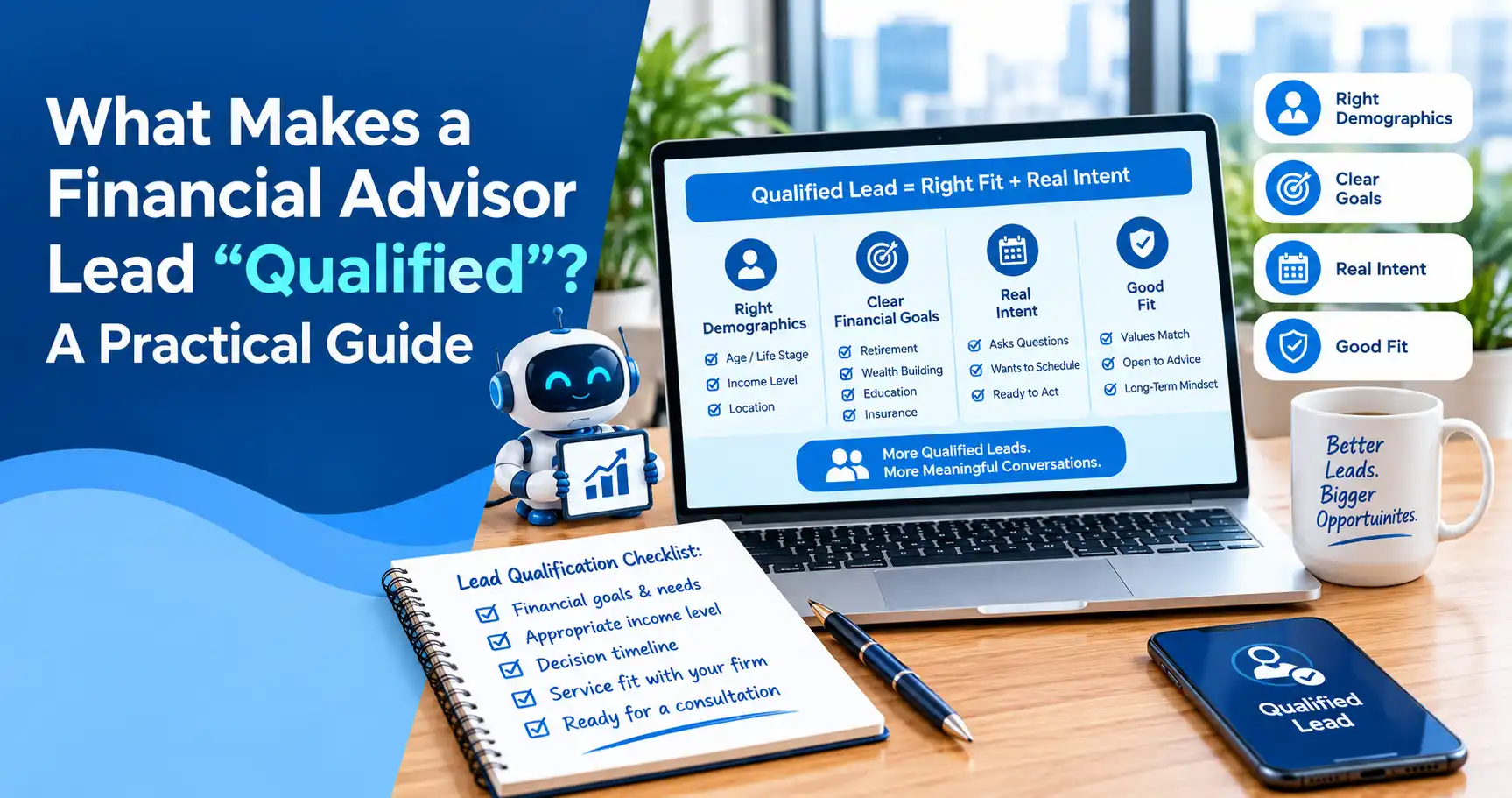
A qualified lead is a potential client whose needs, circumstances, and level of interest align with the financial advisor’s services and client criteria.
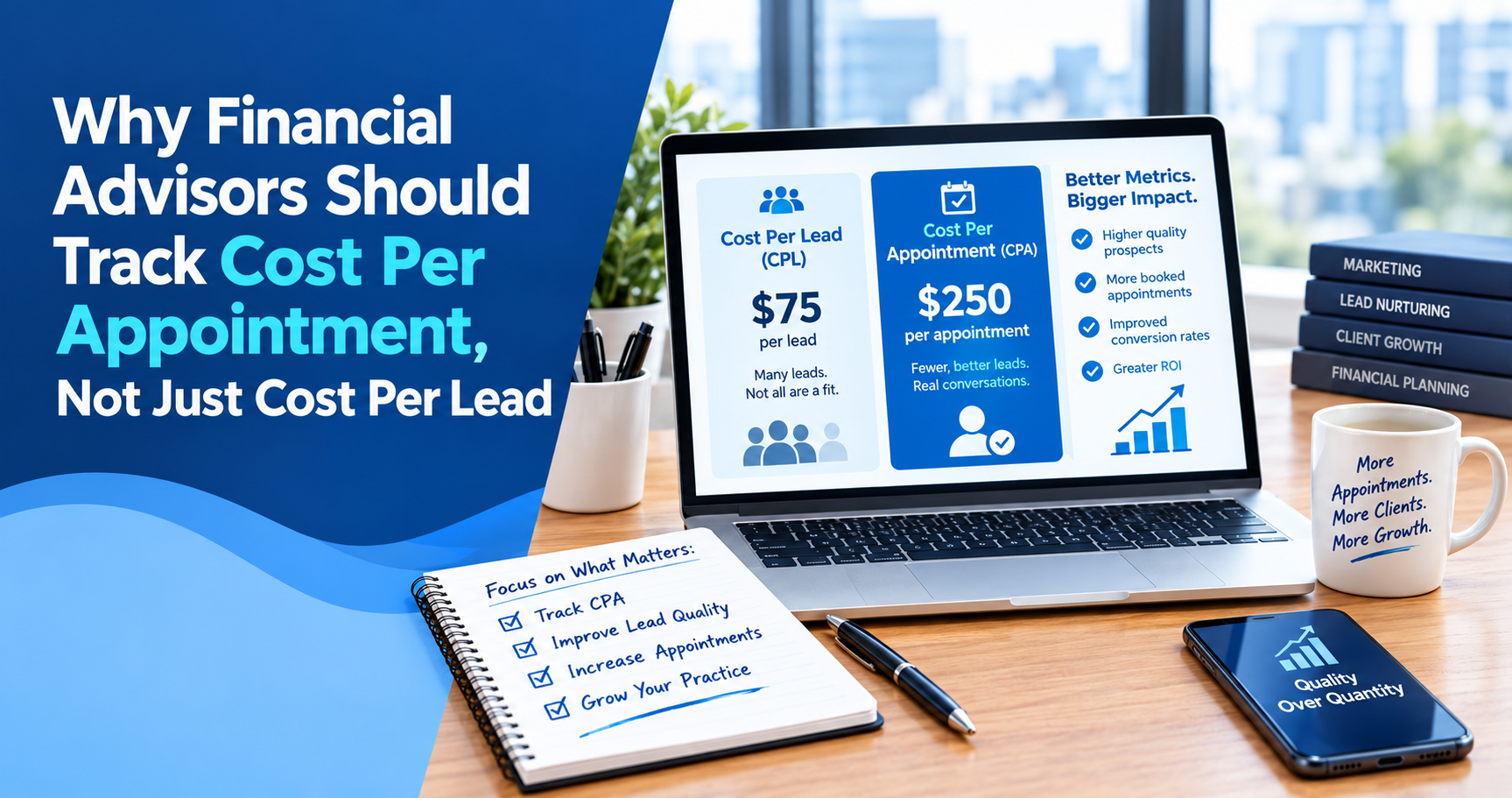
For example, an advisor specializing in retirement planning might receive an inquiry from someone approaching retirement who wants help understanding income options. If the person falls within the firm’s service area and is interested in professional guidance, the inquiry may be worth pursuing. Tracking the cost per booked appointment can help advisors evaluate how effectively their marketing turns relevant inquiries into scheduled consultations.
Compare that with someone who downloads a retirement checklist simply because it is free. That person has shown interest in retirement information, but there is not enough evidence to conclude that they want or need an advisory relationship.
Both individuals can be valuable contacts. However, they require different follow-up approaches.
Financial advisors can generally evaluate leads across three stages:
- Marketing-qualified lead (MQL): Someone who has engaged with the firm’s marketing, such as downloading a guide, attending a webinar, or responding to an email.
- Sales-qualified lead (SQL): A prospect whose needs and circumstances appear to fit the firm’s criteria and who is ready for a more direct conversation.
- Booked appointment: A prospect who has scheduled a meeting with the advisor or an appropriate team member.
These definitions can vary between firms. A booked appointment is also not automatically a qualified opportunity. The prospect’s needs and fit may still need to be confirmed during the initial conversation.
The goal is to identify where each prospect stands and provide the appropriate next step.
What Are the Key Signs of a Qualified Financial Advisor Lead?
1. They Have a Clear Financial Need
The prospect needs help with retirement planning, investment management, financial planning, or insurance that aligns with your firm’s services.
2. They Fit Your Ideal Client Profile
Their financial goals, location, service needs, and expectations match your firm’s expertise and service model.
3. They Show Genuine Interest
They ask relevant questions, request a consultation, or respond to follow-up messages, indicating interest in professional guidance.
4. They Are Willing to Take the Next Step
They show readiness to discuss their needs, respond to scheduling invitations, or consider an introductory meeting without feeling pressured.
5. Their Expectations Align With Your Services
They understand your services, fees, and approach, and their expectations match what your firm can realistically provide.
What Is the Difference Between a Lead, a Qualified Lead, and a Booked Appointment?
These terms describe different stages of the client acquisition process. Understanding the distinctions helps firms measure marketing performance more accurately.
Stage | What it means | Example |
Lead | Someone has expressed initial interest | Downloads a retirement planning guide |
Qualified lead | The prospect appears to fit the firm’s criteria and has a relevant need | Requests help reviewing retirement income options |
Booked appointment | A meeting has been scheduled | Selects a date for an introductory consultation |
Sales opportunity | A conversation indicates a potential fit and a relevant next step | Discusses whether the firm’s services meet their needs |
Client | The prospect formally engages the firm | Completes the firm’s onboarding process |
The distinction is important because a marketing campaign can generate many leads without producing many qualified appointments.
For example, a free educational download might attract a large audience, while a campaign promoting an introductory retirement planning consultation might attract fewer inquiries but more people interested in speaking with an advisor.
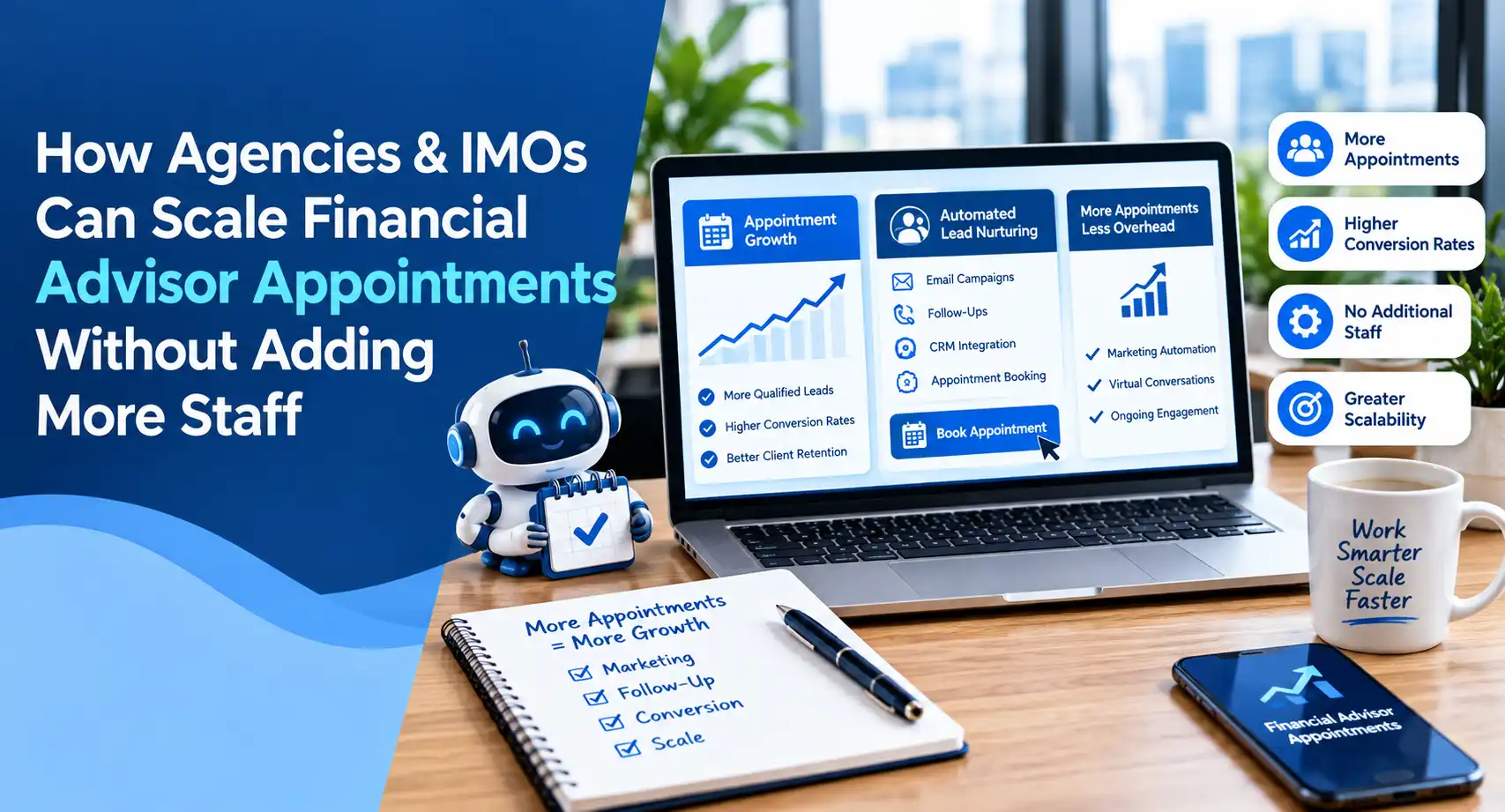
Neither approach is automatically better. The right choice depends on the firm’s goals, audience, services, and ability to nurture prospects over time. For firms looking to grow efficiently, scaling financial advisor appointments requires a structured process for lead qualification, follow-up, and scheduling.
How Can Financial Advisors Qualify Leads Before Booking an Appointment?
A consistent qualification process helps financial advisors identify suitable prospects, understand their needs, and schedule relevant appointments.
Step 1: Define Your Ideal Client
Identify the financial needs, service requirements, and client profiles your firm is best equipped to serve.
Step 2: Ask Relevant Initial Questions
Ask about the prospect’s financial goals, reasons for seeking help, and expectations for the consultation. Avoid collecting unnecessary sensitive information.
Step 3: Confirm Interest and Availability
Explain what the introductory meeting involves and confirm whether the prospect is interested and available.
Step 4: Review Before Scheduling
Check the prospect’s needs, service fit, interest, and contact details. If there is a reasonable fit, offer a convenient appointment time. If they are not ready, consider appropriate follow-up.
What Makes a Lead Unqualified for a Financial Advisor?
A lead may be unqualified when the available information indicates that the firm cannot reasonably meet the person’s needs or that the inquiry is not actionable. Understanding what makes a financial advisor appointment qualified can help firms evaluate prospect fit, identify actionable inquiries, and focus their follow-up efforts more effectively.
Common examples include:
- Service mismatch: The person needs a service the firm does not provide.
- Geographic limitations: The prospect is outside the firm’s service area, where location restrictions apply.
- Invalid contact information: The inquiry contains incorrect details that prevent meaningful follow-up.
- Limited intent: The person is researching general information without expressing interest in professional assistance.
- Misaligned expectations: The prospect expects a service or arrangement the firm cannot offer.
- No interest in a consultation: The person does not want to discuss their needs with an advisor at this time.
These indicators should be evaluated in context.
For example, a prospect who does not respond to one email is not necessarily unqualified. They may be busy, away from work, or simply not ready to respond.
Likewise, someone who is not prepared to book today may become a relevant prospect later.
A useful qualification process distinguishes between an unsuitable inquiry, an invalid lead, and a legitimate prospect who needs more time.
How Do Marketing Channels Affect Lead Quality?
Marketing channels influence the type of prospects your firm attracts and their expectations before making contact.
SEO and Educational Content
SEO helps financial advisors reach people searching for financial guidance. Helpful content builds understanding and encourages relevant prospects to explore your services.
Paid Advertising and Landing Pages
Targeted ads and clear landing pages set expectations, explain your services, and encourage suitable prospects to inquire. For financial advisors looking to reach people actively searching for financial guidance, Google Ads for financial advisors can be part of a targeted strategy to attract relevant prospects and generate inquiries.
Email Marketing and Lead Nurturing
Email marketing keeps your firm connected with interested prospects through useful information, follow-ups, and relevant invitations without pressuring them to book. Understanding why email marketing is important for financial advisors can help your firm build stronger prospect relationships and maintain consistent communication over time.
Referrals and Existing Networks
Referrals can provide helpful context, but advisors should still assess each prospect’s needs and service fit.
How Can Financial Advisors Turn Qualified Leads Into Booked Appointments?
A qualified lead represents an opportunity, but the appointment process still matters.
Even interested prospects may hesitate if the next step is unclear, scheduling takes too much effort, or they do not understand the value of speaking with an advisor. Financial advisor webinar marketing can help address these barriers by educating prospects, building trust, and guiding interested attendees toward a consultation.
Here are five practical ways to improve the transition from inquiry to appointment.
Respond promptly. Follow up while the inquiry is still relevant, using a reasonable timeframe and the contact method the prospect has agreed to use.
Personalize the conversation. Reference the prospect’s stated needs instead of sending a generic message that could apply to anyone. This is especially important for agencies and IMOs that want to build stronger relationships with financial professionals through relevant, personalized communication.
Explain the purpose of the meeting. Tell prospects what the initial consultation covers and what information they may want to bring.
Use appropriate reminders. Appointment confirmations and reminders can reduce confusion and help prospects prepare for the meeting.
If your firm uses a dedicated appointment-setting process, establish clear criteria for when a lead should be contacted, when an appointment should be offered, and how the outcome should be recorded.
How Should Financial Advisors Measure Lead Quality?
Lead quality should be evaluated through the entire journey from initial inquiry to appointment and, where appropriate, a potential client relationship.
Tracking form submissions alone can make a marketing campaign appear successful even when few prospects progress to meaningful conversations.
Consider monitoring these metrics:
Metric | What it helps you understand |
Lead qualification rate | What proportion of inquiries meet your qualification criteria |
Qualified-lead-to-appointment rate | How effectively qualified prospects move toward a scheduled meeting |
Appointment attendance rate | How often scheduled meetings actually take place |
Opportunity conversion rate | How often attended appointments progress to a relevant sales opportunity |
Cost per qualified lead | How much marketing spend is associated with generating each qualified lead |
Cost per attended appointment | How much marketing spend is associated with each completed meeting |
For example, if a campaign generates 100 inquiries and 25 meet the firm’s qualification criteria, the qualification rate is 25%.
That figure is more informative than the raw lead count alone, but it does not tell the whole story. The firm should also examine appointment attendance, cost, and the suitability of the resulting opportunities.
Metrics should be interpreted together and compared across campaigns, audiences, and time periods where the data is reliable.
There is no single qualification rate that works for every financial advisory practice. The right benchmarks depend on the firm’s services, marketing channels, target audience, and sales process.
What Common Lead Qualification Mistakes Should Financial Advisors Avoid?
Financial advisors can improve lead quality by avoiding these common mistakes:
- Treating Every Inquiry Equally: Different prospects have different needs and levels of interest.
- Focusing Only on Lead Volume: More leads do not necessarily mean more qualified prospects.
- Asking Too Many Questions Too Early: Lengthy forms can discourage potential clients.
- Making Narrow Suitability Assumptions: Qualification should reflect actual service criteria, not just age, income, or assets.
- Ignoring Prospects Who Need Time: Use relevant educational follow-ups instead of repeated sales messages.
- Not Tracking Appointment Outcomes: Review attendance and conversion data to understand lead quality.
- Overlooking Compliance Requirements: Review applicable rules for marketing, testimonials, email campaigns, and prospect data handling.
A good qualification process balances efficiency, compliance, and a positive prospect experience.
When Should a Financial Advisor Improve Their Lead Qualification Process?
Financial advisors should review their qualification process when inquiries fail to turn into meaningful conversations.
Common warning signs include:
- Poor Service Fit: Many inquiries are for services your firm does not offer.
- Unclear Expectations: Prospects misunderstand the purpose of consultations.
- Low Appointment Attendance: Many scheduled meetings do not take place.
- Limited Lead Quality Data: Reports track lead volume but not qualification or conversion.
- Inefficient Follow-Up: Advisors spend too much time on unsuitable prospects.
- Inconsistent Criteria: Team members evaluate leads differently.
Improving results may involve refining your ideal client profile, clarifying marketing messages, simplifying contact forms, and standardizing follow-up.
A specialized financial services marketing agency can also help assess targeting, messaging, and appointment outcomes.
For more strategies, explore our guide to content marketing for financial advisors.

Final Thoughts: Focus on Qualified Conversations, Not Just More Leads
A successful financial advisor lead generation strategy is not simply about getting more people to fill out a form. It is about attracting prospects whose needs align with your services and helping them take an appropriate next step.
Clear qualification criteria, relevant marketing messages, thoughtful follow-up, and straightforward appointment scheduling can help your firm make better use of its time.
Remember that a qualified lead is not a guaranteed client. It is a potential opportunity that deserves further evaluation.
When financial advisors measure lead quality alongside appointment attendance and subsequent outcomes, they can make more informed decisions about where to focus their marketing efforts.
At Revenx, the goal is to help financial firms build a more connected path from marketing activity to meaningful prospect conversations. A clear process can make it easier to understand which efforts are attracting the right audience and where improvements may be needed.
FAQs About Qualified Financial Advisor Leads
1. What is a qualified lead for a financial advisor?
A qualified lead is a prospect whose financial needs align with the advisor’s services and who shows enough interest to justify further conversation. Qualification may also consider service fit, location, expectations, and readiness to meet. However, a qualified lead is not a guarantee of becoming a client.
2. How do financial advisors determine whether a lead is qualified?
Financial advisors can assess a prospect’s needs, service fit, level of interest, and willingness to discuss next steps. A short intake form or introductory conversation can help determine whether the firm may be able to help.
3. What is the difference between a qualified lead and a booked appointment?
A qualified lead is a prospect who meets the firm’s initial criteria and has a relevant need. A booked appointment means a meeting has been scheduled. A qualified lead may not book a meeting, and a booked appointment does not guarantee the prospect will attend or become a client.
4. How can financial advisors improve lead quality?
Financial advisors can improve lead quality by defining their ideal client profile, aligning marketing messages with their services, creating helpful educational content, and using consistent qualification criteria. Tracking qualified leads and attended appointments can also help identify which marketing activities attract relevant prospects.
5. How do you measure the quality of financial advisor leads?
Useful metrics include lead qualification rate, qualified-lead-to-appointment conversion rate, appointment attendance rate, and cost per qualified lead. Tracking these metrics together helps advisors evaluate lead quality rather than focusing on lead volume alone.
Disclaimer:
This article is for general informational and educational purposes only and does not constitute financial, investment, legal, tax, or regulatory advice. Revenx is a marketing services provider, not a financial advisory firm. Marketing results vary based on factors including audience, strategy, budget, and execution. No particular number of leads, appointments, clients, rankings, or revenue is guaranteed. Financial firms should consult qualified professionals regarding applicable compliance obligations.