- Written & Reviewed by Jeremy
- Published
- Last Updated Nov 13, 2026
Generating leads is important for financial advisors, but getting people to inquire about your services is only the first step. The bigger challenge is turning those inquiries into qualified prospects who are ready to schedule a consultation.
Many financial advisors invest in SEO, paid advertising, social media, and email campaigns but struggle to connect these activities into a consistent client acquisition process. Website visitors leave without submitting a form, potential clients ignore follow-up emails, and interested prospects sometimes never book an appointment.
A well-planned financial advisor marketing funnel helps address these gaps. It connects different marketing channels, captures prospect information, builds trust through relevant content, and guides potential clients toward scheduling a meeting. However, capturing leads is only the first step. Consistent follow-up is essential to turn interested prospects into booked appointments. Learn more about insurance lead follow-up strategies to book more calls.
Whether you are an independent financial advisor, an insurance agent, or part of a growing financial firm, understanding how to build this process can make your marketing more organized and measurable.
In this guide, we will explain how to create a financial advisor marketing funnel step by step, which tools and channels to use, how to nurture leads, and how to turn marketing inquiries into qualified appointments.
What Is a Financial Advisor Marketing Funnel?
A financial advisor marketing funnel is a structured process that guides potential clients from discovering your services to booking a consultation. It connects marketing activities such as SEO, content marketing, email campaigns, and paid advertising to help prospects move toward taking action. Understanding what makes a financial advisor lead qualified can also help advisors identify which prospects are more likely to become clients and prioritize follow-up efforts.
For example, someone searching for retirement planning advice may find your blog, download a helpful guide, receive follow-up emails, and eventually schedule a consultation.
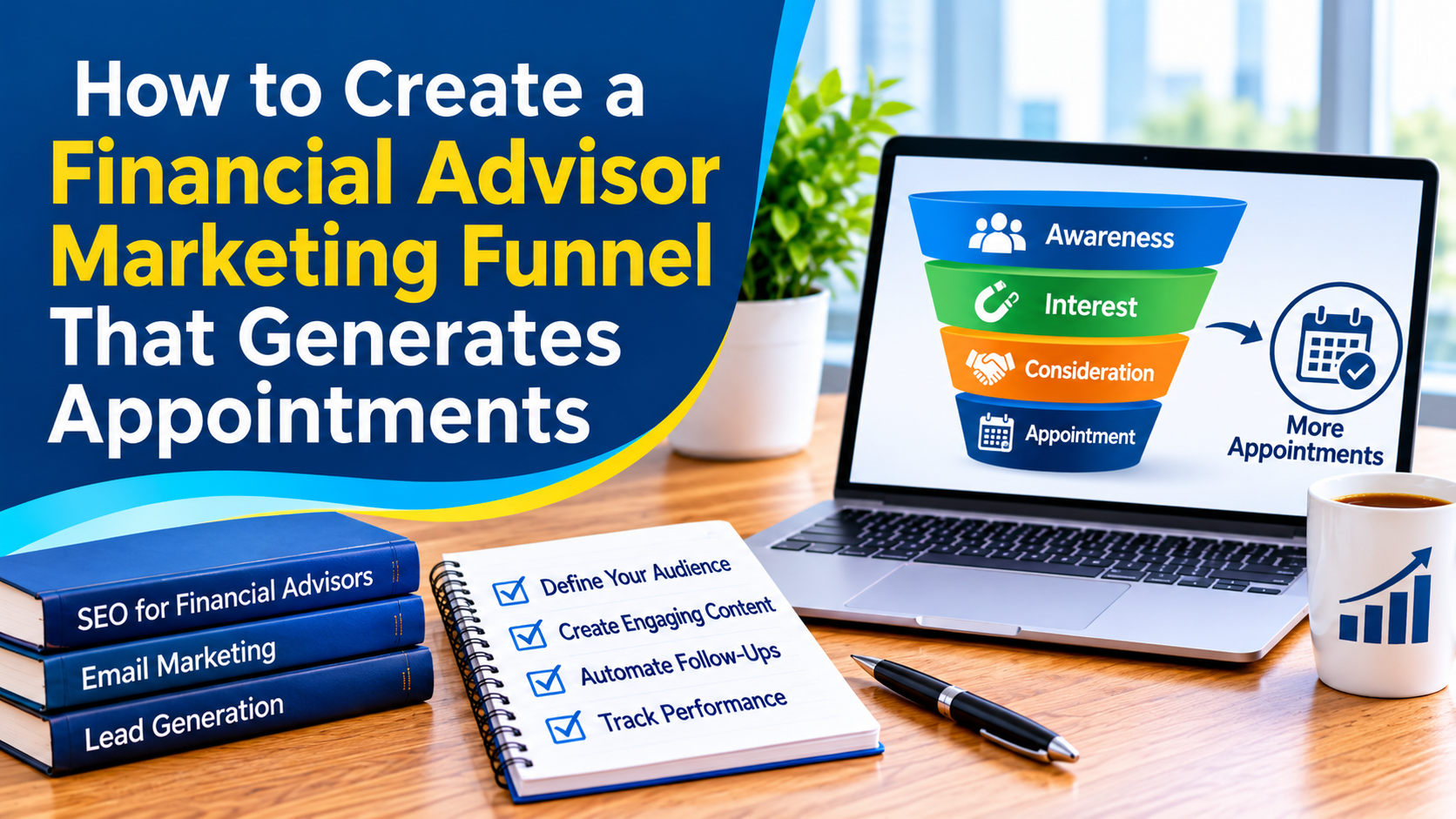
A typical marketing funnel has four stages:
- Awareness: Attract potential clients through search engines, social media, and advertising.
- Interest: Encourage visitors to explore your services and resources.
- Consideration: Build trust through emails, webinars, and educational content.
- Conversion: Turn interested prospects into booked appointments.
The goal is to attract the right prospects, build trust, and make it easier for them to take the next step.
Why Do Financial Advisors Need a Marketing Funnel?
A marketing funnel helps financial advisors attract potential clients, maintain communication, and turn inquiries into appointments. Instead of relying only on referrals, advisors can use a structured marketing process to support consistent client acquisition. A high-converting financial advisor landing page can strengthen this process by encouraging website visitors to take the next step and schedule a consultation.
Key benefits include:
- Generate More Prospects: Combine SEO, content, and paid campaigns to attract potential clients.
- Build Trust: Share useful articles, webinars, and newsletters before the first consultation.
- Reduce Lost Leads: Follow up with interested prospects who are not ready to book immediately.
- Track Marketing Results: Identify which channels generate inquiries and booked appointments.
What Are the Key Stages of a Financial Advisor Marketing Funnel?
A financial advisor marketing funnel guides prospects from discovering your services to booking an appointment. It typically includes five stages: awareness, interest, consideration, conversion, and retention. By using an AI-powered client acquisition funnel for financial advisors, advisors can streamline prospect engagement, automate follow-ups, and improve the process of turning leads into clients.
- Awareness: Attract potential clients through SEO, blog posts, social media, paid ads, webinars, and referrals.
- Interest: Encourage visitors to engage through downloadable guides, newsletters, webinars, and consultation offers.
- Consideration: Build trust through educational emails, helpful resources, and information about your services.
- Conversion: Turn interested prospects into appointments using clear calls to action and simple scheduling options.
- Follow-Up: Reconnect with prospects who have not booked or missed appointments through appropriate email and phone communication.
How to Create a Financial Advisor Marketing Funnel Step by Step
Building an effective funnel starts with understanding your audience and connecting the right marketing activities.
Step 1: Define Your Ideal Client
Identify your target audience based on their financial needs, retirement goals, age group, and location. This helps you create relevant marketing messages.
Step 2: Choose Lead Generation Channels
Use SEO, paid advertising, social media, webinars, and email marketing to attract potential clients. Focus on channels that reach your target audience.
Step 3: Create Landing Pages
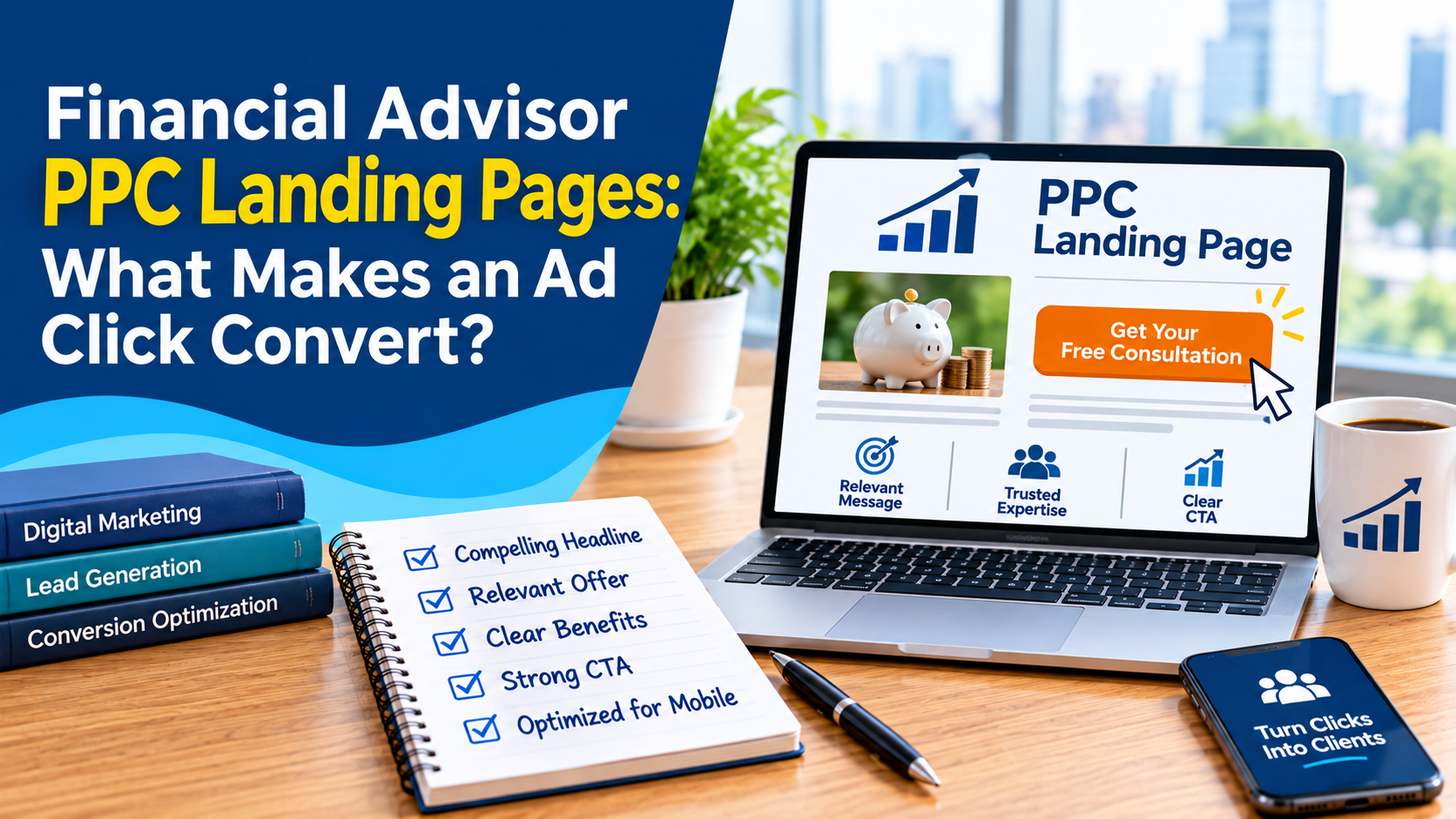
Build dedicated landing pages with clear headlines, relevant information, simple inquiry forms, and strong calls to action.
Step 4: Develop Valuable Content
Publish educational blogs, videos, guides, and webinars that answer common financial questions and demonstrate your expertise.
Step 5: Build an Email Nurturing Sequence
Send relevant emails based on prospect interests. Share helpful resources, explain your services, and invite interested prospects to schedule consultations.
Step 6: Automate Follow-Ups
Use CRM and automation tools to manage inquiries, send confirmations, assign leads, and schedule appointment reminders.
Step 7: Track and Improve Performance
Monitor website traffic, leads, conversion rates, and booked appointments. Identify weak points and improve your funnel based on actual results.
Which Marketing Channels Work Best for Financial Advisor Funnels?
The right marketing channels help financial advisors attract prospects and generate appointments. Key options include:
- SEO: Attract people searching for financial services through useful articles, service pages, and local search.
- Paid Advertising: Promote services, webinars, and landing pages to targeted audiences.
- Social Media: Use LinkedIn and other platforms to share educational content and build visibility.
- Email Marketing: Nurture interested prospects with relevant information and follow-up messages.
- Webinars: Educate potential clients and encourage them to schedule consultations.
A combination of these channels can create a stronger marketing funnel. Learn more in our Financial Advisor Webinar Marketing Guide.
What Tools Do Financial Advisors Need to Build an Effective Marketing Funnel?
Financial advisors can use a few essential tools to manage their funnels effectively:
- CRM software: Organize leads and track follow-ups.
- Landing page builders: Capture prospect inquiries.
- Email platforms: Automate lead nurturing.
- Scheduling software: Simplify appointment booking.
- Analytics tools: Measure campaign and conversion performance.
Choose tools that integrate well and support your firm’s security and compliance requirements.
How Can Financial Advisors Turn Marketing Funnel Leads Into Qualified Appointments?
Generating leads is only the first step. Financial advisors also need a clear process to convert inquiries into appointments.
Five practical ways include:
- Respond Quickly: Acknowledge new inquiries promptly.
- Understand Prospect Needs: Ask relevant introductory questions.
- Personalize Follow-Ups: Share information based on prospect interests.
- Simplify Booking: Provide an easy appointment scheduling link.
- Reduce No-Shows: Send appointment confirmations and reminders.
Common Financial Advisor Marketing Funnel Mistakes to Avoid
Avoid these common mistakes when building your funnel:
- Broad Targeting: Focus on a clearly defined audience.
- Ignoring Lead Quality: Prioritize qualified prospects over total lead volume.
- Generic Landing Pages: Create pages relevant to each campaign.
- Poor Follow-Ups: Maintain consistent, permission-based communication.
- Too Many Tools: Use connected systems to manage leads efficiently.
- Compliance Oversights: Review marketing content, advertising claims, and communications against applicable regulations.
A simple, well-managed funnel can help financial firms improve their marketing process and create more opportunities for qualified appointments.
How to Measure the Performance of Your Financial Advisor Marketing Funnel
Measuring performance helps you understand where prospects are entering, where they are leaving, and which marketing activities deserve more attention.
Consider tracking these metrics:
Metric | What It Measures | Why It Matters |
Website traffic | Number of website visitors | Shows how effectively marketing attracts attention |
Landing page conversion rate | Visitors who complete the intended action | Measures landing page effectiveness |
Cost per lead | Marketing spend divided by leads generated | Helps evaluate lead acquisition costs |
Lead-to-appointment rate | Leads who schedule appointments | Shows how effectively inquiries become bookings |
Appointment show-up rate | Scheduled appointments that take place | Helps evaluate appointment quality and reminders |
Cost per booked appointment | Marketing spend divided by booked appointments | Connects marketing investment to appointment generation |
For example, if a campaign generates website traffic and inquiries but very few appointments, investigate what happens after the form submission.
The issue might involve slow follow-up, unclear service information, or a complicated scheduling experience.
Use actual campaign data to make improvements rather than assuming that more traffic will automatically produce more clients.
Should You Build Your Marketing Funnel In-House or Work With a Financial Services Marketing Agency?
Financial advisors can build and manage their own marketing funnels or work with a specialized marketing partner.
The right choice depends on internal resources, marketing experience, budget, and business goals.
Factor | In-House Marketing | Specialized Marketing Agency |
Strategy | Developed internally | Supported by external marketing specialists |
Content creation | Managed by internal staff | Can be handled by an agency |
SEO and advertising | Requires internal expertise | Access to specialized campaign support |
Automation | Set up and maintained internally | May include implementation and management support |
Reporting | Depends on internal capabilities | May include structured performance reporting |
Resources | Requires staff time and tools | Requires an agency budget and coordination |
An in-house approach may work well if your firm has an experienced marketing team.
However, a specialized financial services marketing agency may be useful when you need support with several connected activities, such as SEO, content creation, lead generation, email automation, and appointment setting.
Before hiring an agency, understand exactly what it will manage and how performance will be measured.
For more guidance, read Financial Advisor Marketing: What Actually Brings You Clients (And What Doesn’t).
How to Choose the Right Marketing Partner for Your Financial Advisor Funnel
Choose a marketing partner with experience in financial services and lead generation. Evaluate agencies based on:
- Industry Experience: Experience with financial advisors and insurance professionals.
- Lead Generation: Ability to attract and qualify prospects.
- SEO and Content: Skills in creating useful financial content.
- Marketing Automation: CRM, email, and appointment scheduling integration.
- Compliance Awareness: Understanding of financial marketing requirements.
- Reporting: Clear performance tracking and reporting.
Avoid agencies that promise guaranteed leads or appointments. Focus on strategy, transparency, and realistic expectations.

Final Thoughts: Building a Financial Advisor Marketing Funnel That Generates Appointments
A successful marketing funnel connects SEO, content, advertising, email, and automation to guide prospects toward booked appointments. These channels work together to attract potential clients, nurture their interest, and turn qualified leads into scheduled meetings.
Start by defining your ideal clients, creating helpful content, building effective landing pages, and following up consistently. Track performance and improve your approach over time.
If managing these activities internally becomes difficult, a specialized partner like Revenx can help financial advisors, agencies, and insurance marketing organizations (IMOs) strengthen their marketing, generate qualified inquiries, and support booked appointments.
FAQs About Financial Advisor Marketing Funnels
1. What is a marketing funnel for financial advisors?
A marketing funnel is a process that guides potential clients from discovering a financial advisor’s services to expressing interest and scheduling a consultation. It typically includes awareness, interest, consideration, and conversion stages. SEO, landing pages, email marketing, and appointment scheduling can work together to support this process.
2. How do financial advisors generate leads through a marketing funnel?
Financial advisors can generate leads through SEO, paid advertising, educational content, webinars, and social media. These channels attract potential clients to relevant landing pages, where visitors can request information, download resources, or register for events. Follow-up communication helps nurture interested prospects toward a consultation.
3. What are the four main stages of a financial advisor marketing funnel?
The four main stages are awareness, interest, consideration, and conversion. Awareness attracts potential clients, interest encourages them to explore your services, consideration builds trust through relevant information, and conversion encourages them to take an action such as requesting a consultation or booking an appointment.
4. How can financial advisors convert leads into booked appointments?
Financial advisors can improve appointment conversions by responding promptly to inquiries, providing relevant follow-up information, understanding prospect needs, and making scheduling simple. Automated confirmations and reminders can also support the process. Tracking lead-to-appointment rates helps identify areas that need improvement.
5. Which marketing channels work best for financial advisors?
SEO, paid advertising, educational content, email marketing, social media, and webinars can all support financial advisor marketing funnels. The right combination depends on the target audience, services, budget, and business objectives. A coordinated strategy is usually more effective than managing each channel separately.