- Written & Reviewed by Jeremy
- Published
- Last Updated Nov 04, 2026
Finding potential clients is one of the biggest challenges for financial advisors. Marketing campaigns may generate website inquiries, email responses, webinar registrations, and contact form submissions, but not every lead is ready to become a client. Some prospects are actively looking for financial guidance, while others are simply researching their options.
The challenge is identifying which prospects deserve attention and how to approach them at the right time.
This is where predictive analytics can help. By analyzing historical data, prospect interactions, and engagement patterns, financial advisors can gain a better understanding of which leads may be worth prioritizing. Instead of relying entirely on broad targeting or manual prospecting, firms can use data to make more informed marketing and follow-up decisions. They can also evaluate how efficiently their marketing efforts turn prospects into scheduled meetings by understanding the cost per booked appointment and using that metric to assess campaign performance.
Understanding how predictive analytics can help financial advisors find better prospects is becoming increasingly important as financial services marketing becomes more data-driven. When combined with a well-organized customer relationship management (CRM) system, relevant content, and consistent follow-up, predictive analytics can support a more organized approach to financial advisor lead generation.
Let’s explore how it works and how financial firms can put it into practice.
What Is Predictive Analytics in Financial Services?
Predictive analytics is the process of using historical data, statistical techniques, and analytical models to estimate what might happen in the future.
In financial services marketing, it can help firms identify patterns in prospect behavior and understand which types of leads are more likely to engage with their services. However, identifying promising prospects is only the first step. Consistent follow-up is equally important for turning inquiries into booked appointments. Learn how insurance lead follow-up strategies can help firms engage prospects and book more calls.
For example, imagine a financial advisory firm receives 200 inquiries in one month. Some people downloaded a retirement planning guide, others registered for a webinar, and some requested an introductory consultation.
Instead of treating all 200 inquiries equally, the firm can examine previous lead data to identify which behaviors have historically been associated with qualified appointments.
The analysis might show that prospects who visit specific service pages, attend webinars, and respond to follow-up emails tend to be more engaged.
These patterns can help the firm decide where to focus its marketing and sales efforts.
How Does Predictive Analytics Work?
Predictive analytics generally involves four stages:
- Data collection: Gather relevant information from CRM records, website activity, email campaigns, webinar registrations, and previous inquiries.
- Pattern identification: Review historical information to identify behaviors and characteristics associated with meaningful business outcomes.
- Predictive modeling: Use statistical methods or machine learning to estimate the likelihood of a particular outcome.
- Action and improvement: Apply the findings to lead prioritization, marketing campaigns, and follow-up processes.
The quality of the results depends on the information being analyzed. Incomplete or outdated records can produce unreliable insights, so data quality should be a priority. This is especially important when evaluating potential prospects, as accurate information helps financial advisors distinguish genuine opportunities from low-quality inquiries. Learn what makes a financial advisor lead qualified and which factors matter when assessing lead quality.
Predictive Analytics vs. Traditional Lead Generation
Traditional lead generation often relies on broad audience targeting, manual research, referrals, and general marketing campaigns.
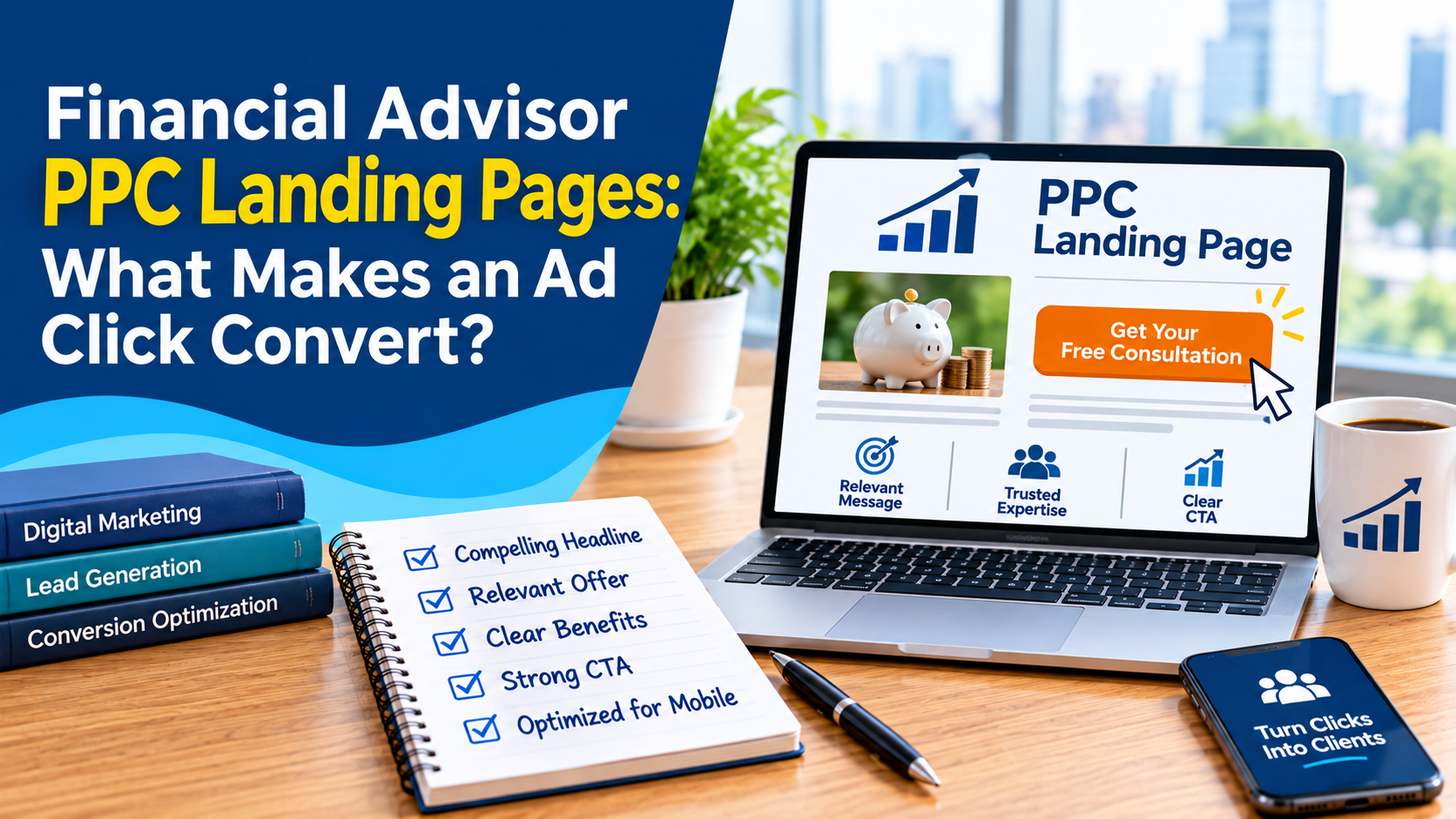
Predictive analytics adds another layer by helping firms evaluate available information and identify patterns that can support better decisions. However, turning those insights into qualified inquiries also requires an effective online presence. A high-converting financial advisor landing page can help firms turn relevant website traffic into potential client inquiries.
The goal is not to replace traditional prospecting. It is to make the process more informed and organized.
Why Do Financial Advisors Need Better Prospect Identification?
Generating leads is important, but generating relevant leads is often more valuable.
Financial advisors typically work with people who have different financial goals, service requirements, and levels of interest. Someone researching retirement planning may have very different needs from someone looking for insurance coverage or investment management.
Without a clear process for identifying and prioritizing prospects, advisors may spend considerable time following up with people who are not currently interested in their services.
Here are some common challenges predictive analytics can help address.
Not Every Lead Is Ready to Become a Client
A person who downloads an educational guide may be interested in learning more but may not be ready to schedule a consultation.
Similarly, someone who visits a financial advisor’s website once may still be comparing different firms.
Predictive insights can help distinguish between different engagement patterns. For example, repeated visits to relevant service pages combined with a consultation request may indicate stronger interest than a single website visit. By connecting these engagement signals with an AI-powered client acquisition funnel for financial advisors, firms can better organize lead qualification, personalize follow-ups, and guide interested prospects toward a consultation.
These signals should be treated as indicators, not proof of a person’s financial needs or intention to purchase.
Marketing Budgets Can Be Wasted on Low-Quality Leads
Financial firms invest in search engine optimization (SEO), paid advertising, email campaigns, webinars, and other marketing activities.
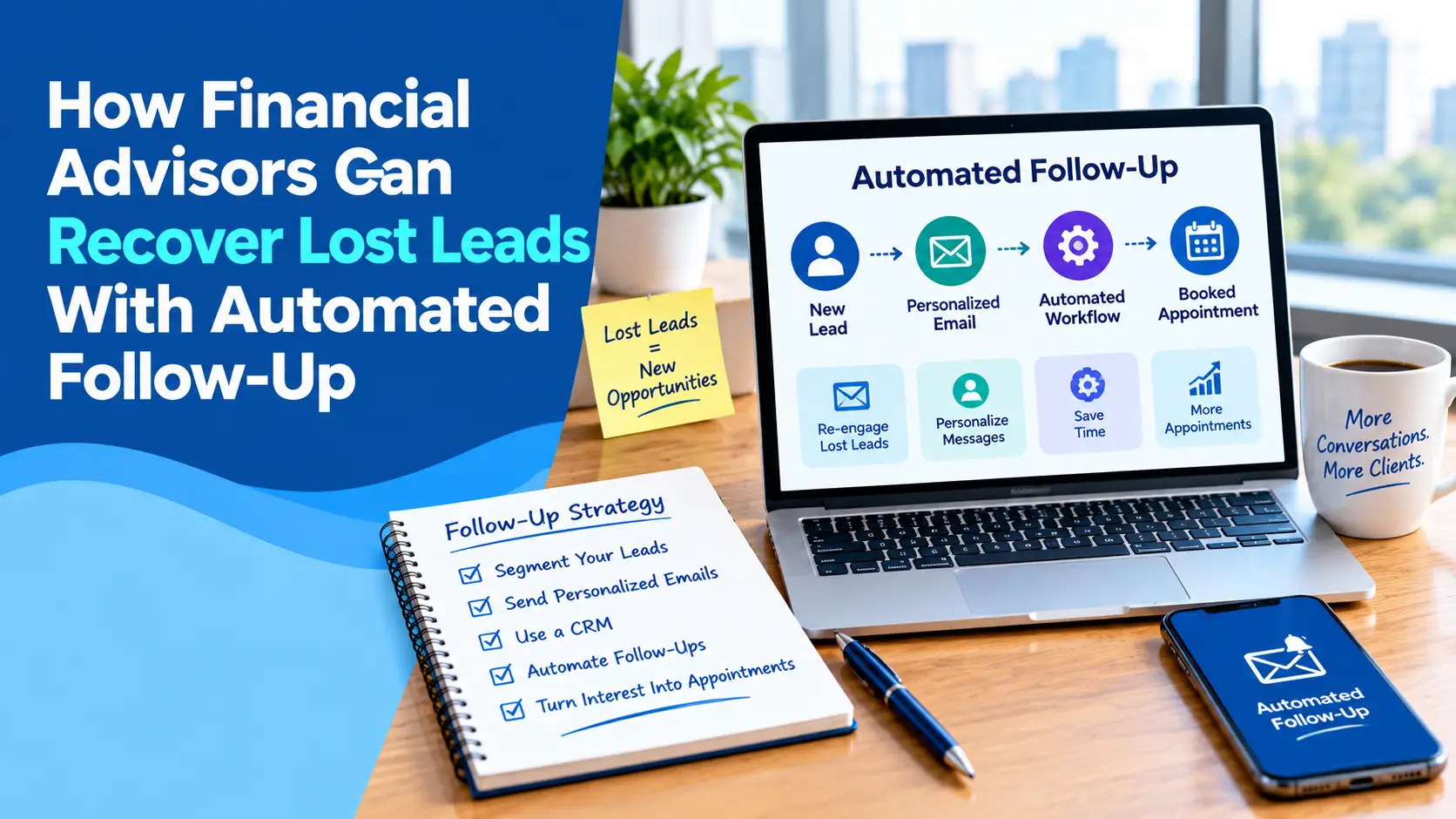
However, without proper tracking, it can be difficult to understand which channels are generating meaningful business opportunities. Businesses also need a process for following up with prospects who show interest but do not convert immediately. Implementing automated follow-up strategies to recover lost leads can help financial advisors re-engage potential clients and avoid missing opportunities.
Predictive analytics can help firms examine historical campaign performance and identify audience segments or marketing sources associated with stronger engagement.
This information can support better decisions about where to allocate marketing resources.
Advisors Need More Than Just a High Number of Leads
A campaign that generates 500 inquiries is not necessarily more successful than one that generates 100 inquiries.
What matters is how many leads are relevant, how many become qualified appointments, and how many eventually become clients.
By focusing on lead quality rather than lead volume alone, financial advisors can build a more practical approach to client acquisition.
For additional guidance, see Financial Advisor Marketing: What Actually Brings You Clients (and What Doesn’t).
How Can Predictive Analytics Help Financial Advisors Find Better Prospects?
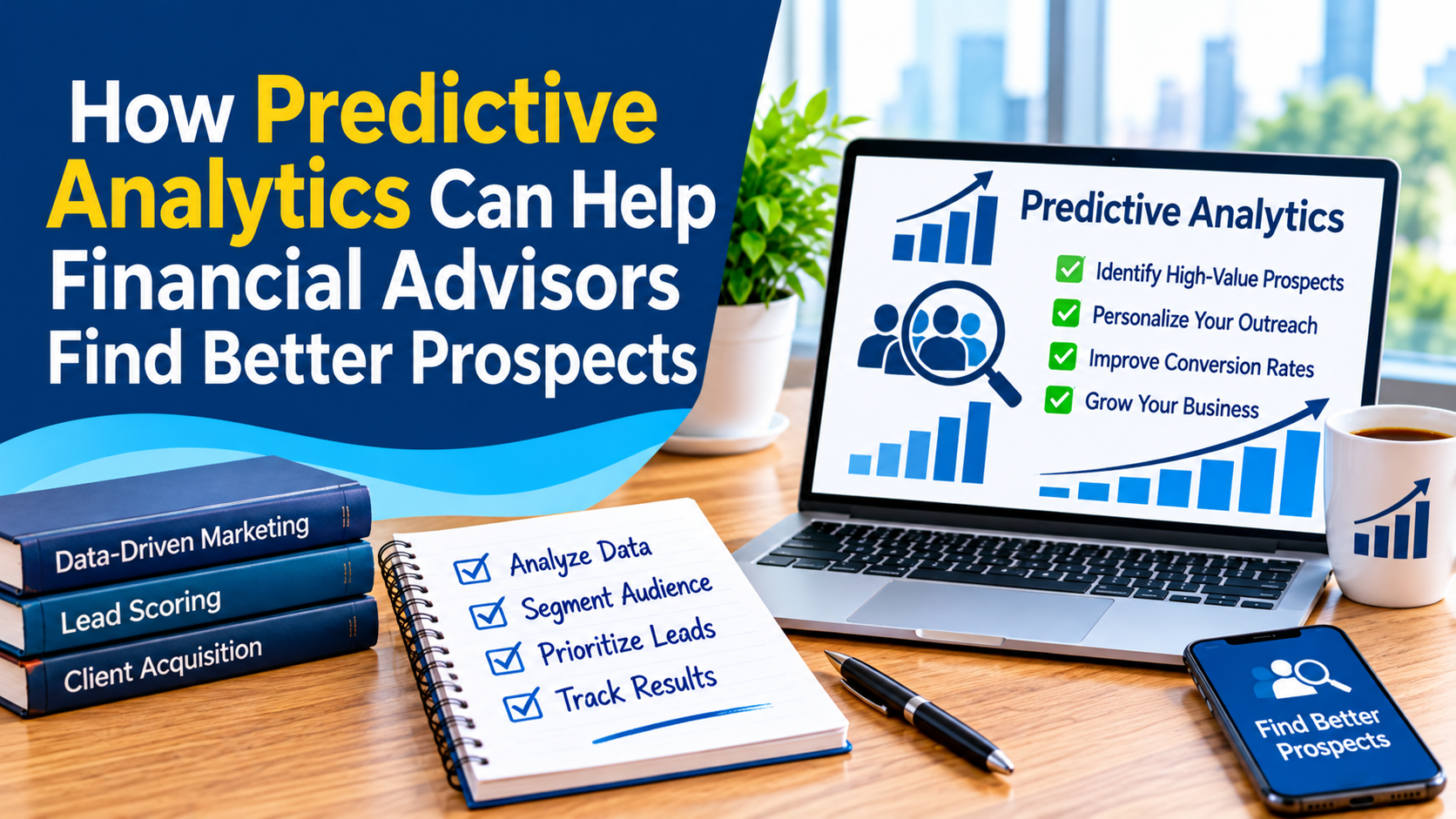
Predictive analytics helps financial advisors analyze prospect data, identify engagement patterns, and prioritize leads that may be more likely to become qualified appointments.
1. Identify Prospects Most Likely to Convert
By analyzing previous inquiries and appointment records, advisors can identify patterns associated with stronger prospect engagement and improve audience targeting.
2. Improve Lead Scoring and Prioritization
Lead scoring evaluates prospect interactions, such as consultation requests, webinar attendance, email engagement, and service page visits, helping teams prioritize follow-ups.
3. Understand Prospect Behavior and Interests
Website visits, content downloads, and webinar registrations can reveal which financial topics interest potential clients, helping firms create more relevant marketing content.
4. Personalize Marketing Campaigns
Predictive insights help advisors segment audiences and deliver relevant educational content based on their interests, service needs, and engagement.
5. Improve Follow-Up Timing
By tracking prospect interactions, firms can identify opportunities for timely follow-ups and use CRM automation to manage communication more consistently.
What Data Can Financial Advisors Use for Predictive Analytics?
Financial advisors can use existing CRM and marketing data to identify prospect behavior, understand audience interests, and improve lead prioritization.
CRM and Historical Lead Data
CRM records provide information about lead sources, inquiries, appointment history, follow-ups, and previous conversions. This helps firms identify which channels generate meaningful opportunities.
Website and Content Engagement Data
Website visits, service page views, content downloads, and contact form submissions help advisors understand which topics attract potential clients.
Email and Webinar Engagement
Email clicks, webinar registrations, attendance, and follow-up responses provide insights into prospect interests and engagement levels.
Client and Prospect Segmentation Data
Grouping prospects by service interest, lead source, and engagement helps firms deliver more relevant marketing messages and organize follow-ups.
How Predictive Analytics Improves Financial Advisor Lead Generation
Predictive analytics helps financial advisors use prospect data to improve marketing decisions and identify better business opportunities.
Better Audience Targeting
Identify audience segments that have historically shown stronger engagement with your services.
More Effective Marketing Campaigns
Analyze campaign performance to understand which channels generate relevant inquiries and qualified appointments.
More Relevant Lead Nurturing
Use prospect interests and engagement patterns to deliver relevant educational content and follow-up communication. Explore our guide to Content Marketing for Financial Advisors.
Better Appointment-Setting Opportunities
Combine lead scoring, CRM tracking, and timely human follow-ups to identify prospects who may be ready for a conversation.
Predictive Analytics vs. Traditional Financial Advisor Prospecting
Both approaches can play an important role in financial advisor marketing. The difference is how information is used to identify and prioritize opportunities.
Factor | Traditional Prospecting | Predictive Analytics |
Lead identification | Manual research and broad targeting | Data-based prospect identification |
Lead prioritization | Often based on individual judgment | Uses defined scoring models |
Prospect insights | Based on available direct interactions | Identifies patterns across historical data |
Follow-ups | Often follows a fixed schedule | Can use engagement indicators |
Marketing decisions | Based on experience and campaign results | Supported by historical patterns and predictive estimates |
Campaign optimization | Often reactive | Can help identify potential opportunities |
Main objective | Generate and manage leads | Improve prospect prioritization |
Predictive analytics does not replace referrals, networking, professional relationships, or direct conversations. Instead, it adds another source of information that can help financial advisors make more informed decisions.
How Can Financial Advisors Use Predictive Analytics in Their Marketing Strategy?
Predictive analytics can improve financial advisor marketing by connecting prospect insights with SEO, email campaigns, webinars, and CRM automation.
Combine Predictive Insights With SEO for Financial Advisors
Analyze search trends, website visits, and content performance to identify topics that attract relevant prospects and improve SEO strategies.
Improve Email Marketing for Financial Advisors
Use engagement data to segment audiences and send relevant educational content. Follow applicable email marketing requirements. Learn more about Financial Email Marketing Compliance.
Use Webinars to Identify Interested Prospects
Track registrations, attendance, questions, and follow-up interactions to understand audience engagement. Explore Financial Advisor Webinar Marketing for appointment-setting strategies.
Connect Predictive Analytics With CRM and Automated Follow-Ups
Integrate lead scoring and engagement data into your CRM to prioritize prospects, schedule timely follow-ups, and track appointment outcomes.
What Are the Limitations of Predictive Analytics for Financial Advisors?
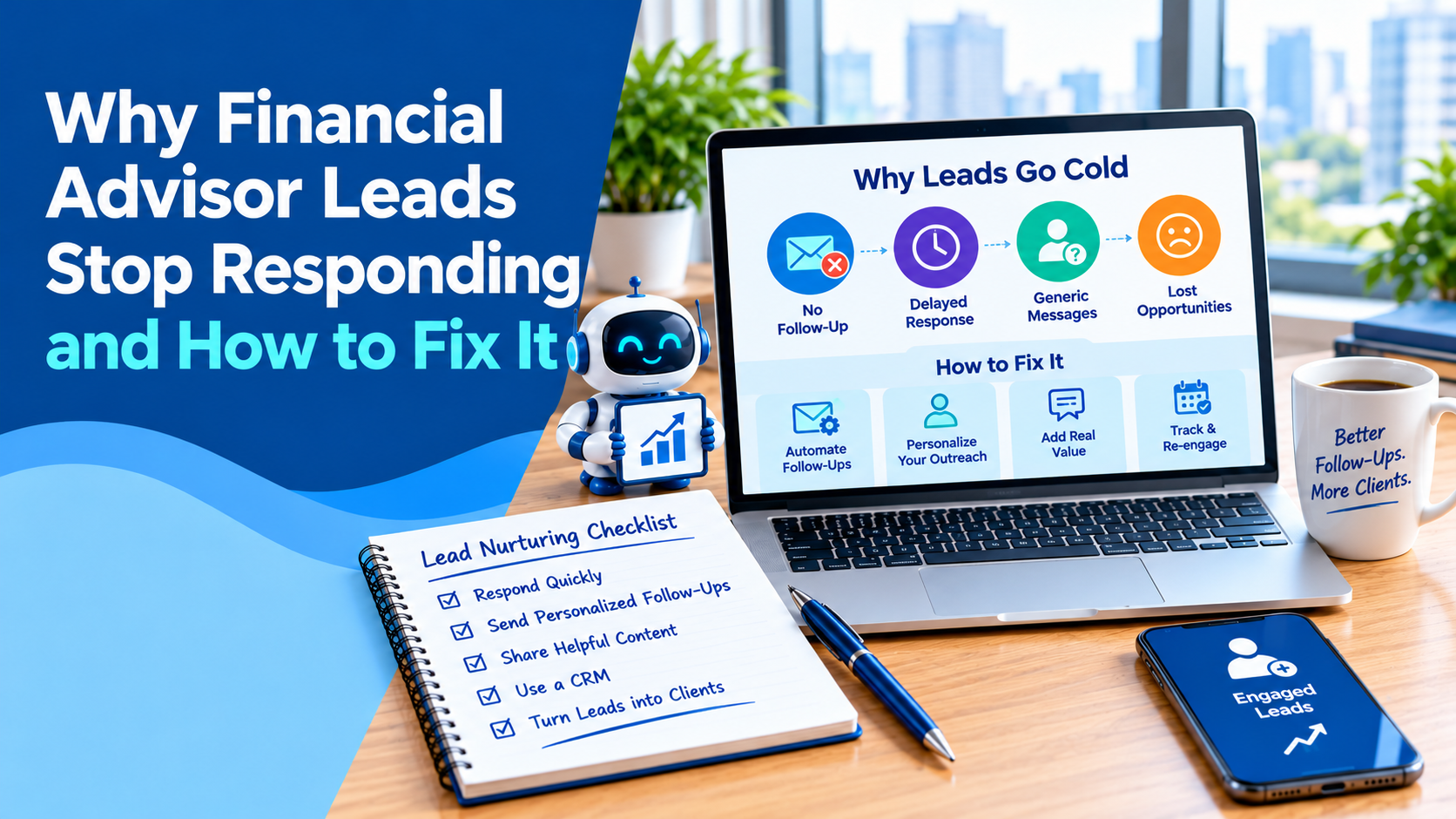
Predictive analytics can support marketing decisions, but financial firms should understand its limitations. Data can help identify promising prospects, but it does not guarantee that leads will respond or convert. Understanding why financial advisor leads stop responding can help firms identify follow-up gaps and improve their lead engagement strategies.
Poor Data Can Lead to Poor Predictions
Incomplete, outdated, or duplicate CRM records can produce unreliable insights. Maintain accurate data.
Predictive Models Are Not Always Accurate
Lead scores estimate potential outcomes; they do not guarantee appointments or new clients.
Privacy and Regulatory Compliance Matter
Financial firms should follow applicable data privacy, security, and marketing requirements. Review the FTC Privacy and Security Guidance and SEC Investment Adviser Marketing Compliance Guide.
Human Follow-Up Is Still Important
Technology can help prioritize prospects, but personal communication and professional judgment remain essential in financial services.
What Should Financial Advisors Look for in Predictive Analytics Tools?
When evaluating predictive analytics tools, financial advisors should consider these seven features:
- CRM Integration: Organizes prospect information in one place.
- Lead Scoring: Helps prioritize prospects based on relevant engagement.
- Marketing Automation: Supports consistent follow-up workflows.
- Campaign Tracking: Measures marketing performance and lead sources.
- Reporting and Analytics: Provides useful performance insights.
- Privacy and Security: Protects prospect information and supports compliance requirements.
- Ease of Use: Makes the platform practical for everyday marketing activities.
Choose tools that fit your firm’s needs, existing systems, and marketing goals rather than investing in unnecessary complexity.
How to Build a Predictive Analytics Strategy for Financial Advisor Lead Generation
Financial firms can start with a simple, structured approach to use predictive analytics effectively.
Step 1: Define Your Ideal Prospect
Identify your target audience, services, and the characteristics of a qualified lead.
Step 2: Organize Existing Data
Review CRM records and marketing data. Remove duplicates, update missing information, and maintain accurate records.
Step 3: Identify Meaningful Prospect Signals
Track relevant interactions such as consultation requests, webinar attendance, and email engagement.
Step 4: Introduce Lead Scoring
Assign scores based on prospect interactions and historical results to prioritize follow-ups.
Step 5: Connect Insights to Marketing
Use predictive insights to improve audience targeting, email campaigns, webinar follow-ups, and appointment-setting workflows.
Step 6: Measure and Refine Performance
Monitor qualified inquiries, appointment rates, conversion rates, and marketing costs to identify areas for improvement.
Common Mistakes Financial Advisors Should Avoid When Using Predictive Analytics
Financial advisors should avoid these common mistakes when implementing predictive analytics:
- Focusing only on lead volume: Prioritize lead quality and qualified appointments.
- Using poor-quality data: Keep CRM records accurate and updated.
- Treating predictions as guarantees: Predictive scores are estimates, not confirmed outcomes.
- Ignoring privacy requirements: Follow applicable data protection and marketing regulations.
- Over-automating communication: Maintain personal follow-up and meaningful conversations.
- Ignoring business results: Measure qualified appointments and client acquisition, not just clicks and email opens.

Final Thoughts: Using Predictive Analytics to Find Better Financial Advisor Prospects
Finding better prospects is not simply about increasing the number of people who see a financial advisor’s marketing campaigns. It is about understanding which audiences are relevant, identifying meaningful engagement, and creating a consistent process for turning inquiries into conversations. With the right strategy, financial advisors can focus on generating booked appointments rather than simply increasing lead volume.
Predictive analytics can help financial advisors achieve this by analyzing historical information, identifying patterns, improving lead prioritization, and supporting more relevant marketing activities.
However, technology alone is not enough. Firms also need accurate CRM records, useful educational content, appropriate marketing practices, and consistent human follow-up.
For financial advisors and insurance agents looking to improve their client acquisition process, combining data-driven marketing with effective appointment-setting workflows can provide a more structured approach to finding and engaging potential clients.
Revenx helps financial advisors and financial services firms strengthen their marketing and lead management processes through digital marketing, automation, and appointment-setting strategies. Explore how a more organized marketing approach can help your firm create opportunities for qualified conversations. Learn more about Revenx’s financial services marketing solutions and how they can support your firm’s growth.
FAQs About Predictive Analytics for Financial Advisors
1. What is predictive analytics for financial advisors?
Predictive analytics uses historical data, statistical methods, and analytical models to estimate future outcomes. Financial advisors can use it to examine prospect engagement, identify patterns in previous inquiries, and prioritize leads based on indicators associated with qualified appointments.
2. How can predictive analytics help financial advisors find better prospects?
Predictive analytics can help financial advisors analyze historical lead data, website interactions, email engagement, and webinar activity. These insights can identify patterns associated with stronger prospect engagement, helping firms improve audience targeting, lead prioritization, and follow-up decisions.
3. How does predictive lead scoring work in financial services?
Predictive lead scoring analyzes historical prospect information and interactions to estimate the likelihood of a defined outcome, such as scheduling an appointment. It can assign scores based on relevant patterns, helping marketing and sales teams prioritize follow-up activities.
4. What data do financial advisors need for predictive analytics?
Financial advisors can start with CRM records, previous inquiries, appointment histories, website engagement, email interactions, and webinar participation. The information should be accurate, relevant, and collected and used in accordance with applicable privacy and regulatory requirements.
5. Can predictive analytics improve financial advisor lead generation?
Predictive analytics can support lead generation by helping firms identify relevant audience segments, prioritize prospects, and evaluate marketing performance. When combined with appropriate follow-up and useful educational content, it can help create a more organized prospect acquisition process.
Disclaimer:
This article is for general educational and informational purposes only. It does not constitute financial, investment, legal, or tax advice. Predictive analytics provides estimates based on available data and does not guarantee prospect behavior, qualified appointments, or business results. Financial firms should consult qualified legal and compliance professionals to ensure their data collection, privacy, security, and marketing practices meet applicable requirements.