- Written & Reviewed by Jeremy
- Published
- Last Updated Oct 28, 2026
Generating leads is only the first step in growing a financial advisory business. The real challenge begins when prospects stop replying to emails, ignore calls, or leave appointment requests unanswered. When financial advisor leads stop responding, the problem may be slow follow-up, unclear messaging, poor lead quality, or a lack of consistent nurturing.
The solution is not always to generate more leads. Financial advisors should first understand where prospects lose interest, improve their follow-up process, and make it easier for interested people to take the next step. A combination of personalized communication, useful educational content, customer relationship management (CRM) tools, and appropriate automation can help advisors build stronger prospect relationships and improve their chances of booking qualified appointments.
A prospect might visit your website, download a retirement guide, or register for a webinar. But if they do not receive relevant follow-ups or understand the next step, they may lose interest before booking a consultation.
In this guide, we will explore why financial advisor leads go cold, how to re-engage unresponsive prospects, and how to build a follow-up system that supports long-term business growth.
The goal is not to automate every conversation. It is to help your team spend less time managing repetitive tasks and more time connecting with the right prospects.
Why Do Financial Advisor Leads Stop Responding?
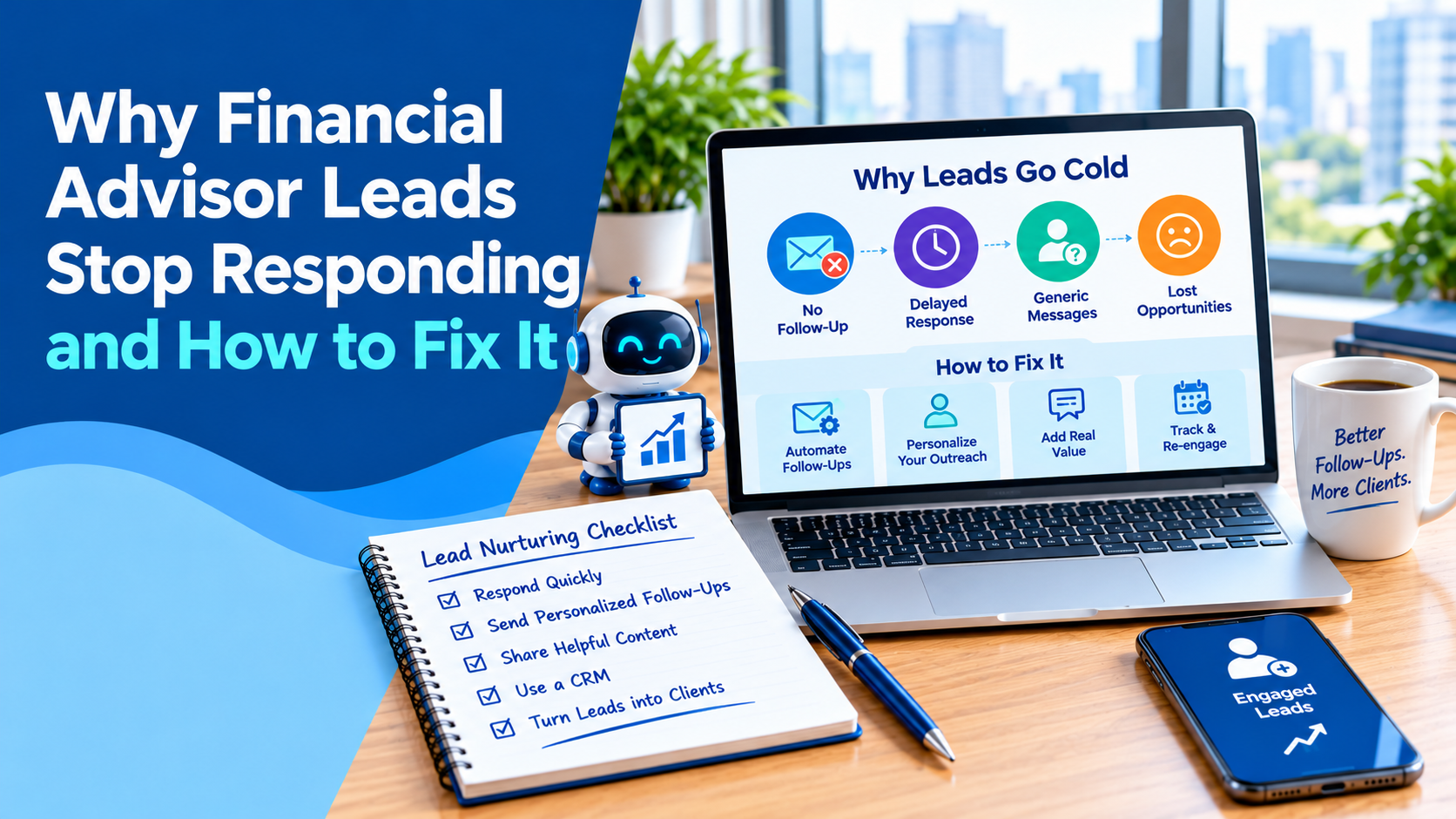
Financial advisor leads may stop responding because they are not ready to book, receive delayed follow-ups, or find messages irrelevant. Poor lead quality and unclear communication can also contribute.
1. They Are Not Ready to Act
Some prospects are still researching or comparing advisors.
How to fix it: Share helpful information and let prospects schedule a conversation when ready.
2. Follow-Up Is Too Slow
Delayed responses can cause prospects to lose interest or contact another advisor.
How to fix it: Set clear response-time targets and assign responsibility for new inquiries.
3. Messages Are Too Generic
Repeated messages like “Just checking in” give prospects little reason to reply.
How to fix it: Personalize messages based on the prospect’s original inquiry.
4. Your Value Is Unclear
Prospects may not understand how your services address their needs.
How to fix it: Explain what they can expect from an initial consultation without promising specific outcomes.
5. Leads Are Poorly Qualified
Some inquiries may not match your services, location, or client requirements.
How to fix it: Clarify your target audience and use appropriate intake questions.
6. Too Many Follow-Ups
Frequent, repetitive messages can frustrate prospects and damage trust.
How to fix it: Use a reasonable follow-up schedule, respect communication preferences, and honor opt-out requests.
What Happens When Financial Advisor Leads Go Cold?
When financial advisor leads stop responding, firms may waste marketing budgets, spend more time chasing prospects, and lose potential clients to competitors.
Use SEO, blogs, webinars, email newsletters, and paid campaigns to reach relevant audiences. AI can help identify content topics and audience interests.
Poor CRM tracking also makes it harder to identify gaps in lead quality, follow-up, and appointment booking.
To measure marketing performance effectively, focus on qualified conversations and attended appointments, not just the number of leads generated.
How Quickly Should Financial Advisors Follow Up With New Leads?
A practical approach is to respond as soon as reasonably possible during business hours, especially when someone has explicitly requested contact. However, a fast response alone may not be enough to convert website visitors into prospects. Understanding why a financial advisor’s website gets traffic but no leads can help identify gaps in messaging, calls to action, and lead capture. The right response time also depends on the source of the inquiry, staffing capacity, and the prospect’s expectations.
For example, a person requesting a consultation may expect a direct response. Someone downloading a general educational guide may be better served by a useful resource followed by a relevant invitation to talk.
Establish a Response-Time Standard
Create a simple process that defines who receives new inquiries, who is responsible for responding, and what happens when the assigned person is unavailable.
For example, your firm could aim to acknowledge consultation requests within one business hour when staffing permits. This is an internal service target, not a universal industry benchmark or a guarantee of improved conversion.
Match the Follow-Up to the Lead Source
Different sources suggest different levels of intent:
- Consultation request: Acknowledge the request and offer clear scheduling options.
- Website inquiry: Answer the question that prompted the submission.
- Educational download: Provide related information before making a consultation offer.
- Webinar registration: Share relevant next steps based on the event topic and the attendee’s expressed interest.
The objective is to make the next interaction feel like a natural continuation of the prospect’s original action.
How to Fix Financial Advisor Leads That Stop Responding
Improve follow-ups by making communication relevant, helpful, and easy to answer.
1. Personalize the First Follow-Up
Reference the prospect’s original inquiry and address their specific needs.
2. Address Their Concerns
Share relevant information about retirement planning, insurance, or their requested topic.
3. Use a Clear Call to Action
Offer a simple next step, such as scheduling an introductory conversation.
4. Provide Value First
Share educational guides, articles, or webinar recordings before asking for a meeting.
Explore Content Marketing for Financial Advisors for more ideas.
5. Make Responding Easy
Offer a scheduling link or let prospects suggest a convenient time to reconnect.
How to Build a Follow-Up Sequence for Financial Advisor Leads
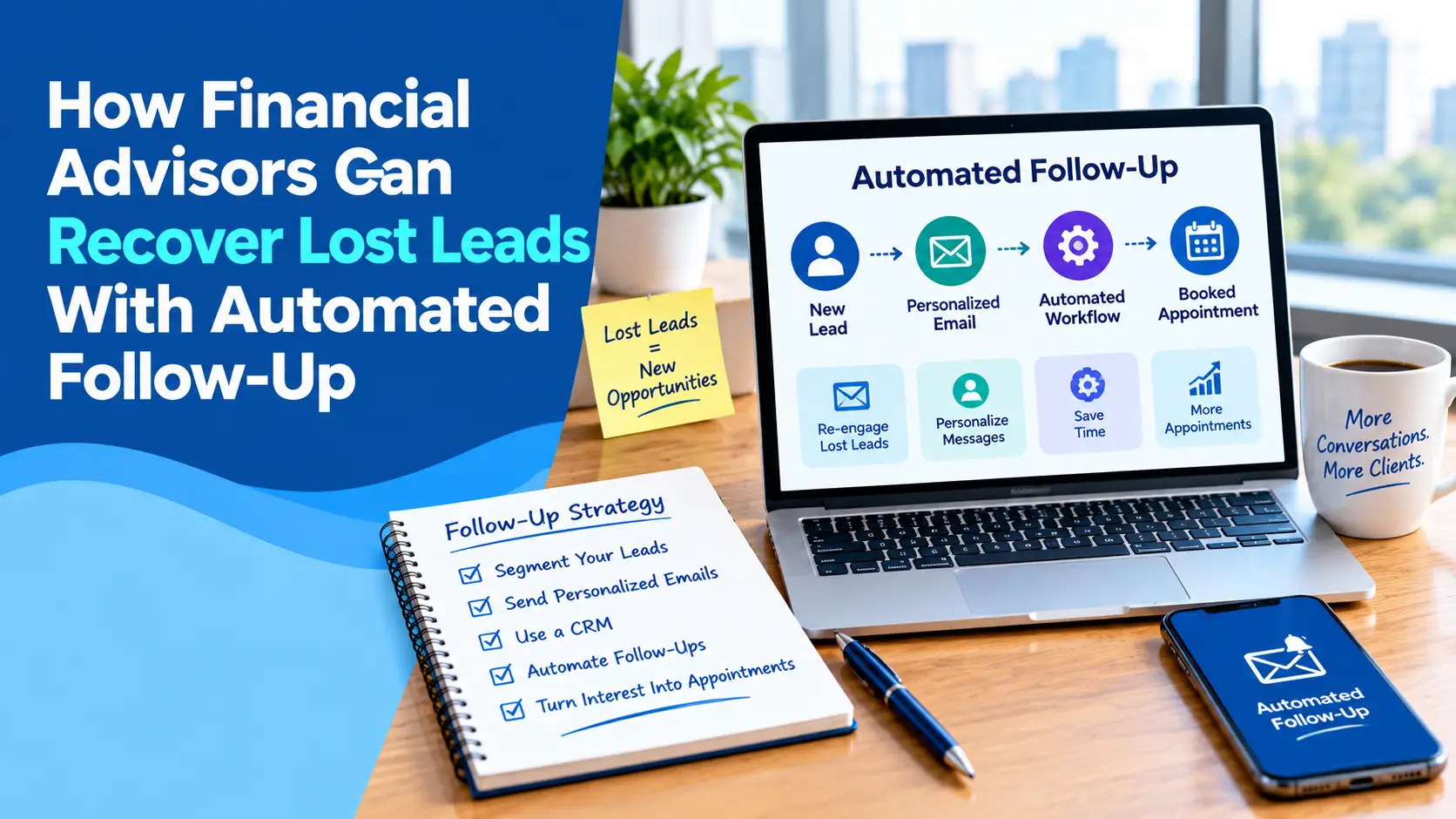
A follow-up sequence creates consistency and reduces the risk of forgetting an inquiry. It should not become a rigid schedule that ignores prospect behavior or communication preferences.
The following is an illustrative framework. Adjust the timing and frequency to your firm’s needs, the lead source, and applicable communication requirements.
Timing | Follow-Up Action | Purpose |
Day 0 | Acknowledge the inquiry and answer the initial question | Establish contact |
Day 2 | Share a relevant resource or clarification | Provide useful information |
Day 5 | Address a common question related to the inquiry | Build understanding |
Day 8 | Offer a convenient way to book a conversation | Make the next step clear |
Day 14 | Send a brief, respectful check-in if appropriate | Determine whether interest remains |
Later, if appropriate | Reconnect based on a relevant update or expressed preference | Maintain a useful relationship |
The schedule should change when a prospect responds, books a meeting, declines further contact, or asks to reconnect at a later date.
Example: A Respectful Re-Engagement Email
Subject: Would it be helpful to reconnect?
Hi [First Name],
You previously reached out to us about [original topic]. I wanted to check whether this is still something you’re exploring.
If it is, I’m happy to share more information or help you understand what an initial conversation would involve.
If your priorities have changed, that’s completely fine too.
Best,
[Advisor Name]
The message is short, acknowledges the original interaction, and gives the prospect room to decide what happens next.
Email, Phone, and Text: Which Follow-Up Channel Works Best?
There is no single best channel for every financial advisor lead. The right choice depends on how the prospect contacted you, the nature of the inquiry, their communication preferences, and the rules that apply to your firm.
Follow-Up Channel | Best Use Case | Main Advantage | Potential Limitation |
Educational information and follow-up reminders | Easy to personalize and document | Messages may be overlooked | |
Phone | Responding to a direct consultation request | Allows a two-way conversation | Unanswered calls can create delays |
Text message | Appropriate reminders and requested updates | Convenient for brief communication | Consent and privacy considerations |
CRM automation | Organizing and coordinating follow-up | Supports consistency and task management | Generic sequences can feel impersonal |
Email Follow-Up for Financial Advisors
Use email to answer prospects’ questions, share relevant resources, and explain the next step. Keep messages concise, personalized, and clear.
Follow applicable email marketing rules, including accurate sender details, truthful subject lines, and clear opt-out options. See the FTC’s CAN-SPAM Compliance Guide.
For additional guidance, see Financial Email Marketing Compliance: What Advisors Must Know.
Phone Calls and Text Messages
Phone calls can be useful when a prospect has explicitly requested a conversation or when a specific question needs clarification. Text messages may be appropriate for certain appointment-related communications when the firm has the necessary permissions and follows applicable rules.
Financial firms should review relevant telemarketing, consent, privacy, and recordkeeping requirements before launching multichannel campaigns. Do not assume that submitting a form automatically authorizes every type of promotional contact.
Your reporting should distinguish between booked appointments, attended meetings, qualified opportunities, and actual clients. These are different outcomes and should not be treated as interchangeable.
How CRM Automation Helps Financial Advisors Recover Unresponsive Leads
A customer relationship management system can help organize lead information, assign follow-up responsibilities, and record the history of interactions.AI may be worth considering when your firm already has a defined marketing process but struggles to manage it consistently.
However, automation works best when it supports thoughtful communication rather than sending the same messages to everyone.
Track Every Lead and Follow-Up Attempt
A CRM should show where an inquiry originated, who owns the next action, whether the prospect replied, and what happened after the initial contact.
This reduces the likelihood of duplicate messages, forgotten inquiries, and inconsistent handoffs between team members.
Segment Leads by Intent
Segmentation makes follow-up more relevant and helps advisors avoid treating every contact as an immediate sales opportunity.
For example, someone requesting a consultation may need a direct scheduling response. A person who downloaded a general guide may benefit from educational material first. A prospect who has asked to reconnect in three months should be handled according to that preference.
Tip: Start with one audience and one acquisition channel, measure the results, and expand once your process works consistently.
Not every lead should receive the same sequence.
Use Automation Without Losing the Human Touch
Automated reminders and task assignments can help teams stay organized. Personalized messages and conversations remain important when prospects have specific questions or concerns.Not every lead should receive the same sequence.
Before activating a workflow, review its messages, timing, triggers, and exit conditions. A prospect who books an appointment should not continue receiving reminders to book one. Someone who opts out of marketing communications should be removed from the relevant promotional sequence.
Firms should also review how their CRM and marketing tools handle personal information and access permissions.
For firms seeking a more coordinated process, AI Appointment Setting for Financial Advisors provides a relevant next step for exploring how automation can support appointment workflows.
How to Personalize Follow-Up Based on Lead Source
1. Leads From Paid Advertising
Tailor your first response to the specific ad or service the prospect inquired about.
2. Leads From Website Forms and Organic Search
Address the prospect’s original question and share relevant educational content.
3. Leads From Webinars and Educational Events
Send useful resources, answer event-related questions, and offer an optional consultation.Tailor your first response to the specific ad or service the prospect inquired about.
Explore Financial Advisor Webinar Marketing for more guidance.
4. Leads From Referrals
Acknowledge the introduction, explain how your services may help, and understand the prospect’s needs before suggesting next steps.
How to Re-Engage Financial Advisor Leads That Have Gone Cold
Before reaching out, review the prospect’s previous interactions and follow-up history.
- Reference the original inquiry: Remind them what they initially asked about.
- Share useful updates: Provide relevant educational content or information.
- Check their interest: Ask whether their priorities have changed.
- Make it easy to decline: Respect their preferences and avoid pressuring them.
Avoid misleading urgency or repeated unwanted messages.
Common Follow-Up Mistakes Financial Advisors Should Avoid
Avoid these common mistakes when following up with leads:
- Generic messages: Personalize communication to each prospect.
- No clear purpose: Make every follow-up useful.
- Overusing automation: Combine automation with personal communication.
- Tracking only email opens: Monitor replies, qualified appointments, and attendance.
- Ignoring opt-outs: Respect communication preferences and applicable rules.
- Making unsupported claims: Avoid misleading promises or guaranteed results.
Investment advisers subject to the SEC Marketing Rule should ensure their advertising complies with applicable requirements. See the SEC Investment Adviser Marketing Guide.
How to Measure and Improve Financial Advisor Lead Follow-Up
Track these key metrics to identify gaps in your follow-up process:
- Response time: How quickly inquiries receive a reply.
- Reply rate: How many prospects respond.
- Qualified appointment rate: How many suitable leads book meetings.
- Attendance rate: How many booked meetings take place.
- Lead-to-client conversion: How many prospects become clients.
Review results by campaign and lead source to identify opportunities for improvement.
When Should Financial Advisors Get Help With Lead Nurturing?
Consider additional support when your firm struggles with:
- Turning inquiries into qualified appointments.
- Managing follow-ups consistently.
- Coordinating communication across channels.
- Using CRM tools effectively.
- Measuring marketing performance.
A specialized financial services marketing agency can help coordinate lead generation, content, CRM workflows, and appointment setting.
How Revenx Can Help Financial Advisors Improve Lead Follow-Up
Revenx helps financial professionals explore coordinated marketing and appointment-setting strategies, including marketing solutions for agencies and IMOs, content marketing, email workflows, and CRM automation.
Start by identifying where prospects disengage, then improve the relevant part of your process instead of adding tools unnecessarily.

Final Thoughts: Turn More Financial Advisor Leads Into Meaningful Conversations
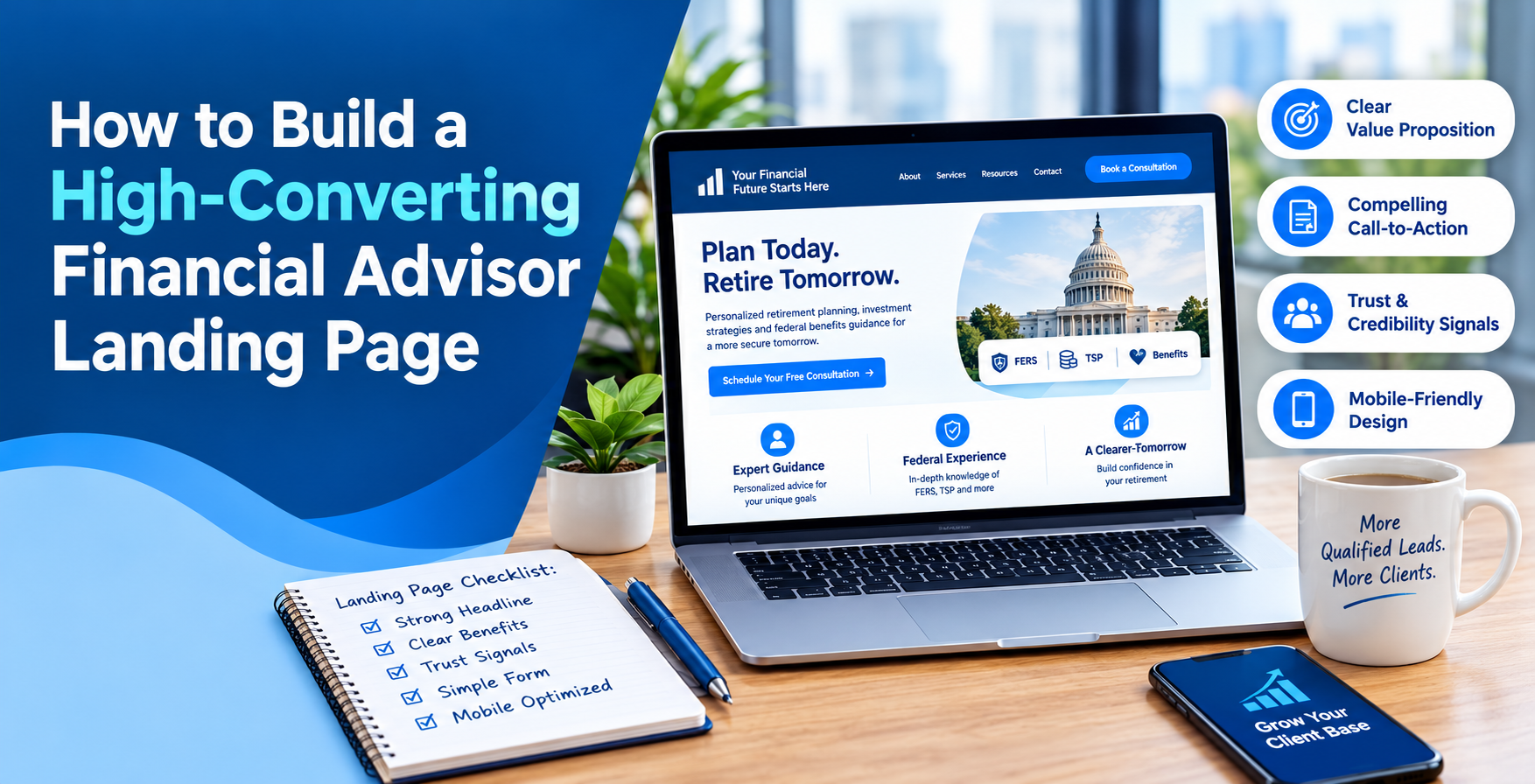
When financial advisor leads stop responding, the answer is not necessarily to increase advertising spend or send more reminders. A high-converting landing page for financial advisors can help address this challenge by providing clear information, relevant messaging, and a straightforward next step. Prospects may also need faster responses or additional time to make a decision.
Start by reviewing your current follow-up process. Respond promptly to genuine inquiries, personalize communication, share useful educational resources, and use CRM automation to keep your team organized. Track qualified appointments and meaningful conversations instead of judging success by lead volume alone.
Most importantly, respect each prospect’s preferences and make it easy for them to decide whether they want to continue. A consistent, helpful follow-up system, supported by a clear booked appointment generation process, can create a better experience for prospects while giving your firm a clearer way to evaluate and improve its marketing.
If your firm is generating inquiries but struggling to turn them into booked meetings, reviewing your lead-nurturing and appointment-setting process is a practical place to start.
FAQs About Financial Advisor Leads Stop Responding
1. Why do financial advisor leads stop responding?
Financial advisor leads may stop responding because they are not ready to make a decision, receive delayed follow-ups, or find the messages irrelevant. Poor lead quality and unclear communication can also contribute. Reviewing response times, lead sources, and follow-up messages can help identify the problem.
2. How can AI help financial advisors generate qualified leads?
Financial advisors should aim to acknowledge new inquiries promptly during business hours. A clear response process helps ensure leads receive timely attention while their original inquiry is still relevant. Consistent follow-up and personalized communication can help build trust.
3. How many times should a financial advisor follow up with a lead?
There is no fixed number of follow-ups that works for every prospect. Advisors should consider the lead’s original inquiry, engagement, and communication preferences. Use a reasonable, well-spaced follow-up sequence and stop promotional contact when required or requested.
4. How do you re-engage cold leads in financial services?
Re-engage cold leads by referring to their original inquiry, sharing relevant educational resources, or asking whether their needs have changed. Keep messages personalized and helpful rather than sending repeated generic reminders. Always respect communication preferences and applicable compliance requirements.
5. Does CRM automation help financial advisors convert more leads?
CRM automation helps financial advisors organize prospect information, assign leads, schedule reminders, and maintain consistent follow-ups. When combined with relevant messaging and appropriate lead targeting, it can improve the follow-up process. However, automation alone does not guarantee more appointments or new clients.
Disclaimer:
This article is for informational and educational purposes only. Revenx does not provide legal, financial, tax, or regulatory advice. Marketing strategies and automation do not guarantee leads, appointments, rankings, or revenue. Financial professionals should review applicable compliance requirements before implementing marketing activities.