- Written & Reviewed by Jeremy
- Published
You’re spending money on ads. Leads are coming in. But somehow, your calendar still looks empty.
If that sounds familiar, you’re not alone. Most financial advisors struggle with the same problem: plenty of leads, very few booked appointments. The gap between a lead filling out a form and that same person showing up on a call is where most marketing budgets quietly disappear.
This guide breaks down exactly why that happens and what you can do about it. We’ll look at lead quality, follow-up speed, nurturing, and the appointment setting systems that actually move prospects from “interested” to “on your calendar.”
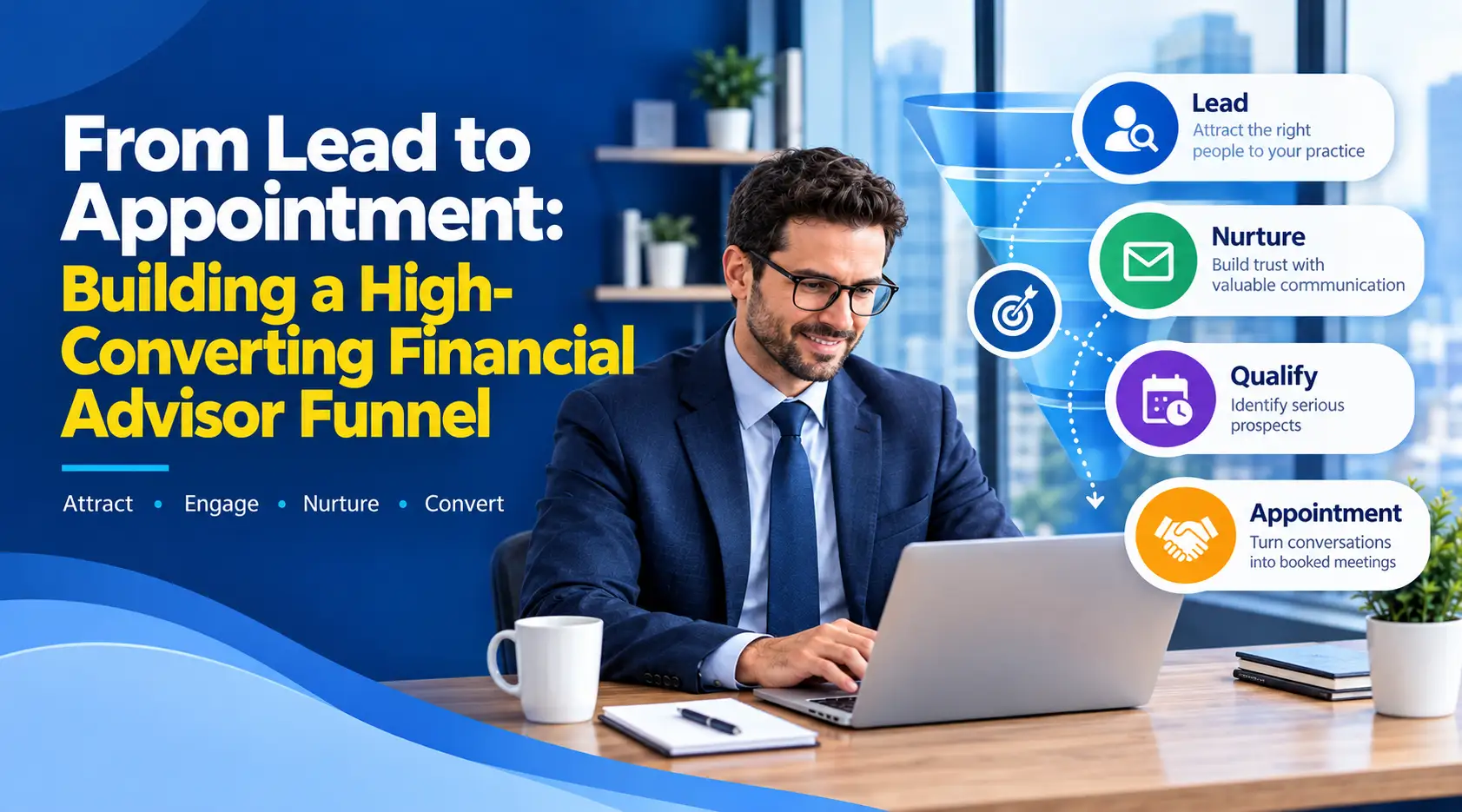
What Lead Conversion Really Means for Financial Advisors
Before we fix the problem, let’s define it clearly.
A lead is just contact information. Someone clicked an ad, filled out a form, or downloaded a guide. That’s it. They haven’t agreed to talk to you. They haven’t committed to anything.
A booked appointment is something completely different. It’s a specific time on your calendar where a qualified prospect has agreed to have a real conversation about their finances. That’s the only thing that actually moves your business forward.
The mistake most advisors make is treating these two things as the same. They count leads as wins. But a lead that never books a call is essentially worthless, no matter how cheap it was. Financial advisor lead conversion is the bridge between the two, and that bridge is where most advisors lose money.
When you start thinking in terms of booked appointments instead of raw leads, your entire approach to marketing changes. Suddenly the question isn’t “how many leads can I get?” It’s “how many of these leads will actually show up and be ready to buy?
Why Lead Quality Matters More Than Lead Volume
Here’s a hard truth: in most cases, 10 qualified leads are more valuable than 100 low-intent leads.
What makes a lead high quality for a financial advisor?
A few things matter most. The person should have investable assets that match your minimum. They should be in a life stage where financial planning makes sense, such as approaching retirement, going through a transition, or managing a recent windfall. They should have a real reason to talk to an advisor right now, not just curiosity. And they should understand what they signed up for.
That last point is where many lead generation campaigns fall apart. If your ad promises a “free retirement guide” but your follow-up immediately pushes a sales call, the prospect feels tricked. They ghost you. That’s not a lead problem. That’s a messaging problem creating fake leads.
Working with the right partner can solve this. If you’re comparing options, it helps to understand how lead generation companies actually filter and qualify prospects before they ever reach your inbox. Stronger partners screen for fit, while weaker providers may focus more on lead volume than lead quality.
How Slow or Weak Follow-Up Causes Leads to Go Cold
Follow-up speed can make or break appointment conversion.
Studies on lead response times have generally pointed to the same pattern: the odds of converting a lead tend to drop sharply after the first hour, and they fall off significantly after 24 hours. By day three, most leads are essentially cold.
Yet most financial advisors take far too long to respond. Some wait until the end of the day. Some wait until tomorrow. Some never call at all and just send an email, hoping the prospect will reply.
Here’s what’s happening on the other side. A 58-year-old looking at retirement options filled out three or four different forms that afternoon. She was researching. She wasn’t committed to anyone yet. The advisor who calls her in 10 minutes catches her while she’s still thinking about it. The advisor who calls two days later catches her after she’s already booked with someone else, or after she’s moved on entirely.
Weak follow-up is just as bad as slow follow-up. One voicemail and one email is not a follow-up sequence. It’s a token effort. Most prospects need five to eight touches before they respond, and those touches need to come through different channels: phone, text, email, and sometimes even a second call later in the week.
Financial advisor lead follow-up is a system, not a task. If it depends on you remembering to call people back, it usually becomes inconsistent.
Why Lead Nurturing Is Needed Before Prospects Book a Call
Not every lead is ready to book a call today. Some are months away from making a decision. That doesn’t mean they’re bad leads. It means they need nurturing.
Financial advisor lead nurturing is the process of staying in front of a prospect with helpful, low-pressure content until they’re ready to talk. It bridges the gap between “I clicked your ad” and “I’m ready to discuss my portfolio.”
What does good nurturing look like? Short, useful emails. Maybe a weekly market update. Maybe a video explaining a common retirement mistake. Maybe a checklist for people approaching age 60. The content isn’t about you. It’s about them. It builds trust over time so that when they’re ready, you’re the obvious choice.
Most advisors skip nurturing entirely. They either book the call on the first contact or they give up. That’s a massive missed opportunity, because a large share of leads who don’t book today may still be ready in the coming months, if someone stays in touch with them in a helpful way.
A simple nurture sequence might run for 90 days with two or three touches per week, then shift to a long-term newsletter cadence. It doesn’t have to be fancy. It just has to be consistent.
Trust is the other side of nurturing that often gets overlooked. Financial advisor prospects are not just comparing services. They are deciding whether they can trust someone with personal financial details, retirement savings, and long-term planning decisions. That is why lead conversion depends on more than speed. Advisors need follow-up that feels helpful, professional, and relevant rather than rushed or sales-heavy. Every email, text, and call is either building that trust or eroding it.
Common Mistakes That Stop Financial Advisor Leads From Converting
Let’s look at the specific mistakes that kill conversion rates. When financial advisor leads don’t convert, the cause is almost always something fixable in the process, not something wrong with the leads themselves. If you’re generating leads but not booking appointments, you’re probably doing at least three of these.
Mistake 1: No clear next step in the ad. If your ad says “learn more” instead of “book a 15-minute call,” you’re attracting browsers, not buyers. The call to action sets the expectation.
Mistake 2: A long form instead of a short one. Or sometimes the opposite. Long forms scare off casual interest. Short forms invite tire-kickers. The form should match the offer.
Mistake 3: Generic follow-up messages. Sending “Hi {FirstName}, thanks for your interest!” to everyone is worse than nothing. Prospects can tell when they’re getting a template. Personalize at least one line.
Mistake 4: Trying to sell before building trust. Financial decisions are emotional. People don’t move their life savings based on a 20-minute call with a stranger. They need to feel comfortable first.
Mistake 5: No appointment confirmation or reminder. Even when I read the book, there were many no-shows because nobody confirmed. A simple text reminder the day before can meaningfully reduce no-shows.
Mistake 6: Treating all leads the same. A 65-year-old with $2 million in IRAs needs a different conversation than a 40-year-old just starting to save. Segment your follow-up.
Mistake 7: Giving up too soon. If you stop after two contact attempts, you’ll miss most of the leads who would have converted on the fifth or sixth touch.
Comparing Raw Leads vs. Booked Appointments
Here’s a side-by-side look at why the distinction matters so much:
Factor | Raw Leads | Booked Appointments |
What you’re paying for | Contact information | Calendar time with a qualified prospect |
Qualification done | Usually none | Pre-screened for fit, assets, intent |
Effort required from advisor | High (call, qualify, nurture, book) | Low (show up and have the conversation) |
Typical conversion to client | Low | Noticeably higher when appointments are well-qualified |
Predictability | Low | High |
No-show rate | N/A (no appointment yet) | Lower when proper confirmation and reminders are used |
Best for | Advisors with strong in-house follow-up systems | Advisors who want to focus on closing, not chasing |
The math here is clarifying. If you’re paying for raw leads, you’re also paying for all the time spent chasing, qualifying, and following up before anyone is ready to talk. Even with a modest improvement in conversion, pre-qualified booked appointments for financial advisors often produce a lower effective cost per new client because more of the qualifying work is already done by the time the prospect lands on your calendar.
This is why many advisors are moving toward appointment-based models. The cost looks higher up front, but the actual cost per client is lower.
How to Build a Better Appointment Setting System
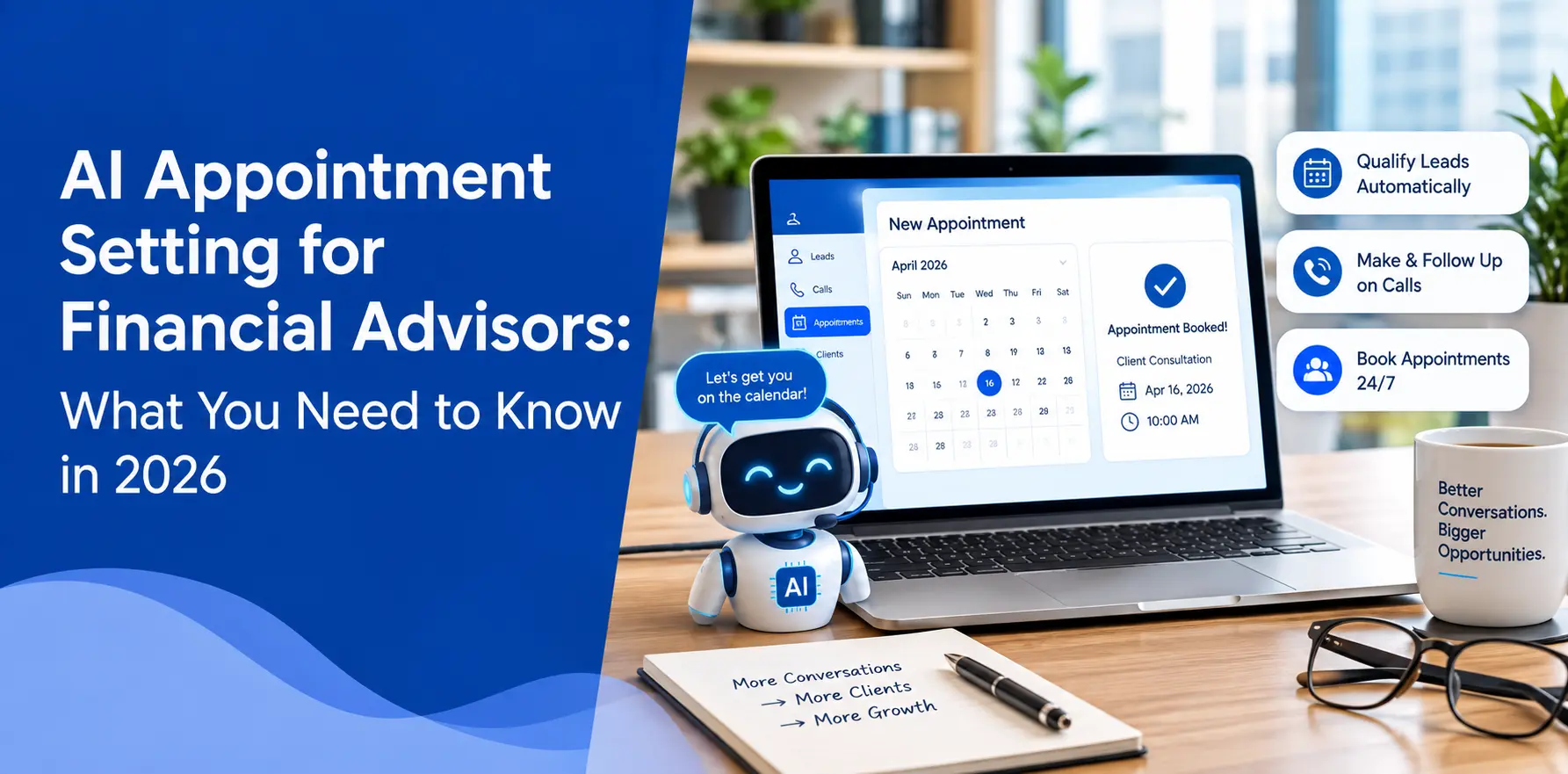
If you want to consistently turn leads into booked appointments, you need a system. Not a list of best practices. An actual system that runs whether you’re paying attention or not.
Here’s what that system should include.
A speed-to-lead rule. Every new lead gets a call attempt within 5 to 10 minutes during business hours, and within the first hour outside of business hours. This usually requires either a dedicated appointment setter or automated dialing software, because it’s almost impossible to maintain manually.
A multi-touch cadence. A standard cadence might look like this: call within 10 minutes, text within 30 minutes, email within an hour, second call same day, third call next day, then a slower drip for two to three weeks. You stop only when the lead books, opts out, or clearly disqualifies themselves.
A qualification framework. Before booking, your appointment setter should confirm a few basics: age range, asset level, reason for looking, and timeline. This filters out tire-kickers and ensures every call on your calendar is worth your time. Some advisors use a simple checklist. Others use scoring.
A confirmation sequence. Once an appointment is booked, send a confirmation immediately, then a reminder 24 hours before, then another reminder one hour before. This can meaningfully reduce no-shows.
A nurture path for “not yet” leads. Anyone who doesn’t book but isn’t disqualified goes into a long-term nurture sequence. They stay in your world. When they’re ready in three or six or twelve months, you’re the first call they make.
A measurement system. You should know your numbers: leads per day, contact rate, qualification rate, appointment rate, show rate, close rate. If you can’t see these numbers, you can’t improve them. Most advisors who feel stuck on conversion simply aren’t tracking the funnel.
Building this in-house is possible but slow. Many advisors get there faster by partnering with specialists. If that’s a path you’re considering, this overview of the best marketing agencies for financial services walks through what to look for in a partner.
You’ll also want to think about retention, not just acquisition. The advisors who win long-term are the ones with consistent pre-booked appointments showing up week after week. That predictability changes how you run your business.

Final Thoughts: Turning More Leads Into Qualified Booked Appointments
The reason financial advisor leads don’t convert isn’t usually because the leads are bad. It’s because the process between lead and appointment is broken.
You can fix it. Start by focusing on lead quality instead of lead volume. Then tighten your follow-up speed to minutes, not hours. Build a real cadence that touches each lead at least five times. Nurture the leads who aren’t ready yet. And put a real appointment setting system in place, with confirmation and reminders, so the people who do book actually show up.
None of this is exotic. It’s just disciplined execution of basic principles that most advisors skip. The ones who do it consistently end up with calendars full of qualified prospects and a predictable pipeline. The ones who don’t end up complaining that lead generation doesn’t work.
Lead generation works best when it is supported by strong follow-up, nurturing, and appointment setting.
Frequently Asked Questions
1. Why are my financial advisor leads not converting?
The most common reasons are slow follow-up, weak qualification, lack of nurturing for prospects who aren’t ready today, and treating all leads the same regardless of fit. Fixing speed and adding a multi-touch cadence usually produces the biggest immediate lift.
2. How can financial advisors convert more leads into appointments?
Respond within 10 minutes, follow up at least five to eight times across multiple channels, qualify before booking, confirm appointments with reminders, and nurture the leads who aren’t ready yet. The advisors who do all five consistently see conversion rates several times higher than those who don’t.
3. What causes poor lead quality for financial advisors?
Mismatched ad messaging, overly broad targeting, lead generation partners that prioritize volume over fit, and bait-and-switch offers that attract people who never intended to talk to an advisor. Quality starts with the ad and the audience, not just the form.
4. Why is follow-up important in financial advisor lead conversion?
Because most leads are not ready to commit on first contact. Industry research generally shows that responding quickly, ideally within minutes, performs much better than waiting hours, and that most leads who eventually convert do so after several touches rather than the first one. Without consistent follow-up, you’re leaving the majority of your potential conversions on the table.
5. Can lead nurturing help financial advisors get more booked appointments?
Yes, significantly. Many leads who are not ready to book immediately may still become ready within a few months. Consistent, helpful nurturing keeps you top of mind so you’re the advisor they think of when the timing is right.
6. Are booked appointments better than raw leads?
For most financial advisors, yes. Booked appointments are pre-qualified, pre-scheduled, and require far less effort to convert. The cost per appointment is higher than the cost per lead, but the cost per actual new client is usually lower because the conversion rate is much higher.
Disclaimer
This content is for informational and educational purposes only. It does not constitute financial, investment, legal, compliance, or marketing advice. Financial advisors and advisory firms should review all marketing materials, claims, testimonials, endorsements, disclosures, lead handling practices, and client communications with their compliance team or qualified legal counsel before publication or use. Results from any marketing platform, agency, or appointment-setting system may vary based on market conditions, offer, audience, follow-up process, compliance requirements, and firm-specific execution.