- Written & Reviewed by Jeremy
- Published
- Last Updated Aug 12, 2026
Organic leads vs paid leads is an important decision for financial advisors, insurance agents, and financial firms that want a consistent flow of qualified prospects. Organic leads come from unpaid channels such as Google search, SEO, educational content, referrals, and social media. Paid leads come from advertising campaigns that place a business in front of targeted prospects.
So, which is better?
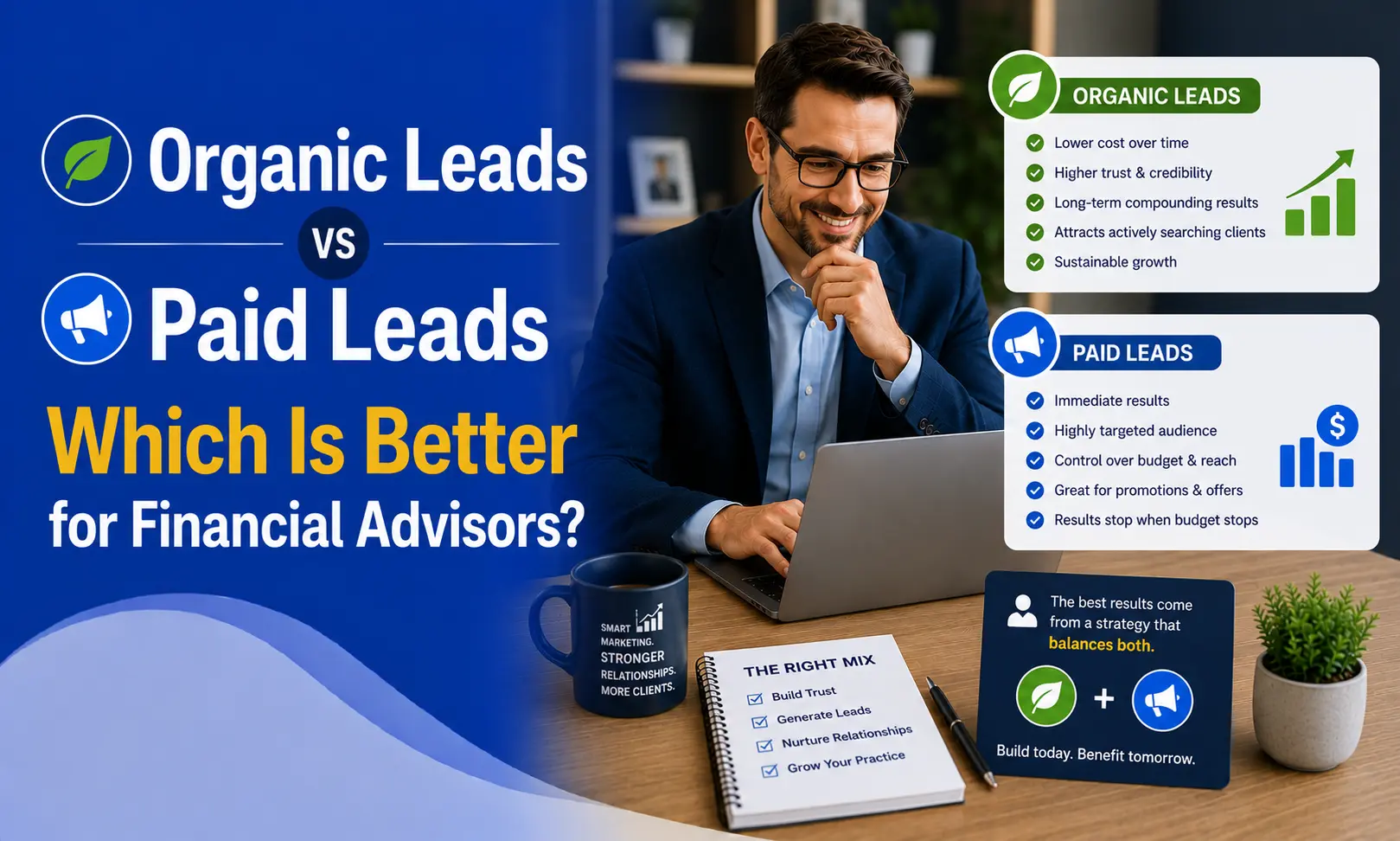
Organic leads are generally stronger for long-term visibility and sustainable growth, while paid leads are better for generating traffic and inquiries quickly. For many financial advisors, the best strategy is not choosing one over the other. It is using paid marketing to create immediate opportunities while building organic marketing assets that can generate leads over time.
The right approach depends on your budget, goals, audience, competition, lead quality, and how quickly you need new appointments.
What Are Organic Leads?
Organic leads are prospects who discover your financial firm through unpaid marketing channels. They may find you through a Google search, an educational article, a referral, an organic social media post, or a webinar.
For example, someone may search for “financial advisor for retirement planning” and find your website through an educational article. If they then complete a contact form or schedule a consultation, that person becomes an organic lead.
Common sources of organic leads include:
- SEO and Google search
- Educational blog content
- Local search
- Organic social media
- Referrals
- Webinars
- Downloadable guides
- Branded searches
- Existing website traffic
SEO for financial advisors is particularly valuable because it helps firms appear when potential clients are actively searching for answers, services, or solutions.
Organic lead generation usually takes time. However, once a website builds search visibility, a useful article or service page can continue attracting prospects without requiring the firm to pay for every click.
What Are Paid Leads?
Paid leads come from advertising campaigns where a financial firm pays to reach potential prospects.
Common paid lead sources include:
- Google Ads
- Meta Ads
- LinkedIn Ads
- Retargeting campaigns
- Sponsored content
- Paid webinar promotion
- Lead-generation advertising
The major advantage of paid marketing is speed. Instead of waiting for a page to gain organic visibility, a financial advisor can launch a campaign targeting specific keywords, audiences, locations, or services.
However, paid traffic does not automatically produce qualified prospects.
A campaign may generate hundreds of form submissions while producing only a small number of people who are actually suitable for the firm’s services.
That is why paid campaigns should be evaluated based on qualified leads, booked appointments, and new clients, rather than lead volume alone.
Organic Leads vs Paid Leads: Key Differences
Factor | Organic Leads | Paid Leads |
Speed | Usually slower to build | Usually faster |
Cost structure | Investment in SEO, content, and strategy | Ongoing advertising spend |
Long-term value | Can continue producing traffic | Usually stops when spending stops |
Targeting | Based heavily on search intent | Strong audience and campaign targeting |
Trust building | Strong potential through educational content | Depends on ad and landing-page experience |
Scalability | Builds gradually | Can scale quickly with budget |
Best for | Long-term growth | Immediate demand and testing |
A simple way to understand the difference is:
Organic marketing is a compounding asset. Paid marketing is an acceleration tool.
Organic marketing can require months of consistent work before it becomes a significant source of leads. Paid advertising can generate traffic much sooner, but the firm must continue funding campaigns to maintain that traffic.
Which Produces Better-Quality Leads?
Neither organic nor paid leads are automatically better.
Lead quality depends heavily on intent, targeting, messaging, and the conversion process.
Consider two prospects.
The first searches Google for:
“financial advisor for retirement planning near me”
That person is actively looking for financial guidance and may already be considering a consultation.
The second person sees a retirement planning advertisement while browsing social media. They may be interested, but they may not be ready to speak with an advisor.
Both can become valuable leads, but their level of intent is different.
Lead quality can also be affected by:
- Audience targeting
- Search intent
- Offer relevance
- Landing-page quality
- Website experience
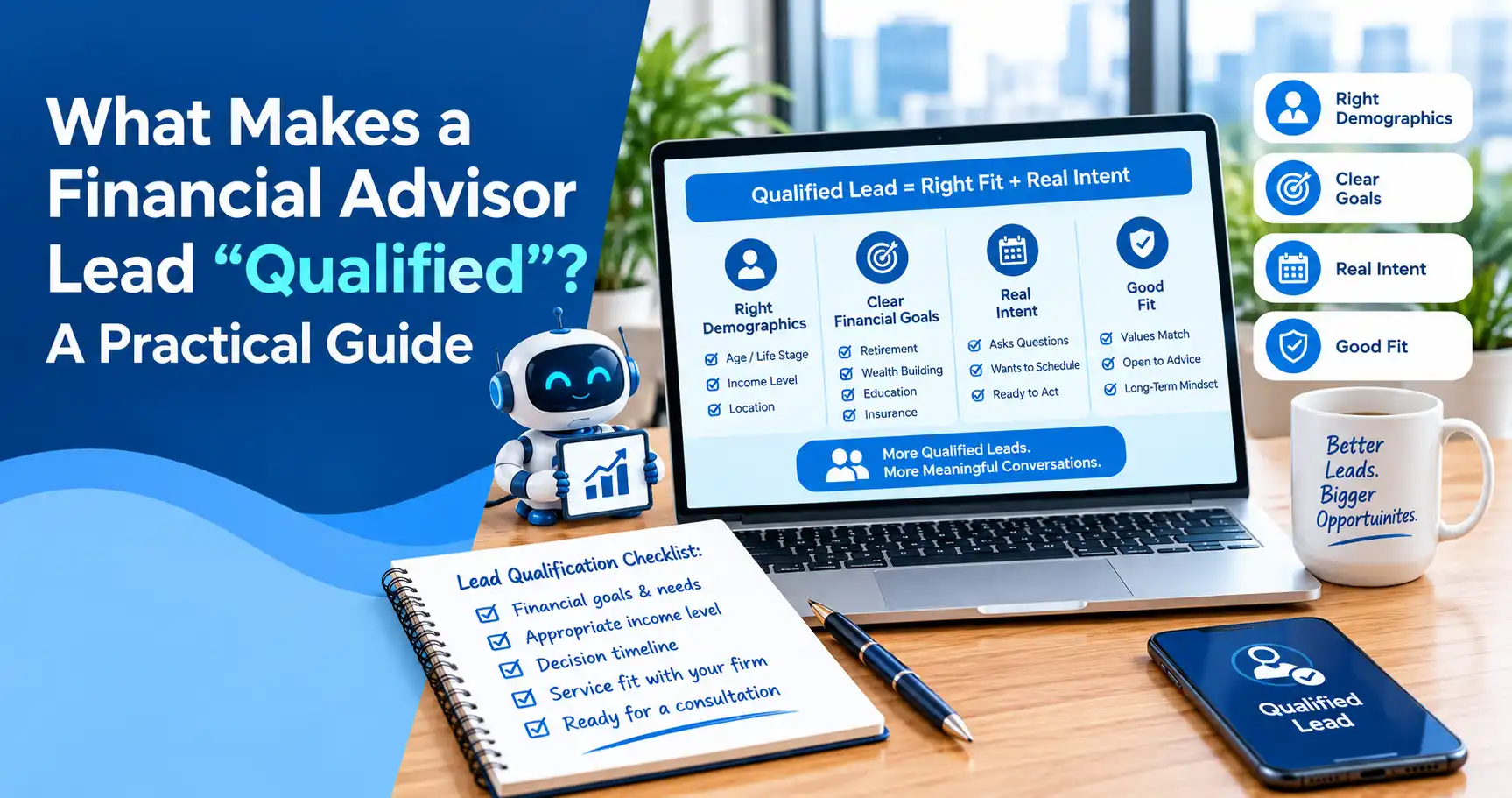
- Qualification questions
- Follow-up speed
- Appointment-booking process
For this reason, financial advisor lead generation should focus on attracting the right prospects rather than simply generating the highest number of leads.
Which Is More Cost-Effective?
This is one of the most important questions when comparing organic leads vs paid leads.
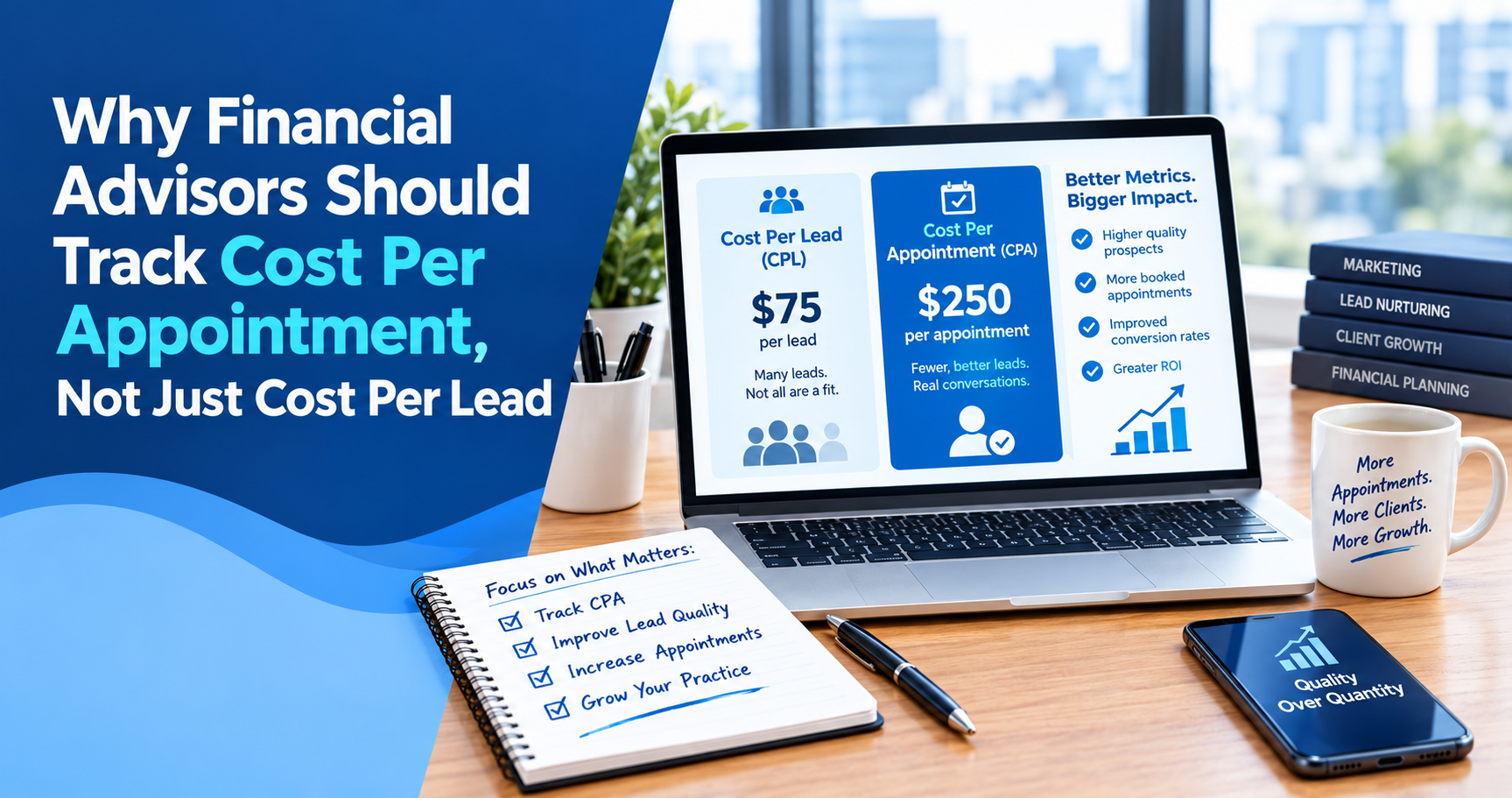
However, financial firms should avoid judging marketing performance by cost per lead alone.
Imagine one campaign generates leads for $30 each, while another generates leads for $100 each.
At first glance, the $30 campaign looks better.
But what if most of those $30 leads are unqualified, while the $100 leads are much more likely to book consultations and become clients?
The more expensive campaign could actually deliver a better return.
Financial firms should monitor:
- Cost per lead
- Cost per qualified lead
- Cost per booked appointment
- Appointment show rate
- Consultation-to-client rate
- Customer acquisition cost
- Revenue generated
Organic marketing also has costs. Although you aren’t paying Google for every organic visitor, you may still invest in strategy, SEO, content creation, website improvements, and ongoing optimization.
Paid advertising offers faster feedback but requires ongoing spending.
The better question is not:
“Which channel gives us the cheapest leads?”
It is:
“Which channel produces qualified clients at a sustainable acquisition cost?”
How SEO, Paid Advertising, Email, and Webinars Work Together
Financial firms do not have to treat organic and paid marketing as separate systems.
A strong strategy can connect several channels.
For example:
SEO/content → website visit → guide or webinar → email nurture → consultation
A paid campaign may follow a similar path:
Paid ad → landing page → lead capture → qualification → appointment
SEO can attract prospects who are already searching for information. Paid advertising can help promote a specific service, offer, webinar, or lead magnet. Email can then nurture prospects who aren’t ready to schedule immediately.
This is where financial services content marketing can create additional value.
One useful topic can become:
The goal is to create content that works for both the person reading it and the search systems helping that person find it.
How Does AI Search Affect Financial Advisor Lead Generation?
Search question → Educational content → Trust → Website exploration → Service page → Consultation → Qualified appointment
A prospect may first discover an advisor while researching retirement planning. They may not book an appointment immediately. Instead, they might read several articles, subscribe to an email list, attend a webinar, or return later through a branded search.
That means financial advisor lead generation should not be measured only by the number of visitors coming from Google.
One useful topic can become:
- A blog article
- A webinar
- An email sequence
- Social media content
- A downloadable guide
- A video
- An FAQ page
For example, an advisor could create a webinar about retirement planning and promote it through both organic search and paid advertising.
After the webinar, follow-up emails can educate attendees and encourage qualified prospects to schedule a consultation.
Should Financial Advisors Use Organic or Paid Leads?
The right answer depends on the firm’s goals.
Choose Organic Lead Generation When:
- You want to build long-term search visibility.
- Your prospects actively search for financial information.
- You can invest in useful content consistently.
- You want to establish authority in a specific niche.
- You want to reduce dependence on advertising over time.
- Your website has the potential to rank for valuable search terms.
Organic marketing is particularly useful for firms that want to build a long-term digital asset.
Choose Paid Lead Generation When:
- You need leads quickly.
- You are launching a new service.
- You want to test an offer or audience.
- You have a defined advertising budget.
- You want to promote an upcoming webinar or event.
- You need to increase appointment volume quickly.
Paid campaigns can be especially useful when a firm needs immediate market feedback.
Use Both When:
You want immediate opportunities while building a sustainable acquisition channel.
For many established financial firms, this combination makes the most sense.
Paid campaigns can generate demand today while SEO and content work toward generating more organic opportunities in the future.
Common Mistakes Financial Firms Make
One of the biggest mistakes is focusing on lead quantity instead of lead quality.
Other common problems include:
Expecting SEO to Produce Immediate Results
SEO is a long-term strategy. A new website or competitive topic may require significant time and consistent content before it generates meaningful traffic.
Running Paid Ads Without Tracking Conversions
If you only track clicks, you don’t know whether your advertising is generating qualified prospects.
Sending Every Visitor to the Homepage
A campaign for retirement planning should ideally lead to a relevant page about retirement planning rather than a generic homepage.
Ignoring Lead Follow-Up
A lead can lose interest if the firm takes too long to respond.
Treating Every Lead as Equal
A person who is ready to schedule a consultation is different from someone who simply downloaded a guide.
Stopping Organic Marketing Once Paid Ads Work
Paid advertising can generate immediate results, but relying on it exclusively can make a firm highly dependent on advertising costs.
A successful lead-generation strategy connects marketing with qualification, follow-up, and sales.
How Should Financial Firms Measure Lead Generation?
Marketing performance should ultimately be measured against business outcomes.
For organic campaigns, monitor:
- Organic traffic
- Search visibility
- Non-branded traffic
- Organic conversions
- Qualified leads
- Booked appointments
- New clients
For paid campaigns, monitor:
- Click-through rate
- Cost per click
- Cost per lead
- Qualified lead rate
- Cost per appointment
- Appointment show rate
- Customer acquisition cost
The most important measurement is what happens after the lead is generated.
For example, a campaign that generates 500 low-quality leads may be less valuable than one that generates 50 prospects who are genuinely interested in becoming clients.
When Should You Hire a Financial Services Marketing Agency?
A financial services marketing agency can help when your internal team doesn’t have enough time, expertise, or resources to manage multiple marketing channels.
You may benefit from outside support if:
- Organic traffic has stopped growing.
- Paid campaigns aren’t producing profitable appointments.
- Content publishing is inconsistent.
- Your website gets visitors but few inquiries.
- You aren’t sure which marketing channels generate clients.
- Your team struggles to follow up with leads.
- You don’t have a clear SEO or content strategy.
A specialized financial services digital marketing agency may combine SEO, content, paid advertising, email marketing, conversion optimization, and analytics.
When choosing an agency, don’t focus only on traffic or lead volume. Ask how the agency measures qualified leads, booked appointments, conversion rates, and customer acquisition cost.
A good marketing partner should understand that the objective isn’t simply to generate clicks. It is to connect your firm with prospects who are a realistic fit for your services.

Final Thoughts: Organic Leads vs Paid Leads
There is no universal winner in the organic leads vs paid leads debate.
Paid leads provide speed, targeting, and flexibility. Organic leads provide long-term visibility, authority, and the potential for compounding results.
For financial advisors and insurance professionals, combining both channels can create a more balanced marketing strategy.
Use paid advertising when you need immediate demand or want to test a campaign. Build SEO and content when you want to create a sustainable source of qualified organic traffic.
Most importantly, don’t measure success by traffic or lead volume alone. Focus on qualified appointments, new clients, customer acquisition cost, and long-term revenue.
FAQs About Organic Leads vs Paid Leads
1. What is the difference between organic leads and paid leads?
Organic leads come from unpaid channels such as Google search, SEO, content, referrals, and organic social media. Paid leads come from advertising campaigns where a business pays to reach potential prospects.
2. Are organic leads better than paid leads?
Not necessarily. Organic leads can have strong search intent and provide long-term value, while paid leads can provide faster results and precise targeting. Lead quality depends on the audience, offer, intent, and conversion process.
3. Are paid leads more expensive than organic leads?
Paid campaigns require ongoing advertising spend. Organic marketing also requires investment in SEO, content, strategy, and website improvements. The better comparison is not simply cost per lead but cost per qualified appointment and customer acquisition cost.
4. How long does it take to generate organic leads?
Organic lead generation generally takes longer than paid advertising. The timeline depends on competition, search demand, website authority, content quality, and consistency. Some lower-competition topics may gain visibility sooner, while competitive markets can take considerably longer.
5. How quickly can paid advertising generate leads?
Paid campaigns can begin generating traffic and inquiries soon after launch. However, profitable campaigns usually require testing and optimization. Targeting, ad messaging, landing pages, conversion tracking, and follow-up all affect results.
6. Which is better for financial advisors: SEO or paid advertising?
It depends on the firm’s objective. SEO is useful for long-term visibility and capturing search demand. Paid advertising is useful when an advisor needs faster traffic or wants to test a specific offer. Many firms benefit from using both.
7. Can financial advisors use organic and paid leads together?
Yes. Paid campaigns can generate immediate opportunities while SEO and content build long-term visibility. The two channels can also support webinars, email marketing, lead magnets, and retargeting campaigns.
8. How can financial advisors improve lead quality?
Start with the right audience and search intent. Use relevant offers, focused landing pages, qualification questions, and timely follow-up. Most importantly, measure qualified appointments and new clients instead of simply counting leads.
Disclaimer:
This article is provided for general educational and informational purposes only. It does not constitute financial, investment, legal, tax, insurance, or professional marketing advice. Marketing results vary based on factors such as audience, market competition, budget, strategy, and execution. Financial professionals should evaluate marketing strategies based on their individual business needs and applicable regulatory or compliance requirements.