- Written & Reviewed by Jeremy
- Published
State and university employees can be a strong audience for financial advisors, insurance agents, and retirement planning firms. Many have pensions, 403(b) plans, 457(b) plans, health benefits, survivor options, and retirement timelines that require careful planning.
But getting appointments with state and university employees is not as simple as running a generic ad or sending a cold email.
This audience is often cautious. They may have already attended retirement vendor presentations, received plan provider emails, or seen financial messages that do not explain how their actual benefits work.
To earn their attention, advisors need to lead with education. The message should show that you understand public employee retirement planning, state employee benefits, university employee benefits, pension planning, and the decisions they face before retirement.
The goal is not just to generate leads. The goal is to create trust, educate the right people, and turn interested employees into qualified appointments.
What Makes State and University Employees a Valuable Audience?
State and university employees often have more complex retirement planning needs than private-sector workers. Their retirement decisions may involve pensions, 403(b) plans, 457(b) plans, Social Security, retiree health benefits, and tax planning.
For financial advisors, this creates a clear opportunity. These employees may have stable income, long service histories, and real questions about when and how to retire.
Common questions include:
- When can I retire?
- How much will my pension provide?
- Should I contribute more to my 403(b) or 457(b)?
- How will taxes affect my retirement income?
- What happens to my health benefits after retirement?
- Should I take a survivor benefit option?
- When should I claim Social Security?
This audience is valuable because the need is real. Many public employees are not looking for complicated investment language. They want clear guidance that connects their benefits to their retirement goals.
Why Is It Hard to Get Appointments With State and University Employees?
The main challenge is that many state and university employees have already heard broad retirement advice that does not match their actual benefit system.
A generic message like “Plan your retirement today” is usually not enough. It does not speak to their pension system, employer benefits, 403(b), 457(b), or retirement timeline.
Another challenge is that public employee benefits vary by state, university, and plan. A state employee, university professor, public school administrator, and public hospital employee may all have different rules, options, and concerns.
That is why public employee lead generation needs to be more specific than standard financial advisor lead generation. The messaging must feel relevant from the first touchpoint.
Instead of leading with a sales pitch, advisors need to lead with education.
What Do State and University Employees Usually Need Help With?
State and university employees often need help understanding how different parts of their retirement picture work together.
Key planning areas include:
- Pension eligibility and payout options
- 403(b) and 457(b) contribution planning
- Roth vs. pre-tax savings
- Retirement income planning
- Social Security timing
- Health insurance before and after retirement
- Medicare coordination
- Survivor benefit decisions
- Tax planning
- Beneficiary planning
- Investment allocation before retirement
- Rollovers from old accounts
For university employees, 403(b) planning may be especially important. Some may also have access to a 457(b), pension plan, or optional retirement plan.
For state employees, pension planning and retiree health benefits may be major concerns. Many want to know how their years of service, final average salary, and retirement age affect their income.
A strong appointment strategy should connect directly to these questions.
What Is the Best Way to Reach State and University Employees?
The best way to reach this audience is through an education-first marketing system.
That system can include:
- SEO content
- Retirement webinars
- Email campaigns
- Downloadable guides
- Paid search campaigns
- Local landing pages
- Referral partnerships
- Appointment-focused follow-up
The main point is simple: do not ask for the appointment too early without giving the employee a reason to trust you.
A good funnel may begin with a helpful topic, such as:
- “Retirement Planning for State Employees Within 5 Years of Retirement”
- “403(b) and 457(b) Planning for University Employees”
- “How Public Employees Can Prepare for Retirement Income Decisions”
- “Common Pension Mistakes to Avoid Before Retirement”
These topics are more specific than general retirement content. They show the employee that the advisor understands their situation.
Example Campaign for University Employees
For example, an advisor targeting university employees within five years of retirement could run a webinar on 403(b), 457(b), and pension coordination.
The webinar could explain how those income sources work together, what decisions employees need to review before retirement, and what common mistakes can affect taxes or income planning.
After the webinar, the advisor could send a short follow-up email with a clear appointment offer:
“Schedule a university employee retirement planning appointment to review your pension, 403(b), 457(b), and retirement income timeline.”
This approach works because the appointment offer is connected to the education the employee just received. It feels relevant instead of random.
How Can Webinars Help Book Appointments?
Webinars are one of the strongest tools for booking appointments with state and university employees. They allow advisors to educate a group of people at once and build trust before asking for a call.
A webinar should focus on one clear problem. It should not try to cover every part of retirement planning.
Good webinar topics include:
- Pension planning mistakes state employees should avoid
- How university employees can coordinate a 403(b), 457(b), and pension
- Retirement income planning for public employees
- What to review before choosing a pension payout option
- Tax planning before retirement from public service
The webinar should include a clear appointment offer near the end. This should feel helpful, not aggressive.
For example:
“After this session, you may still have questions about how these rules apply to your own benefits. If you would like to review your retirement timeline, pension options, and income plan, you can schedule a one-on-one appointment.”
For more detail, advisors can use a structured approach to financial advisor webinar marketing so attendees are guided from registration to follow-up to booked appointment.
How Can Email Marketing Turn Interest Into Appointments?
Many employees will not book an appointment the first time they hear from an advisor. They may attend a webinar, download a checklist, or read an article, but still need time before speaking with someone.
That is where email marketing for financial advisors becomes important.
Email can help nurture interest through:
- Webinar reminders
- Post-webinar follow-up
- Retirement planning tips
- Pension planning education
- 403(b) and 457(b) guidance
- Appointment invitations
- Re-engagement campaigns
The emails should be useful and specific. Avoid aggressive claims, pressure tactics, or broad promises.
A simple email sequence could look like this:
- Thank the person for registering or downloading the guide.
- Share one helpful retirement planning insight.
- Explain a common mistake public employees make.
- Invite them to book an appointment if they want help applying the information to their situation.
Because financial services communication can involve compliance concerns, advisors should review financial email marketing compliance before launching campaigns.
How Can Content Marketing Support Appointment Generation?
Content marketing helps build trust before the first conversation. A state or university employee may search online before they ever speak with an advisor.
They might search for questions like:
- How does my state pension work?
- Should I use a 403(b) or 457(b)?
- When should public employees retire?
- What happens to university benefits after retirement?
- How do I create retirement income from a pension and investments?
If your website answers those questions clearly, you can attract people who already need help.
This is where content marketing for financial advisors becomes valuable. It supports lead generation for financial advisors by bringing in people who are already searching for answers.
Strong content topics include:
- State employee retirement checklist
- University employee retirement planning guide
- 403(b) vs. 457(b) for public employees
- Pension planning before retirement
- Retirement income planning for public employees
- Questions to ask before retiring from a state job
Every content piece should include a natural next step. That could be a guide download, webinar registration, or appointment request.
What Role Does Financial Advisor Marketing Play?
Financial advisor marketing is not just about visibility. It is about building a system that moves the right person from interest to action.
A strong appointment system includes:
- A clear audience
- A relevant message
- A helpful offer
- A simple landing page
- A lead capture form
- Follow-up emails
- Appointment reminders
- Qualification questions
Without this structure, advisors may get traffic but not appointments. Or they may get appointments that are not a good fit.
The best marketing focuses on qualified appointments, not just more names in a database.
For example, a broad campaign may generate leads from anyone interested in retirement. A better campaign targets public employees within 5–10 years of retirement who need help with pensions, 403(b), 457(b), taxes, and retirement income.
That is the difference between general marketing activity and a real appointment system.
What Types of Offers Work Best?
The offer matters. State and university employees are more likely to respond when the offer feels specific to their situation.
Strong offers include:
- Public employee retirement checklist
- Pension review appointment
- 403(b) and 457(b) planning guide
- Retirement income planning session
- State employee benefits review
- University employee retirement webinar
- Pre-retirement tax planning guide
Weak offers are usually too vague. “Free consultation” may not explain enough value.
A stronger version would be:
“Schedule a public employee retirement planning appointment to review your pension, savings plans, and retirement income timeline.”
Comparison Table: Best Channels for Booking Appointments
Channel | Best For | Strength | Limitation |
Webinars | Educating employees at scale | Builds trust before the call | Needs strong follow-up |
Email marketing | Nurturing interested leads | Keeps prospects engaged | Requires compliance review |
SEO content | Long-term visibility | Attracts high-intent searches | Takes time to grow |
Paid search | Capturing active demand | Can generate leads quickly | Costs can rise |
LinkedIn outreach | Reaching professional employees | Useful for university staff | Needs personalization |
Referral partnerships | Warm introductions | Higher trust | Slower to scale |
Downloadable guides | Lead capture | Good for early-stage prospects | Needs nurture sequence |
How Should Advisors Qualify Leads?
Not every lead should become an appointment. Qualification helps protect the advisor’s time and improves appointment quality.
Useful qualifying questions include:
- Are you currently employed by a state agency, university, college, or public institution?
- When do you plan to retire?
- Do you have a pension, 403(b), 457(b), or similar retirement plan?
- Are you looking for help with retirement income, taxes, pension choices, or investments?
- Have you selected a retirement date?
- Would you like to speak with an advisor about your options?
These questions help identify whether the person is a good fit and what they need help with.
What Common Mistakes Stop Advisors From Booking Appointments?
Many advisors struggle because their campaigns are too general.
Common mistakes include:
- Using the same message for every audience
- Talking only about investments
- Ignoring pension and benefit questions
- Sending cold emails without education
- Not following up after webinars
- Having weak landing pages
- Asking for too much information too early
- Using unclear appointment offers
- Focusing on lead volume instead of appointment quality
- Making unsupported claims
Another major mistake is treating all public employees the same. State employees and university employees may share some planning needs, but their benefits can be different.
The more specific the message, the more likely it is to create trust.
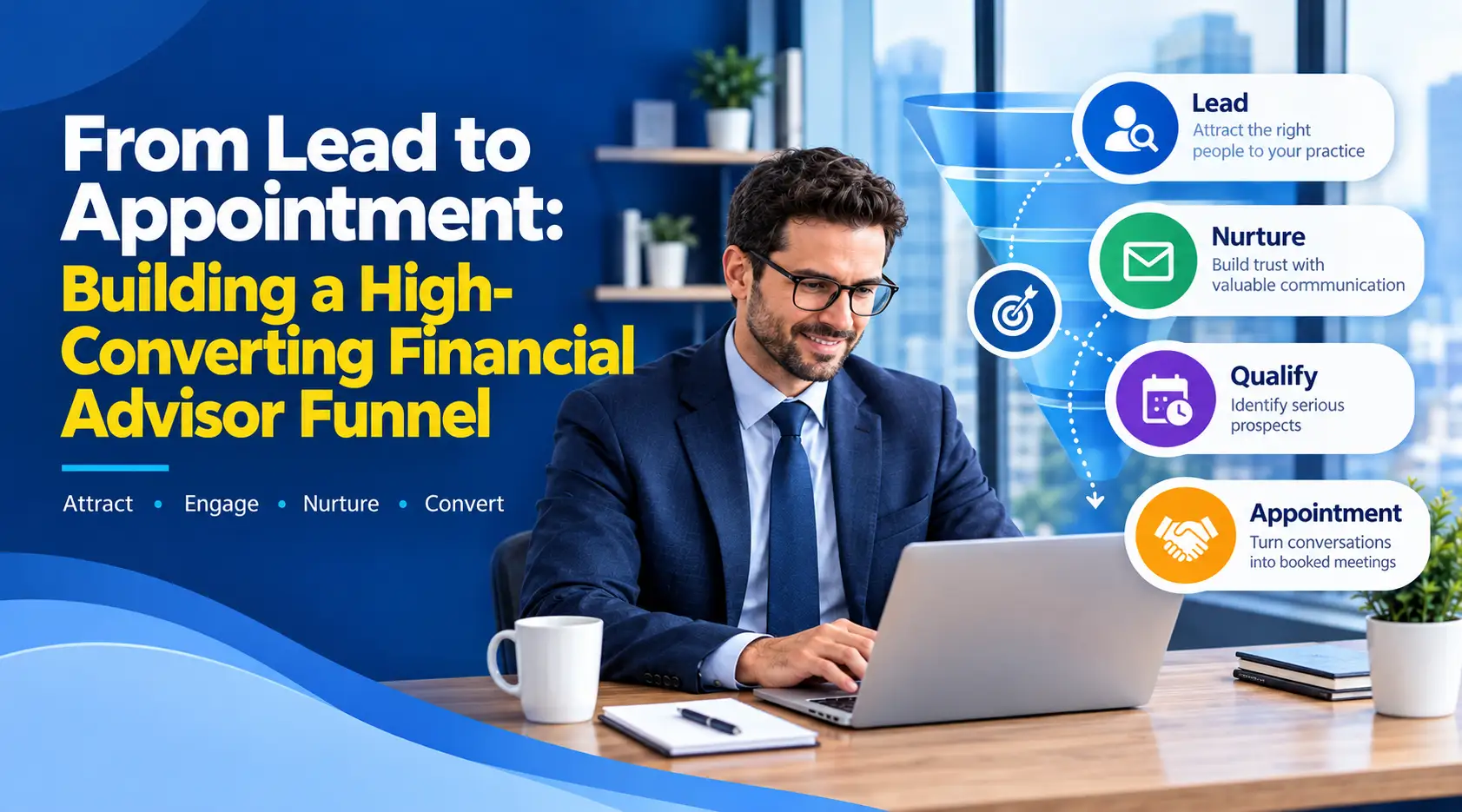
What Should an Appointment Funnel Look Like?
A simple appointment funnel can follow this structure:
- Target the right audience
Focus on state employees, university employees, teachers, faculty, administrators, and public workers. - Offer education
Use a webinar, checklist, guide, or article that answers a specific retirement question. - Capture the lead
Ask for basic details like name, email, employer type, and retirement timeline. - Send follow-up emails
Share helpful information and invite the person to take the next step. - Offer an appointment
Make the call-to-action specific to their situation. - Qualify the appointment
Confirm whether the person is a good fit before the meeting. - Hold the consultation
Focus on pension planning, income planning, taxes, benefits, and next steps.
This type of funnel works because it gives the employee time to understand the advisor’s value before booking.
When Should Advisors Use Appointment Setting Services?
Some firms use appointment setting services for financial advisors when they do not have the time, team, or system to generate appointments consistently.
This can help, but only if the service understands the financial services space and the public employee audience.
A good service should understand:
- Financial advisor lead generation
- Public employee retirement planning
- Compliance-sensitive messaging
- Webinar follow-up
- Email nurturing
- Lead qualification
- Appointment quality
The wrong service may only focus on volume. That can lead to poor-fit calls, no-shows, or appointments with people who are not ready to take action.
Advisors should measure success by qualified appointments, not just booked calendar slots.
How Can Advisors Improve Appointment Show Rates?
Booking the appointment is only part of the process. The person also needs to show up prepared.
To improve show rates:
- Send a calendar invite immediately
- Use reminder emails
- Confirm the reason for the appointment
- Explain what the employee should bring
- Keep the appointment title specific
- Offer flexible time options
- Follow up politely with no-shows
Instead of naming the meeting “Free Consultation,” use a more specific title like:
“State Employee Retirement Planning Appointment”
or
“University Employee 403(b) and Pension Review”
Specific appointment titles remind the prospect why they booked the call.
How to Create Messaging That Resonates
Messaging should focus on the employee’s real concerns.
Good examples include:
- “Understand how your pension fits into your retirement income plan.”
- “Review your 403(b), 457(b), and pension options before retirement.”
- “Get clarity on taxes, income, and benefits before leaving public service.”
- “Plan your retirement timeline with your state or university benefits in mind.”
Avoid language that sounds exaggerated or sales-driven, such as:
- “Guaranteed retirement success”
- “Secret retirement strategy”
- “Beat the market”
- “Limited-time financial opportunity”
State and university employees usually respond better to clarity, education, and practical next steps.
Final Thoughts: Getting More Appointments With State and University Employees
Getting appointments with state and university employees requires more than basic advertising. Advisors need to understand the audience, speak to their specific benefits, and build trust before asking for a meeting.
The strongest strategy combines educational content, webinars, email follow-up, clear appointment offers, and lead qualification.
When done well, this approach helps advisors reach employees who actually need guidance with pensions, 403(b) plans, 457(b) plans, taxes, income planning, and retirement decisions.
The goal is not more leads. The goal is better conversations with the right people.
FAQs About Getting Appointments With State and University Employees
How do financial advisors get appointments with state employees?
Financial advisors can get appointments with state employees by using educational webinars, retirement planning content, email follow-up, and benefit-specific appointment offers. The message should focus on pensions, 457(b) plans, retirement income, taxes, and state employee benefits.
How do financial advisors reach university employees?
Advisors can reach university employees through SEO content, webinars, email campaigns, LinkedIn outreach, referral partnerships, and retirement planning resources focused on 403(b), 457(b), pension, and income planning.
What is the best lead generation strategy for financial advisors targeting public employees?
The best strategy is an education-first funnel that combines content, webinars, email nurturing, lead qualification, and a clear appointment booking process.
Do webinars work for booking financial advisor appointments?
Yes. Webinars work well when they focus on a specific retirement planning topic and include strong follow-up. They help educate employees before asking them to book an appointment.
What should advisors offer state and university employees?
Advisors can offer retirement checklists, pension review appointments, 403(b) and 457(b) guides, public employee retirement webinars, and retirement income planning consultations.
Are appointment setting services for financial advisors worth it?
They can be worth it if the service focuses on qualified appointments and understands financial advisor compliance, public employee audiences, and retirement planning topics.
How long does it take to generate appointments?
Paid campaigns and webinars may generate appointments faster, while SEO and content marketing usually take longer. Most firms need a consistent system that includes content, follow-up, and qualification.
Disclaimer
This material is provided for informational and educational purposes only and is not intended as individualized business, investment, or legal advice. Success in building a financial advisory practice depends on many factors, including individual effort, market conditions, and client needs. Examples provided are for illustrative purposes only and do not guarantee similar results.