- Written & Reviewed by Jeremy
- Published
Most financial advisors do not have a meeting problem. They have a pipeline problem.
A prospect may visit the website, download a guide, click an ad, attend a webinar, or ask a question on social media. But if there is no clear follow-up process, that interest often disappears before it becomes a real conversation.
That is why appointment setting for financial advisors matters.
It is not just about adding more names to a CRM. It is about creating a reliable process that turns interested prospects into scheduled meetings with the right people. For advisory firms, that may mean retirement income reviews, 401(k) rollover consultations, estate planning discussions, Medicare planning calls, portfolio reviews, or tax strategy appointments.
A strong appointment setting process connects lead generation, qualification, nurturing, automation, reminders, and calendar booking into one clear system. When done well, it helps advisors spend less time chasing cold leads and more time speaking with prospects who are closer to making a decision.
What Is Appointment Setting for Financial Advisors?
Appointment setting for financial advisors is the process of converting interested prospects into scheduled consultations.
These consultations may include:
- Retirement income planning reviews
- 401(k) rollover discussions
- Portfolio risk reviews
- Medicare or Social Security planning calls
- Estate planning conversations
- Tax planning consultations
- Insurance or annuity reviews
- Wealth management discovery calls
The goal is not just to get someone on the calendar. The goal is to schedule meetings with people who match the advisor’s ideal client profile and have a relevant financial need.
A complete appointment setting process usually includes:
- Lead capture
- Lead qualification
- Follow-up messaging
- Financial advisor lead nurturing
- Calendar booking
- Appointment reminders
- No-show reduction
- Post-call follow-up
This is different from simply buying leads. A list of names and phone numbers does not guarantee meaningful conversations. The real value comes from having a system that guides prospects from initial interest to a scheduled meeting.
Why Appointment Setting Matters for Financial Advisors
Financial advisors often rely on referrals, networking, events, or paid leads to grow their business. These channels can work, but they are not always predictable.
Referrals may come in waves. Paid leads may lack quality. Website visitors may leave without booking. Social media interest may not turn into real conversations. Even warm prospects can go cold if the advisor does not follow up quickly.
Appointment setting helps solve this problem by creating a structured path from interest to meeting.
Instead of waiting for prospects to take action on their own, the process supports every stage of the journey.
It helps advisors:
- Respond to new leads faster
- Qualify prospects before the meeting
- Follow up consistently
- Reduce missed opportunities
- Improve show-up rates
- Track which channels produce real consultations
- Spend more time with serious prospects
For example, someone searching for retirement income help may not be ready to hire an advisor today. But with the right follow-up sequence, that person may book a retirement review after receiving helpful emails, reminders, and a clear invitation to schedule.
This is why appointment setting is more than an admin task. It is a core part of a financial advisor marketing system.
How Financial Advisor Appointment Setting Works
Appointment setting usually works through several connected steps. Each step affects the quality of the final meeting.
1. Lead Generation
Lead generation is the first stage. This is where a prospect enters the advisor’s pipeline.
Leads may come from:
- Google Ads
- Facebook or LinkedIn campaigns
- Organic search
- Landing pages
- Webinars
- Referral campaigns
- Email newsletters
- Retirement planning guides
- Financial calculators
- Educational blog content
For example, an advisor may offer a free “Retirement Readiness Checklist” or a “401(k) Rollover Guide” to attract prospects. Once someone submits their details, they enter the follow-up process.
Lead generation is important, but it is only the beginning. A lead does not automatically become a client. The next steps decide whether that interest turns into a useful meeting.
2. Lead Qualification
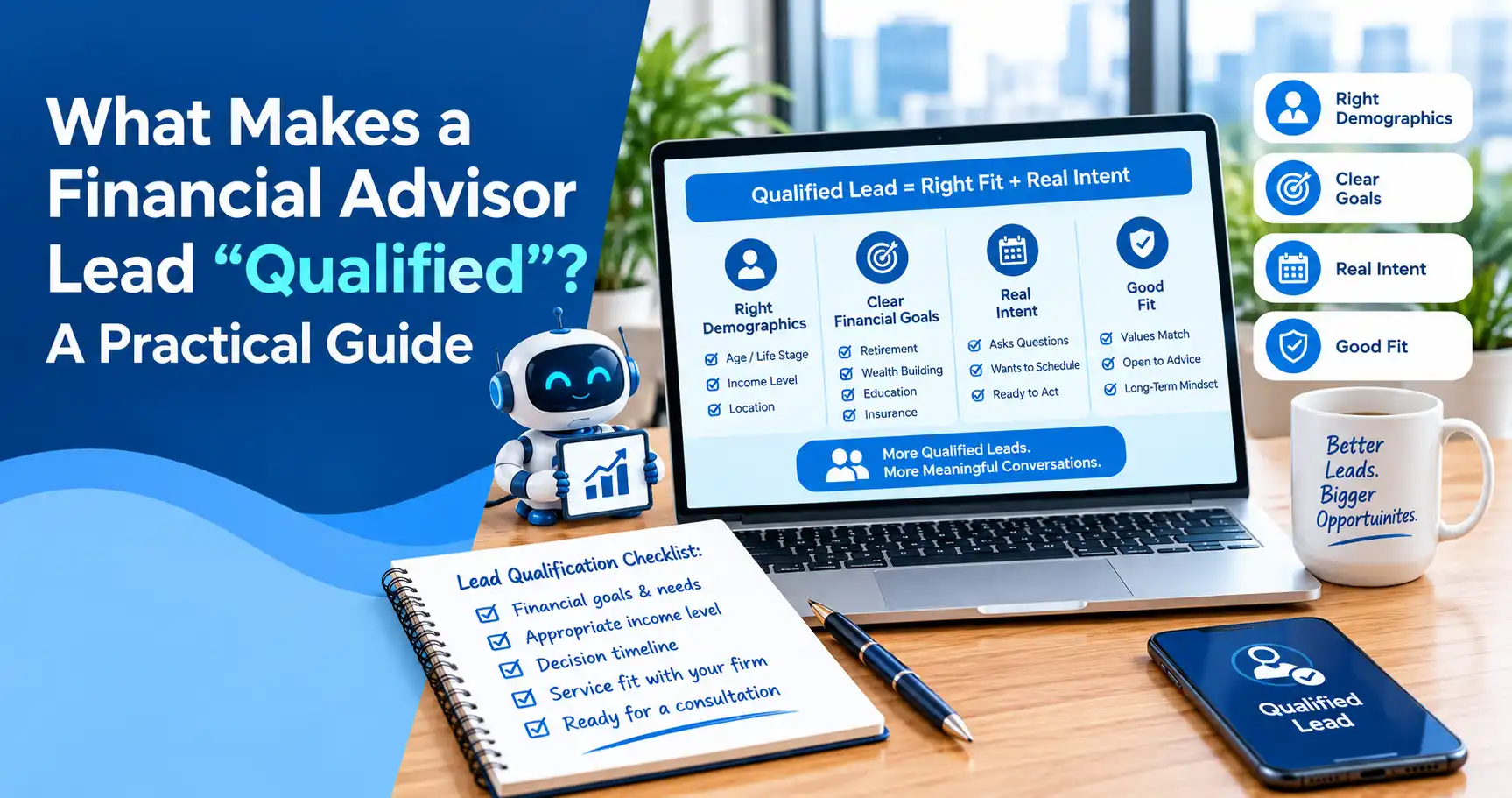
After a lead enters the system, the next step is qualification.
Not every prospect will be a good fit. Some may not meet the firm’s asset minimum. Some may be outside the service area. Some may need help that the advisor does not offer.
Lead qualification helps identify which prospects deserve priority.
Common qualification points include:
- Age or retirement timeline
- Investable assets
- Income range
- Financial concern
- Service need
- Location
- Current advisor relationship
- Urgency
- Willingness to schedule a consultation
For example, a retirement-focused advisor may want to prioritize people aged 55–67 who are planning retirement within the next five years. A wealth manager may focus on households with a certain asset level. A Medicare planning specialist may focus on people approaching age 65.
Qualification protects the advisor’s time and improves meeting quality.
3. Lead Nurturing
Not every prospect books right away.
Some need more education. Some are comparing advisors. Some are interested but not urgent. Others may need several touchpoints before they feel ready to schedule.
This is where financial advisor lead nurturing becomes important.
Lead nurturing may include:
- Educational email sequences
- SMS follow-ups
- Reminder messages
- Retargeting ads
- Webinar follow-ups
- Case-based examples
- Market update emails
- Planning checklists
For example, someone who downloads a Social Security guide may receive a short email sequence explaining claiming ages, retirement income timing, and common filing mistakes. After that, they may be invited to book a Social Security planning call.
This type of follow-up feels more helpful than aggressive. It gives the prospect time to understand the issue and take the next step.
4. Appointment Booking
Once a prospect is ready, the booking process should be simple.
A strong booking flow usually includes:
- Clear call-to-action
- Calendar integration
- Available time slots
- Confirmation email
- Calendar invite
- SMS reminder
- Pre-call questions
- Easy rescheduling option
If booking feels difficult, prospects may drop off. Advisors should avoid unnecessary back-and-forth emails or unclear scheduling steps.
The best systems make the next step obvious.
For example, a button that says “Book Your Retirement Review” is clearer than a generic “Contact Us” button.
You can also read more about the role of booked appointments in building a stronger sales pipeline.
5. Reminder and Follow-Up Process
The process does not stop once the meeting is scheduled.
Prospects may forget, get busy, or lose interest. Reminder emails, SMS updates, and pre-call preparation messages help improve attendance.
This is where retention and follow-up systems support long-term growth. RevenX explains this further in its guide on consistent pre-booked appointments.
Appointment Setting vs Lead Generation
Lead generation and appointment setting are related, but they are not the same.
Lead generation creates interest. The appointment setting turns that interest into a scheduled conversation.
Area | Lead Generation | Appointment Setting |
Main goal | Capture prospect information | Schedule qualified consultations |
Output | Names, emails, phone numbers | Meetings on the calendar |
Advisor workload | Often requires manual follow-up | Uses a structured follow-up process |
Quality control | Can vary by source | Includes qualification before booking |
Best use | Building awareness and pipeline | Creating sales conversations |
Main risk | Many leads may not convert | Poor screening can create weak meetings |
Success metric | Cost per lead | Cost per qualified appointment |
For financial advisors, lead generation should not work in isolation. A better approach is to combine lead capture, follow-up, qualification, and appointment booking into one connected process.
Examples of Appointment Setting Offers for Financial Advisors
The offer behind the appointment matters.
A generic “schedule a call” message is usually weaker than a specific, outcome-focused invitation. Prospects need to understand why the meeting is worth their time.
Here are examples of appointment offers advisors can use:
Advisor Type | Appointment Offer Example |
Retirement planning advisor | Retirement income review |
Wealth manager | Portfolio risk consultation |
Insurance advisor | Life insurance or annuity review |
Tax-focused advisor | Tax-efficient retirement strategy call |
Medicare planning advisor | Medicare planning discussion |
Estate planning advisor | Legacy planning consultation |
401(k) rollover specialist | 401(k) rollover options review |
Social Security advisor | Social Security timing consultation |
Specific offers work better because they connect to a real concern.
A pre-retiree may not be motivated by “speak to an advisor.” But they may respond to “review your retirement income plan before leaving work.”
That small difference can improve appointment quality.
Key Features of a Strong Appointment Setting System
A good appointment setting process requires more than a calendar link. Advisors need the right mix of tools, messaging, and follow-up.
Targeted Lead Capture
The system should attract the right people from the beginning.
For example, an advisor who works with retirees should not build campaigns that appeal to everyone. The landing page, ad copy, content, and offer should speak directly to retirement concerns.
Targeted lead capture improves the quality of later conversations.
Clear Qualification Questions
A short qualification form can help advisors understand whether a prospect is a good fit.
Questions may include:
- What is your main financial concern?
- When do you plan to retire?
- Are you currently working with an advisor?
- What type of planning help do you need?
- What is your estimated investment range?
The form should not feel too long. The goal is to collect enough information to improve the consultation.
Automated Follow-Up
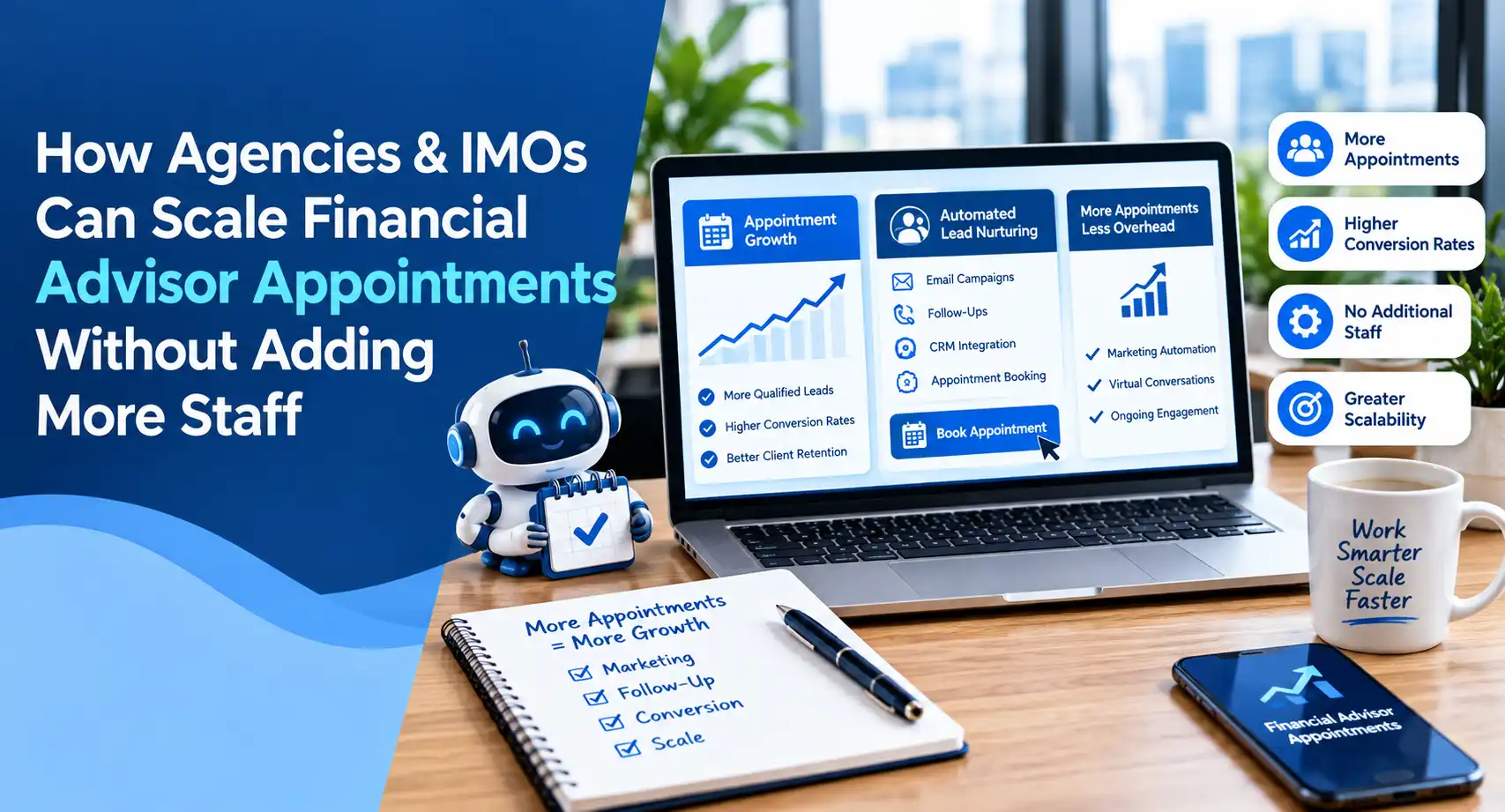
Marketing automation for financial advisors helps keep the process consistent.
Without automation, advisors may forget to follow up, reply too slowly, or lose track of leads. Automated messages can help keep prospects engaged without requiring constant manual effort.
Useful automation includes:
- Instant response emails
- Educational nurture sequences
- Appointment reminders
- Rebooking prompts
- Post-call follow-up
- Long-term lead nurturing
Automation should support the relationship, not replace it.
Calendar Integration
Prospects should be able to book directly from the campaign, landing page, or email.
A clean calendar booking process reduces friction and makes it easier for the prospect to take action.
CRM and Pipeline Tracking
Advisor marketing software should help track where every prospect stands.
Important pipeline stages may include:
- New lead
- Contacted
- Qualified
- Nurturing
- Appointment booked
- Appointment completed
- No-show
- Proposal sent
- Client won
- Long-term follow-up
This helps advisors understand what is working and where leads are dropping off.
Financial services marketing must be careful.
The messaging should avoid unrealistic guarantees, exaggerated claims, or promises about investment performance. It should be clear, professional, and aligned with the firm’s compliance standards.
Reporting
A good financial advisor marketing platform should show more than clicks and leads.
Advisors should track:
- Qualified leads
- Scheduled appointments
- Show-up rate
- Cost per appointment
- Conversion rate
- Revenue per new client
- Lead source performance
This helps the firm make better marketing decisions.
This helps the firm make better marketing decisions.
Appointment Setting Services for Financial Advisors vs Software
Advisors may choose between appointment setting services, software, agencies, or a complete platform.
Each option has a different role.
Option | Best For | Limitation |
Appointment setting services for financial advisors | Firms that want help booking calls | Quality depends on targeting and follow-up |
Advisor marketing software | Firms that want tools to manage leads | Still requires strategy and execution |
Marketing agency | Firms that need campaigns, ads, and creative | May not focus only on scheduled consultations |
Financial advisor marketing platform | Firms that want lead generation, nurturing, and booking together | Requires clear goals and tracking |
Appointment setting services for financial advisors can be valuable when the firm wants more support with outreach, qualification, and calendar booking.
Advisor marketing software can also help, but tools alone are not enough. The firm still needs a clear offer, strong messaging, and a repeatable follow-up process.
If you are comparing outside support, this guide on marketing agencies for financial services can help you understand what to look for.
Common Mistakes Financial Advisors Make With Appointment Setting
Appointment setting can work well, but many firms weaken the process by focusing on the wrong metrics.
Focusing Only on Lead Volume
More leads do not always mean more clients.
A campaign that produces 300 weak leads may create less value than one that produces 30 serious prospects. Advisors should measure quality, not just volume.
Using a Generic Offer
“Schedule a consultation” is clear, but it may not be compelling.
A more specific offer, such as “Book a retirement income review,” gives prospects a better reason to act.
Weak Follow-Up
Many leads go cold because no one follows up quickly.
If a prospect submits a form and waits days for a response, the opportunity may be lost. Automated follow-up helps reduce this issue.
Poor Qualification
Without qualification, advisors may end up speaking with prospects who are not a good match.
This can waste time and lower close rates.
No Reminder System
No-shows are common when there are no reminders.
Simple confirmation emails, SMS reminders, and calendar invites can improve attendance.
Not Tracking Results
Some advisors track leads but not what happens after the lead is booked.
The better metrics are show-up rate, close rate, revenue per appointment, and cost per new client.
How to Measure Appointment Setting Performance
You can also read more about the role of booked appointments in building a stronger sales pipeline.
Here are the key metrics to track.
Lead-to-Appointment Rate
This shows how many leads become scheduled meetings.
If this number is low, the issue may be the offer, follow-up, qualification, or landing page.
Appointment Show-Up Rate
This shows how many scheduled prospects actually attend.
A low show-up rate may mean reminders are weak or the prospect was not properly qualified.
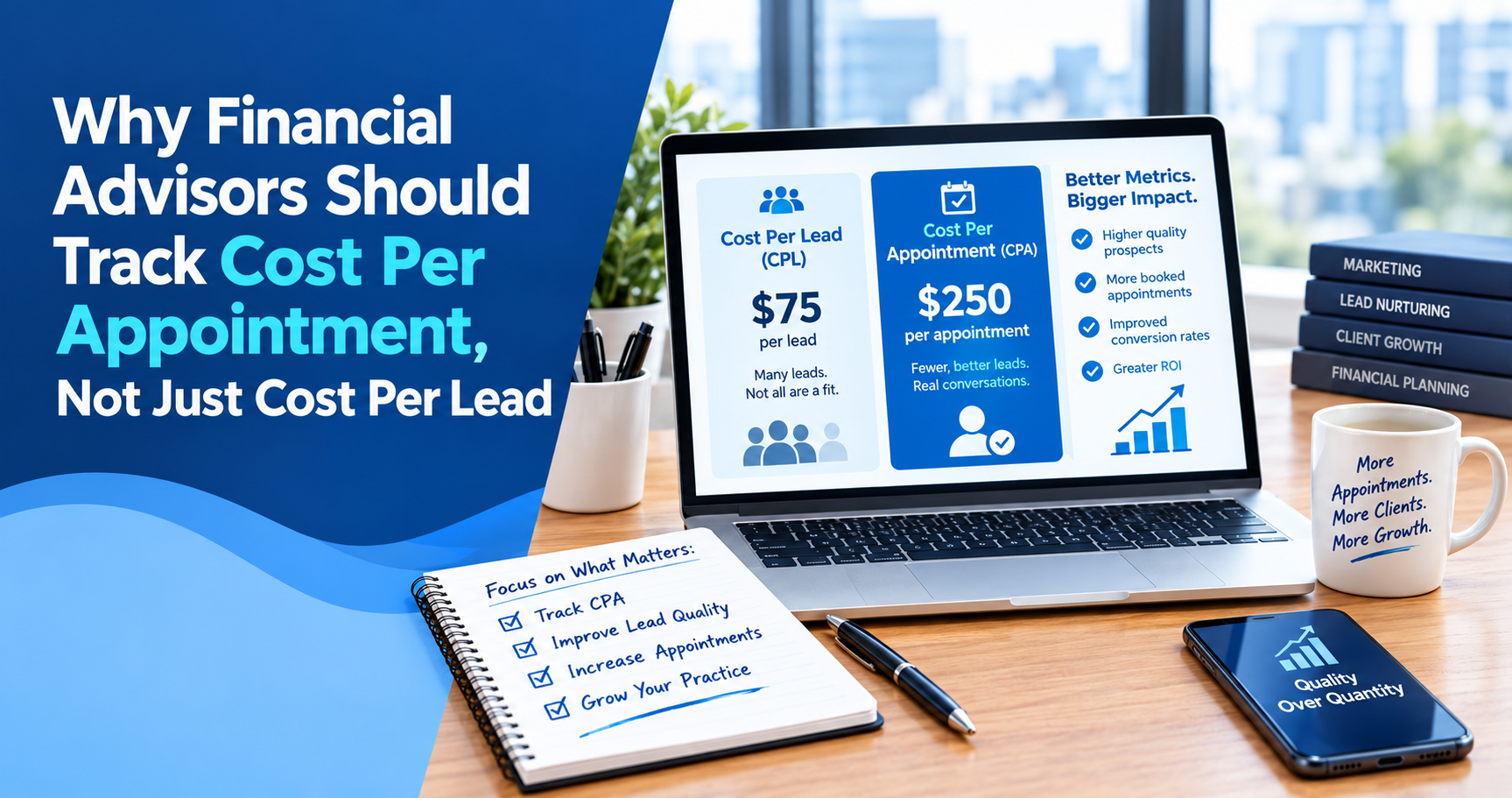
Cost Per Qualified Appointment
This is more useful than cost per lead.
A cheap lead is not valuable if it never becomes a serious conversation.
Consultation-to-Client Conversion Rate
This shows how many meetings turn into clients.
If conversion is low, the issue may be lead quality, sales process, offer fit, or advisor positioning.
Revenue Per New Client
This helps determine whether the appointment setting process is profitable.
A higher cost per meeting can still make sense if the clients are valuable.
When Should a Financial Advisor Invest in Appointment Setting?
A financial advisor should consider appointment setting when growth depends too heavily on referrals or manual prospecting.
Common signs include:
- Referrals are inconsistent
- Website leads are not converting
- Paid leads are low quality
- Follow-up is manual
- The advisor is spending too much time chasing prospects
- The firm wants predictable consultations
- No-shows are increasing
- The team needs better tracking
- The firm has a clear offer but not enough meetings
How to Choose the Right Appointment Setting Partner
Before choosing a platform, service, or agency, advisors should look at the full process.
A good partner should explain how leads are generated, qualified, nurtured, and booked.
Use this checklist before making a decision:
- Does the provider understand financial services?
- Does it offer appointment setting services for financial advisors specifically?
- Does it focus on qualified meetings, not just lead volume?
- Is there a clear qualification process?
- Are follow-up sequences included?
- Does it support calendar booking?
- Are reminder systems included?
- Can it reduce no-shows?
- Does it integrate with CRM or advisor marketing software?
- Does it support financial advisor lead nurturing?
- Does it use compliance-aware messaging?
- Are reports clear and useful?
- Is pricing transparent?
- Are expectations realistic?
- Can the process scale as the firm grows?
The right partner should help the advisor build a repeatable process, not just deliver a list of names.

Final Thoughts: Build a System That Turns Interest Into Meetings
Appointment setting for financial advisors works best when it is part of a complete marketing system.
Leads need to be captured, qualified, nurtured, reminded, and guided toward a clear next step. Without that process, even good prospects can be lost.
The goal is not to fill the calendar with random calls. The goal is to create better conversations with people who have a real financial need and are more likely to become clients.
For advisors, that may mean more retirement planning reviews, 401(k) rollover consultations, Medicare planning discussions, portfolio reviews, or wealth strategy calls.
RevenX helps financial advisors build marketing systems focused on lead generation, nurturing, retention, and scheduled consultations. If your firm wants a more consistent way to turn prospects into appointments, a structured appointment setting process is the right place to start.
FAQs About Appointment Setting for Financial Advisors
1. What is the appointment setting for financial advisors?
Appointment setting for financial advisors is the process of turning interested prospects into scheduled consultations through lead generation, qualification, follow-up, nurturing, and calendar booking.
2. How is appointment setting different from lead generation?
Lead generation captures prospect information. Appointment setting focuses on turning those prospects into scheduled meetings. The two work best when they are connected.
3. What are appointment setting services for financial advisors?
Appointment setting services for financial advisors help firms generate, qualify, nurture, and book meetings with potential clients. Some services also include follow-up, reminders, and reporting.
4. Can appointment setting help financial advisors get better leads?
Yes. A structured process can improve lead quality by adding qualification, follow-up, and clear appointment offers before the prospect reaches the advisor’s calendar.
5. What types of appointments can financial advisors book?
Financial advisors can book retirement income reviews, portfolio consultations, 401(k) rollover discussions, Medicare planning calls, estate planning conversations, tax planning sessions, and wealth management discovery calls.
6. How does marketing automation help financial advisors?
Marketing automation for financial advisors helps with faster responses, email nurturing, SMS reminders, appointment confirmations, and long-term follow-up.
Disclaimer
This content is for informational and educational purposes only. It does not constitute financial, investment, legal, compliance, or marketing advice. Financial advisors and advisory firms should review all marketing materials, claims, testimonials, endorsements, disclosures, lead handling practices, and client communications with their compliance team or qualified legal counsel before publication or use. Results from any marketing platform, agency, or appointment-setting system may vary based on market conditions, offer, audience, follow-up process, compliance requirements, and firm-specific execution.