- Written & Reviewed by Jeremy
- Published
- Last Updated Sep 02, 2026
A prospective client can learn a lot about your financial advisory firm before they ever speak with you. They can review your services, read your content, check your credentials, and decide within minutes whether your firm feels credible enough to explore further.
That makes your website much more than an online brochure. For many prospects, it is the first place they decide whether they feel comfortable trusting you with something as important as their financial future.
Learning how to build trust on a financial advisor website means going beyond professional design. Your website needs to communicate expertise, transparency, clarity, and a genuine understanding of the people you serve. A well-designed financial advisor website can help reinforce these trust signals while making it easier for prospects to understand your services and take the next step.
Why Trust Matters on a Financial Advisor Website
Trust is critical in financial services because prospects are considering who they can rely on with important financial decisions. Your website should quickly communicate expertise, transparency, professionalism, and a clear understanding of client needs.
1. Put Real People Behind Your Brand
Introduce your advisors with professional photos, experience, credentials, specialties, and a brief explanation of their approach. Help visitors understand who they may be working with.
2. Explain Your Services in Plain English
Avoid confusing financial jargon. Clearly explain what you offer and connect your services to common client questions and financial goals.
3. Be Transparent About Fees and Expectations
Clearly explain your services, compensation structure, engagement process, and relevant disclosures. Easy-to-find information helps reduce uncertainty.
4. Demonstrate Your Expertise
Show your knowledge through credentials, experience, educational articles, guides, webinars, and other useful resources. Let your expertise speak through the value you provide.
5. Use Educational Content to Build Familiarity
Create helpful content that answers the questions your prospects are already asking. Valuable resources can build familiarity and credibility before someone schedules a meeting.
6. Use SEO to Help the Right People Find You
Optimize your website for relevant searches such as retirement planning, financial planning, Social Security, and investment planning. Good SEO connects your expertise with people actively looking for help.
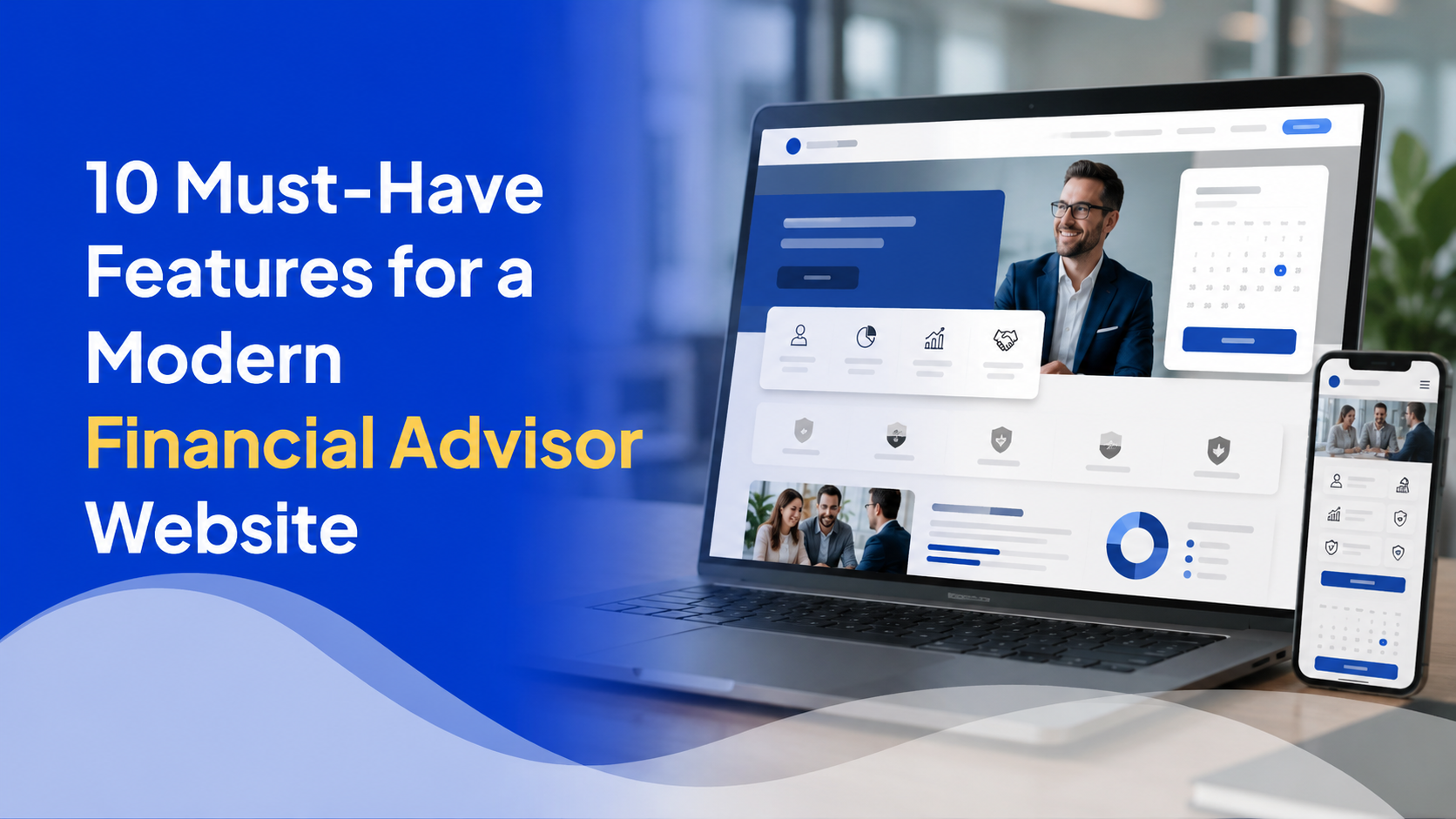
7. Keep Your Website Professional and Easy to Use
Use clean design, simple navigation, readable content, mobile responsiveness, fast-loading pages, and clear headings. A smooth experience creates a stronger first impression.
8. Make Contact and Appointments Easy
Give visitors a clear next step. Simple forms, scheduling options, and low-pressure calls to action can make contacting your firm feel more comfortable.
9. Use Testimonials and Client Experiences Carefully
Authentic testimonials and reviews can provide social proof. Make sure any client experiences or claims are accurate and comply with applicable financial advertising requirements.
10. Make Security and Disclosures Easy to Find
Use HTTPS, secure forms, privacy information, and appropriate regulatory disclosures. Showing that you take security and transparency seriously can strengthen visitor confidence.
Trust-Building Website vs. Weak Website
Trust-Building Website | Weak Website |
Clear advisor biographies | Little information about the team |
Simple service explanations | Generic financial terminology |
Helpful educational content | Thin or outdated content |
Easy-to-find disclosures | Important information is difficult to locate |
Clear contact process | Vague “Contact Us” CTA |
Professional photography | Excessive generic stock images |
Mobile-friendly design | Difficult mobile experience |
Secure forms and HTTPS | Outdated form experience |
Transparent communication | Unclear expectations |
The important takeaway is that trust rarely comes from one feature. It comes from the combined experience.
How Content, SEO, and Lead Generation Work Together
Your website should not operate separately from the rest of your marketing.
A prospect might discover one of your articles through Google. They may read several other resources, register for a webinar, receive useful follow-up emails, and eventually schedule a conversation.
The journey might look like:
Search visibility → Relevant visitor → Helpful content → Familiarity → Trust → Lead → Qualified lead → Appointment
This is why financial advisor lead generation should not simply mean collecting as many form submissions as possible.
Twenty inquiries from people who genuinely fit your target audience can be more valuable than 100 irrelevant leads.
For a deeper look at the broader marketing process, your article “Financial Advisor Marketing: What Actually Brings You Clients & What Doesn’t” can support this section.
Similarly, webinars can create another opportunity to demonstrate expertise. Financial Advisor Webinar Marketing: How to Turn Attendees Into Qualified Appointments is a natural next resource for readers interested in that approach.
And once prospects enter your marketing funnel, email can help maintain the relationship through useful educational communication. Your article “Financial Email Marketing Compliance: What Advisors Must Know” can provide additional context.
How to Measure Whether Your Website Is Building Trust
Trust is difficult to measure directly, but you can monitor the behaviors that indicate stronger engagement.
Important metrics include:
- Organic search traffic
- Non-branded organic traffic
- Engagement with educational content
- Guide downloads
- Webinar registrations
- Contact form submissions
- Consultation requests
- Returning visitors
- Qualified lead rate
- Appointment conversion rate
Do not judge your website solely by traffic.
For a financial advisory firm, the more meaningful progression is:
Search visibility → Relevant traffic → Engagement → Lead → Qualified lead → Appointment → Client
That connects marketing performance to actual business outcomes.
When Should You Improve Your Financial Advisor Website?
A complete redesign is not always necessary.
Sometimes the problem is not the design. It is the messaging, content, navigation, or conversion process.
Consider reviewing your website if:
- Visitors struggle to understand your services.
- Advisor information is incomplete.
- Your content is outdated.
- The mobile experience is poor.
- Your contact process is confusing.
- The website gets traffic but generates few inquiries.
- Important disclosures are difficult to find.
- Your current services are not accurately represented.
- Your calls to action are unclear.
- Organic search visibility has declined.
Start by identifying where visitors experience friction. Then fix those issues before assuming the entire website needs to be rebuilt.
What to Look for in a Financial Marketing Partner
If you are considering a financial services marketing agency or financial services digital marketing agency, do not evaluate agencies based only on promises about rankings or traffic.
Look for a partner who understands:
- Your target audience
- Financial services content
- SEO
- Lead generation
- Website conversion
- Long buying cycles
- Compliance considerations
Ask potential agencies:
- How do you define success?
- What metrics do you report?
- Who creates the content?
- How do you research our audience?
- How do SEO and content work together?
- How do you approach compliance-sensitive content?
- How do you measure qualified leads?
- What does the onboarding process look like?
A strong agency should be able to explain why its recommendations make sense for your business.
Common Technical SEO Mistakes Financial Advisors Should Avoid
Some technical SEO problems are surprisingly easy to overlook.
Common examples include:
- Accidentally blocking important pages
- Leaving old URLs without appropriate redirects
- Publishing duplicate service pages
- Ignoring mobile performance
- Uploading oversized images
- Creating complicated website navigation
- Forgetting to update XML sitemaps after major changes
- Using excessive redirects
- Failing to monitor indexing issues
- Treating technical SEO as a one-time project
Another mistake is focusing entirely on rankings while ignoring the experience after someone reaches the website.
The goal should be a technically sound website that also helps potential clients understand the firm’s services and take an appropriate next step.

Final Thoughts: Your Website Should Reduce Uncertainty
A financial advisor website should do more than look professional.
It should reduce uncertainty.
When a prospective client lands on your website, they should quickly understand who you are, who you help, what you offer, why you are qualified, what they can learn from you, and what happens if they decide to contact you.
That is what builds confidence.
Strong design helps, but lasting trust comes from the combination of clear communication, demonstrated expertise, transparency, useful content, appropriate disclosures, and a straightforward user experience.
Your website is also part of a larger marketing system. SEO can bring the right people to your content. Content can demonstrate your expertise. Webinars can deepen engagement. Email can maintain the relationship. And a clear appointment process can turn interest into meaningful conversations.
The goal is not simply to get more visitors.
It is to create a website that makes the right visitors feel confident taking the next step.
FAQs About Building Trust on a Financial Advisor Website
1. How do you build trust on a financial advisor website?
Build trust by clearly showing who you are, who you serve, what you offer, and why prospects should consider your expertise. Professional advisor profiles, transparent service information, educational content, appropriate disclosures, secure website features, and a simple contact process all contribute to credibility.
2. What information should a financial advisor website include?
A trustworthy website should explain the firm’s services, target clients, advisor experience and qualifications, approach, contact information, educational resources, and relevant disclosures. The information should be easy to understand and regularly updated so visitors know they are dealing with an active, professional firm.
3. How does content marketing build trust for financial advisors?
Educational content allows potential clients to experience an advisor’s knowledge before scheduling a conversation. Helpful articles, guides, videos, webinars, and FAQs can answer real financial questions, demonstrate expertise, and help prospects feel more confident about taking the next step.
4. Does SEO help build trust for financial advisors?
SEO helps the right prospects discover your website when they search for financial topics or services. However, ranking alone does not create trust. The content visitors find after clicking needs to be accurate, useful, easy to understand, and consistent with the firm’s expertise and services.
5. Can a financial advisor website generate qualified appointments?
Yes. A website can generate qualified appointments when SEO, educational content, clear positioning, trust signals, and strong calls to action work together. The goal should not simply be more website traffic, but attracting the right prospects and making it easy for them to take the next step.
Disclaimer:
This content is for general informational and educational purposes only. It does not constitute financial, investment, tax, or legal advice. Information may change based on laws, regulations, and individual circumstances. Readers should not rely on this content as a substitute for professional advice. Financial advisory services and recommendations may vary by firm and client needs. Any examples or statements about marketing performance are not guarantees of results. Please consult a qualified professional for advice specific to your situation. Review all website content and disclosures with the appropriate compliance professionals before publication.