
- Written & Reviewed by Jeremy
- Published
- Last Updated Sep 02, 2026
A financial advisor website can have excellent services and valuable content, but that does not automatically mean search engines can find, understand, and rank it. Technical SEO creates the foundation that allows your content and landing pages to perform properly in organic search.
For financial advisors, this foundation matters even more because prospective clients often research firms online before deciding whether to schedule a consultation. A slow website, confusing navigation, a broken page, or an indexing issue can create friction before a visitor ever contacts you.
This Technical SEO Checklist for Financial Advisor Websites covers 15 areas to review, from crawlability and indexing to mobile performance, structured data, internal links, and website security.
What Is Technical SEO for Financial Advisor Websites?
Technical SEO involves improving the technical parts of a website so search engines can crawl, understand, and index its pages effectively.
Unlike content SEO, which focuses heavily on topics, keywords, and useful information, technical SEO focuses on the website’s underlying structure and performance.
For a financial advisor website, this can include:
- Making important pages accessible to search engines
- Maintaining a clean website structure
- Fixing broken links and redirect problems
- Improving page speed and Core Web Vitals
- Creating and maintaining an XML sitemap
- Using HTTPS
- Managing duplicate URLs
- Improving mobile usability
- Adding appropriate structured data
- Strengthening internal linking
Technical SEO does not guarantee rankings. Instead, it helps remove technical obstacles that could prevent valuable pages from being properly crawled, indexed, or experienced by visitors. For financial firms looking to build a stronger online presence, Revenx’s financial marketing solutions can complement technical SEO with broader digital marketing strategies.
Why Technical SEO Matters for Financial Advisors
Financial advisors compete for searches related to retirement planning, wealth management, investment planning, financial planning, and other specialized services.
A technically weak website can make it harder for search engines to discover and process those pages.
Technical SEO can also improve the experience for prospective clients. Someone researching a financial advisor may leave a site if pages load slowly, links don’t work, navigation is confusing, or the website is difficult to use on a phone.
A strong technical foundation supports other marketing efforts, including SEO for financial advisors, content marketing, local SEO, and financial advisor lead generation.
Technical SEO Checklist for Financial Advisor Websites
1. Check Website Crawlability
Make sure search engines can access important pages. Review robots.txt, internal links, navigation, and server status codes.
2. Check Page Indexing
Use Google Search Console to confirm that important service, location, team, and resource pages can be indexed.
3. Review Your XML Sitemap
Keep your sitemap updated with important, canonical, indexable URLs. Remove broken, redirected, duplicate, or excluded pages.
4. Check Robots.txt
Make sure robots.txt does not accidentally block important financial advisor service pages or other valuable content.
5. Fix Broken Links and 404 Errors
Find and fix broken internal links, outdated URLs, and missing pages. Redirect permanently moved pages to relevant destinations.
6. Review Redirects and Canonicals
Use 301 redirects for permanently moved pages and canonical tags to identify the preferred version of similar URLs. Avoid redirect chains and loops.
7. Improve Page Speed
Optimize images, scripts, fonts, and third-party tools to improve loading speed and Core Web Vitals.
8. Optimize for Mobile
Make sure your website works smoothly on smartphones, with readable text, easy navigation, usable forms, and properly sized buttons.
9. Use HTTPS
Secure all pages with HTTPS and ensure HTTP URLs redirect correctly. Check for expired certificates and mixed-content issues.
10. Create a Clear Website Structure
Organize pages logically so users and search engines can easily navigate from your homepage to services, resources, and contact pages.
11. Strengthen Internal Linking
Link related content and service pages naturally. Use descriptive anchor text to help users and search engines understand page relationships.
12. Check URLs and Duplicate Content
Keep URLs simple and consistent. Identify duplicate pages and use canonical tags or redirects where appropriate.
13. Add Relevant Schema Markup
Use accurate structured data for appropriate content, such as organizations, local businesses, services, articles, and breadcrumbs.
14. Optimize Images
Compress large images, use suitable formats, and add descriptive alt text where images provide meaningful information.
15. Review Metadata
Check important pages for unique title tags, useful meta descriptions, proper headings, canonical tags, and descriptive URLs.
How Technical SEO Supports SEO for Financial Advisors
Technical SEO works best as part of a broader search strategy.
For example, a financial advisor could publish a detailed article about retirement planning. The content may be excellent, but technical problems could still interfere with how effectively search engines access or understand the page.
A stronger SEO strategy combines:
Technical foundation → Helpful content → Relevant internal links → Strong user experience → Clear conversion paths
This is why technical SEO should not be viewed as a one-time task. It supports the content and marketing work happening across the website.
Technical SEO vs. Content SEO: What’s the Difference?
Technical SEO | Content SEO |
Focuses on website accessibility and structure | Focuses on useful information and topics |
Helps search engines crawl and process pages | Helps satisfy search intent |
Addresses indexing and technical errors | Addresses keywords and topical relevance |
Improves site performance and usability | Builds topical authority |
Includes sitemaps, redirects and canonicalization | Includes articles, guides and service content |
Technical SEO does not directly guarantee appointments. Instead, it helps create a website environment where organic visitors can discover and use your pages effectively.
For example, if a prospective client searches for a financial planning service, they need to be able to:
- Find the relevant page in search.
- Load the page without unnecessary delays.
- Understand the service quickly.
- Navigate to related information.
- Find a clear way to contact the firm.
That final conversion step depends on more than technical SEO. Your financial advisor marketing strategy, messaging, credibility, offers, calls to action, forms, and overall user experience also matter.
Common Technical SEO Mistakes Financial Advisors Should Avoid
Some technical SEO problems are surprisingly easy to overlook.
Common examples include:
- Accidentally blocking important pages
- Leaving old URLs without appropriate redirects
- Publishing duplicate service pages
- Ignoring mobile performance
- Uploading oversized images
- Creating complicated website navigation
- Forgetting to update XML sitemaps after major changes
- Using excessive redirects
- Failing to monitor indexing issues
- Treating technical SEO as a one-time project
Another mistake is focusing entirely on rankings while ignoring the experience after someone reaches the website.
The goal should be a technically sound website that also helps potential clients understand the firm’s services and take an appropriate next step.
How Often Should a Financial Advisor Website Have a Technical SEO Audit?
There is no universal schedule that works for every website.
A smaller website may benefit from periodic technical reviews, while larger financial firms or websites undergoing frequent changes may need more frequent monitoring.
A technical audit is especially useful after:
- A website redesign
- A domain migration
- A CMS change
- A major URL restructure
- Significant content updates
- Changes to navigation
- A sudden drop in organic traffic or indexed pages
Between formal audits, ongoing monitoring through tools such as Google Search Console can help identify emerging problems. If your team does not have the resources to manage technical SEO internally, working with a digital marketing partner can help identify technical issues and coordinate SEO improvements with your broader marketing strategy. Revenx provides digital marketing solutions for financial professionals looking to strengthen their online presence.
When Should You Hire a Financial Services Digital Marketing Agency?
Some technical SEO tasks can be handled internally, particularly on smaller websites. More complicated issues may require an experienced SEO or development team.
A financial services digital marketing agency may be worth considering when your team:
- Does not have technical SEO expertise
- Is planning a website migration
- Has persistent indexing problems
- Has experienced unexplained organic traffic changes
- Needs help with website performance
- Wants to coordinate SEO with content and lead generation
- Does not have enough internal resources to monitor the website
The right partner should explain problems clearly rather than overwhelming you with technical terminology.
Technical recommendations should also be based on the website’s actual needs instead of applying the same checklist blindly to every financial firm.

Final Thoughts: Building a Strong Technical SEO Foundation
Technical SEO is the foundation that supports a financial advisor’s broader online marketing strategy.
From crawlability and indexing to mobile usability, page performance, structured data, internal linking, and website security, each technical element contributes to how effectively your website can serve both search engines and prospective clients.
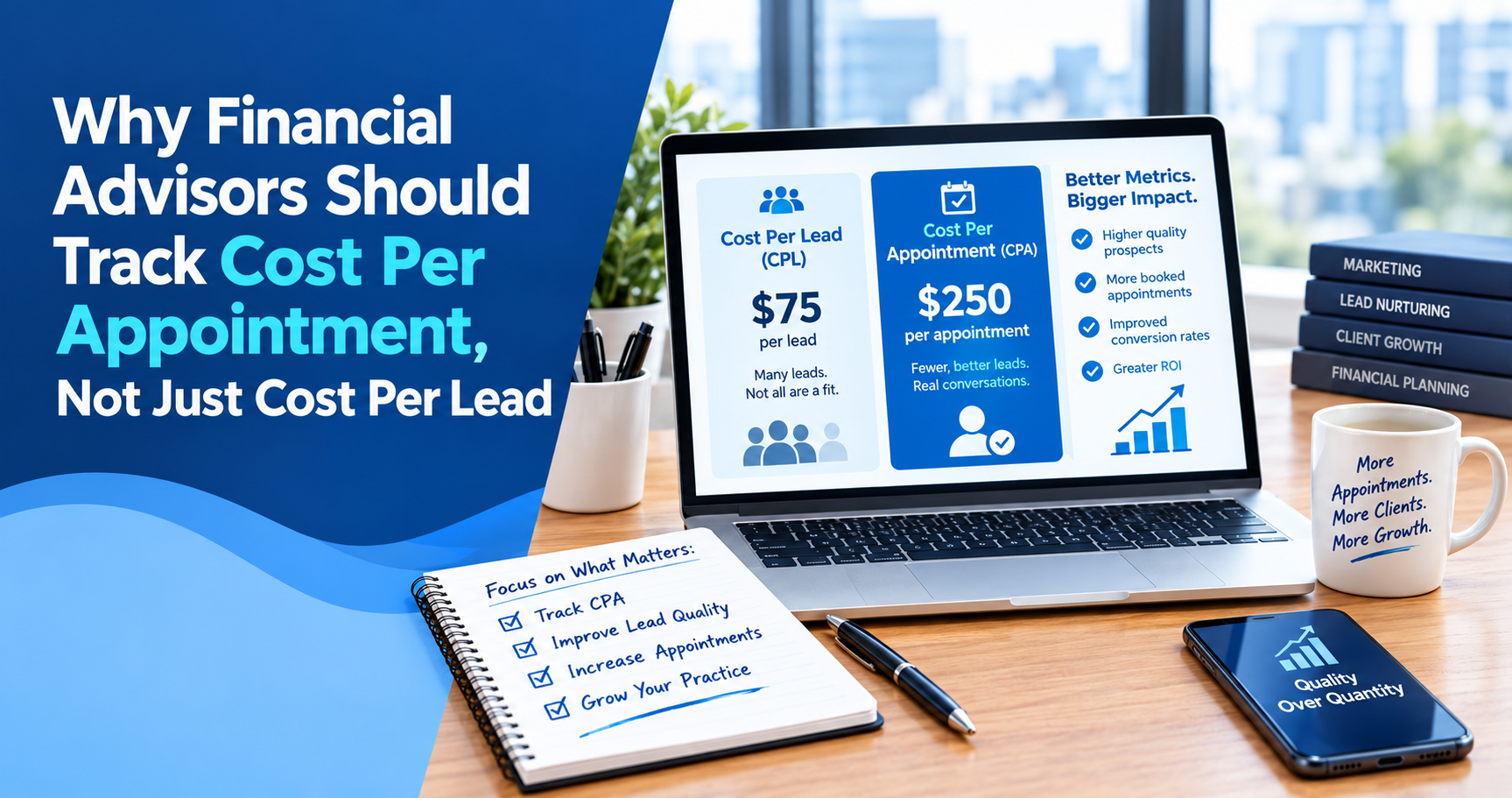
A checklist is a useful starting point, but technical SEO should ultimately support a larger objective: making your financial advisor website easier to discover, easier to use, and better positioned to turn relevant visitors into meaningful inquiries. Once visitors reach your website, having a clear path to take the next step is equally important. Financial firms can use booked appointments as part of a broader strategy for turning qualified website visitors into scheduled conversations.
If your technical foundation is strong, your content, local SEO, and other digital marketing efforts have a better environment in which to perform.
FAQs About Technical SEO for Financial Advisor Websites
1. What is technical SEO for financial advisor websites?
Technical SEO is the process of improving a financial advisor website’s technical structure, accessibility, performance, and search-engine discoverability. It includes areas such as crawling, indexing, XML sitemaps, redirects, site speed, mobile usability, and structured data.
2. Why is technical SEO important for financial advisors?
Technical SEO helps search engines access and understand important website pages while also improving the experience for visitors. A strong technical foundation supports broader SEO, content marketing, and lead-generation efforts.
3. What should a technical SEO audit for a financial advisor website include?
A technical SEO audit can examine crawlability, indexing, XML sitemaps, robots.txt, broken links, redirects, canonical tags, Core Web Vitals, mobile usability, HTTPS, internal linking, duplicate content, structured data, images, and metadata.
4. Does a financial advisor website need schema markup?
Relevant schema markup can help search engines better understand certain types of content and entities on a website. It should be implemented accurately and should reflect information that is actually present on the page.
5. Can technical SEO help financial advisors generate more leads?
Technical SEO can support lead generation by making important pages easier for search engines to discover and for visitors to use. However, leads also depend on factors such as content quality, service positioning, trust signals, calls to action, website experience, and overall marketing strategy.
Disclaimer:
This article is provided for general educational and informational purposes only. SEO practices, search engine guidelines, website technologies, and best practices can change over time. The information presented here should not be considered a guarantee of search rankings, website traffic, leads, or business results. Financial advisors and firms should evaluate their specific website and business requirements and consult qualified SEO, web development, legal, or compliance professionals when appropriate. Revenx does not provide financial, investment, legal, or regulatory advice through this article.