- Written & Reviewed by Jeremy
- Published
- Last Updated Oct 01, 2026
Generating leads is only the first step in growing a financial advisory business. The real challenge is turning those inquiries into meaningful conversations and booked appointments. Many financial advisors invest in marketing but struggle to convert website visitors and interested prospects into actual consultations.
A well-structured financial advisor marketing funnel helps solve this problem. It guides potential clients through each stage of the decision-making process, from discovering your services to scheduling an appointment. With the right combination of SEO for financial advisors, lead generation, follow-ups, email marketing, and appointment booking, financial advisors can build a more consistent client acquisition process.
In this guide, we’ll explain how to build a financial advisor funnel, improve lead conversion, and create a smoother journey from the first inquiry to a booked appointment.
What Is a Financial Advisor Marketing Funnel?
A financial advisor marketing funnel is a process that guides potential clients from discovering your firm to booking a consultation.
For example, a prospect may find your retirement planning blog, download a guide, receive helpful follow-up emails, and eventually schedule an appointment.
A typical funnel has five stages:
- Awareness: Prospects discover your firm through SEO, social media, ads, or referrals.
- Lead Generation: Visitors become leads through forms, guides, webinars, or consultation requests.
- Lead Nurturing: Educational content and emails build ongoing engagement.
- Appointment Booking: Interested prospects schedule a consultation.
- Conversion: The advisor meets with the prospect and determines whether the services are suitable
Each stage helps move prospects toward the next step while creating a more organized client acquisition process.
Why Do Financial Advisors Need a Lead-to-Appointment Funnel?
Generating leads doesn’t always result in booked appointments. A structured funnel helps financial advisors manage prospects and move them toward the next step.
- Inconsistent follow-ups: A defined process helps ensure leads don’t get overlooked.
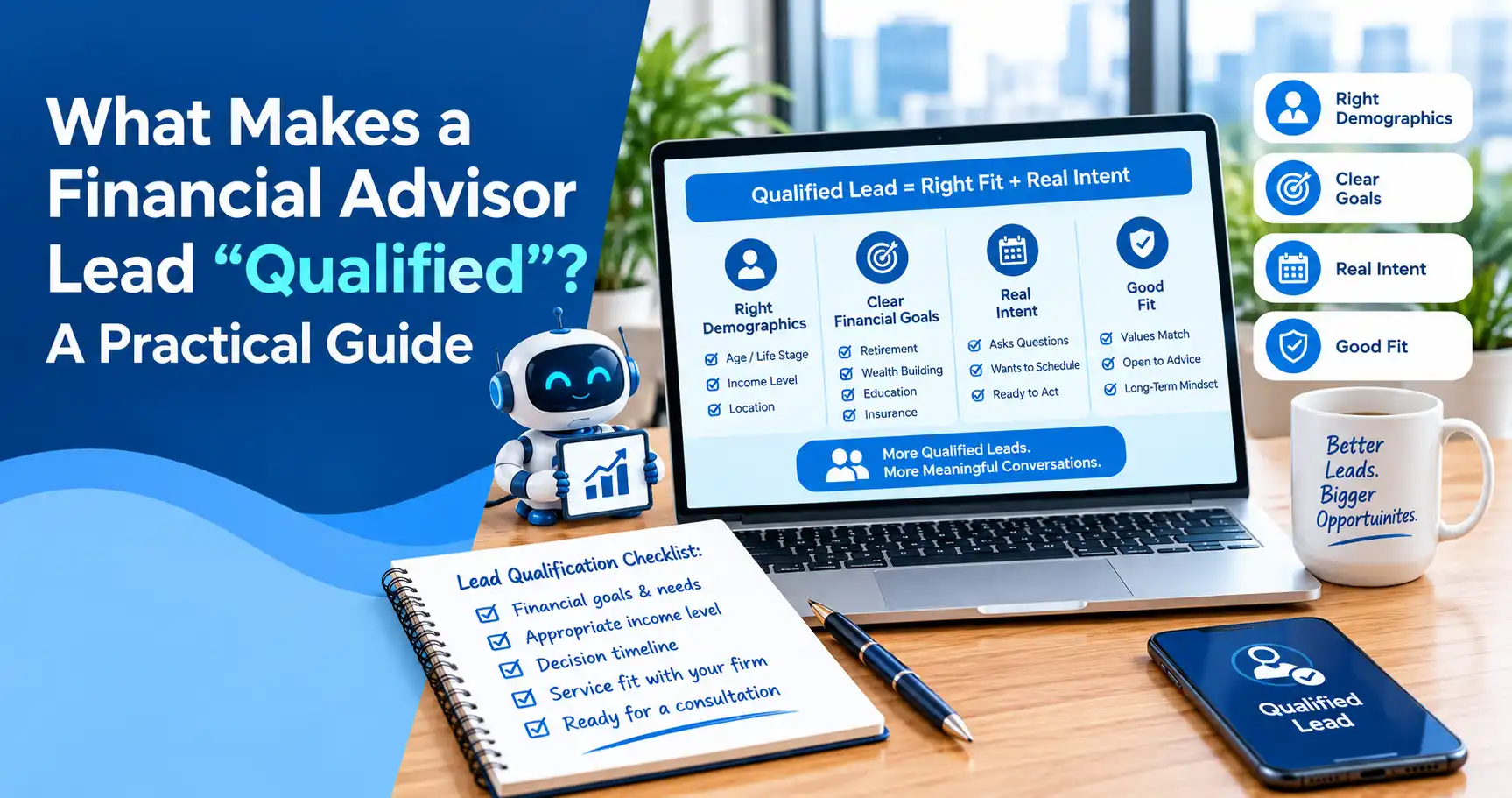
- Unqualified leads: Qualification helps identify prospects who may be a better fit for your services.
- Low appointment bookings: Clear CTAs and simple scheduling can make booking easier.
- Lost opportunities: Educational content and timely follow-ups keep your firm connected with prospects who need more time.
A lead-to-appointment funnel brings these activities together and creates a more consistent process for managing potential clients.
What Are the Key Stages of a Financial Advisor Funnel?
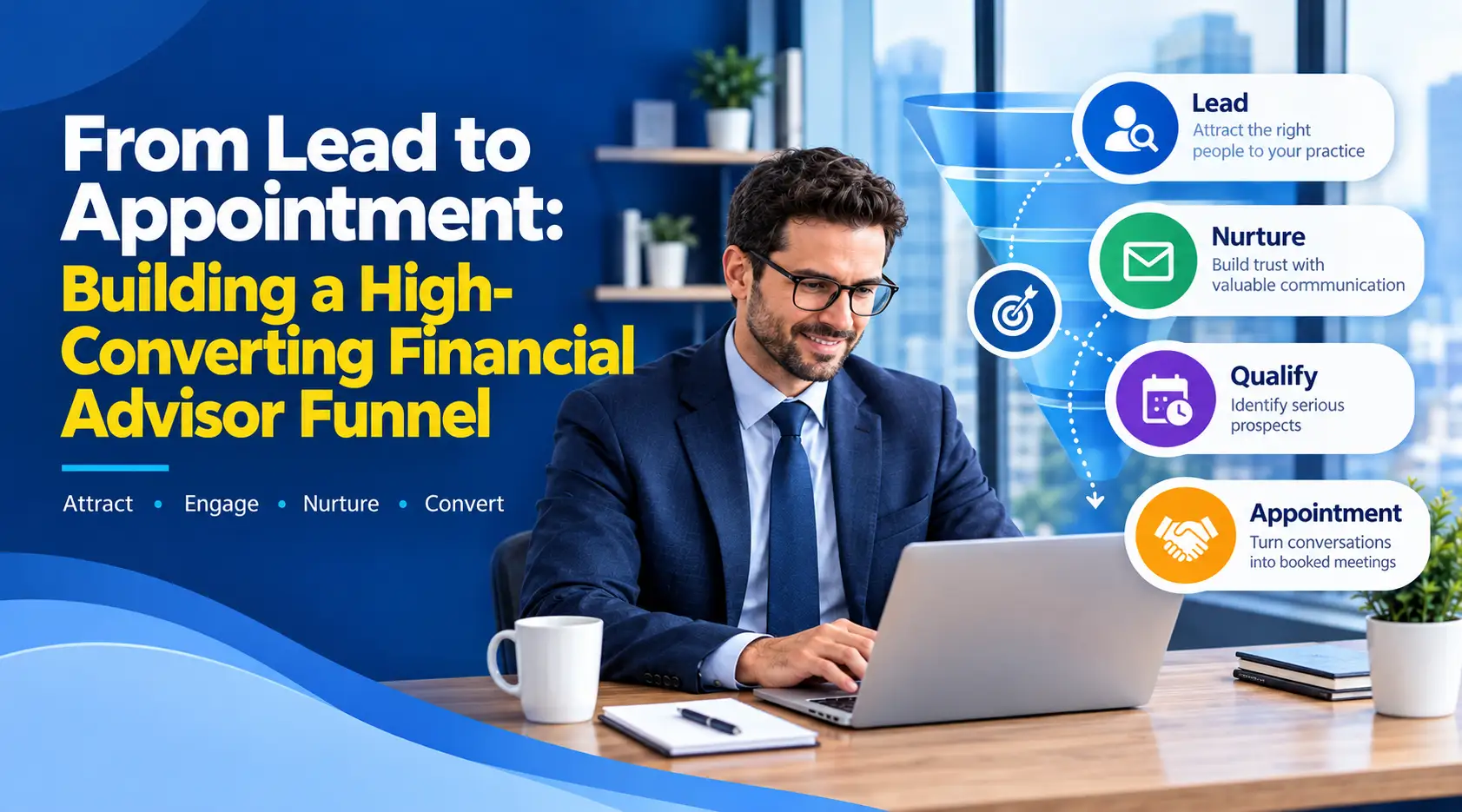
A financial advisor funnel guides prospects from discovering your firm to booking an appointment. The key stages are:
Stage 1: Attract the Right Leads
Use SEO, content marketing, paid ads, social media, and webinars to reach people who need your financial services.
Stage 2: Capture Leads
Use focused landing pages, forms, and clear calls to action to turn website visitors into leads. Keep forms simple and relevant.
Stage 3: Qualify Leads
Ask basic questions about a prospect’s needs, goals, and timing to understand whether your services may be a good fit.
Stage 4: Nurture Leads
Use email marketing and helpful content to stay connected with prospects who aren’t ready to book immediately. Focus on providing value rather than repeated sales messages.
Stage 5: Book Appointments
Make scheduling easy with a clear CTA, online booking, available time slots, confirmations, and reminders.
Stage 6: Follow Up
Reconnect with interested prospects who haven’t booked. Share relevant resources and provide another opportunity to schedule without creating unnecessary pressure.
How to Build a High-Converting Financial Advisor Funnel Step by Step
A high-converting funnel starts with a clear process for attracting, nurturing, and converting the right prospects.
Step 1: Define Your Ideal Client
Identify your target clients, their financial needs, common concerns, relevant services, and signs they are ready to speak with an advisor.
Step 2: Choose Lead Generation Channels
Use channels that match your audience and goals, such as SEO, content marketing, paid advertising, social media, and webinars. Focus on lead quality rather than using every channel.
Step 3: Create a Focused Landing Page
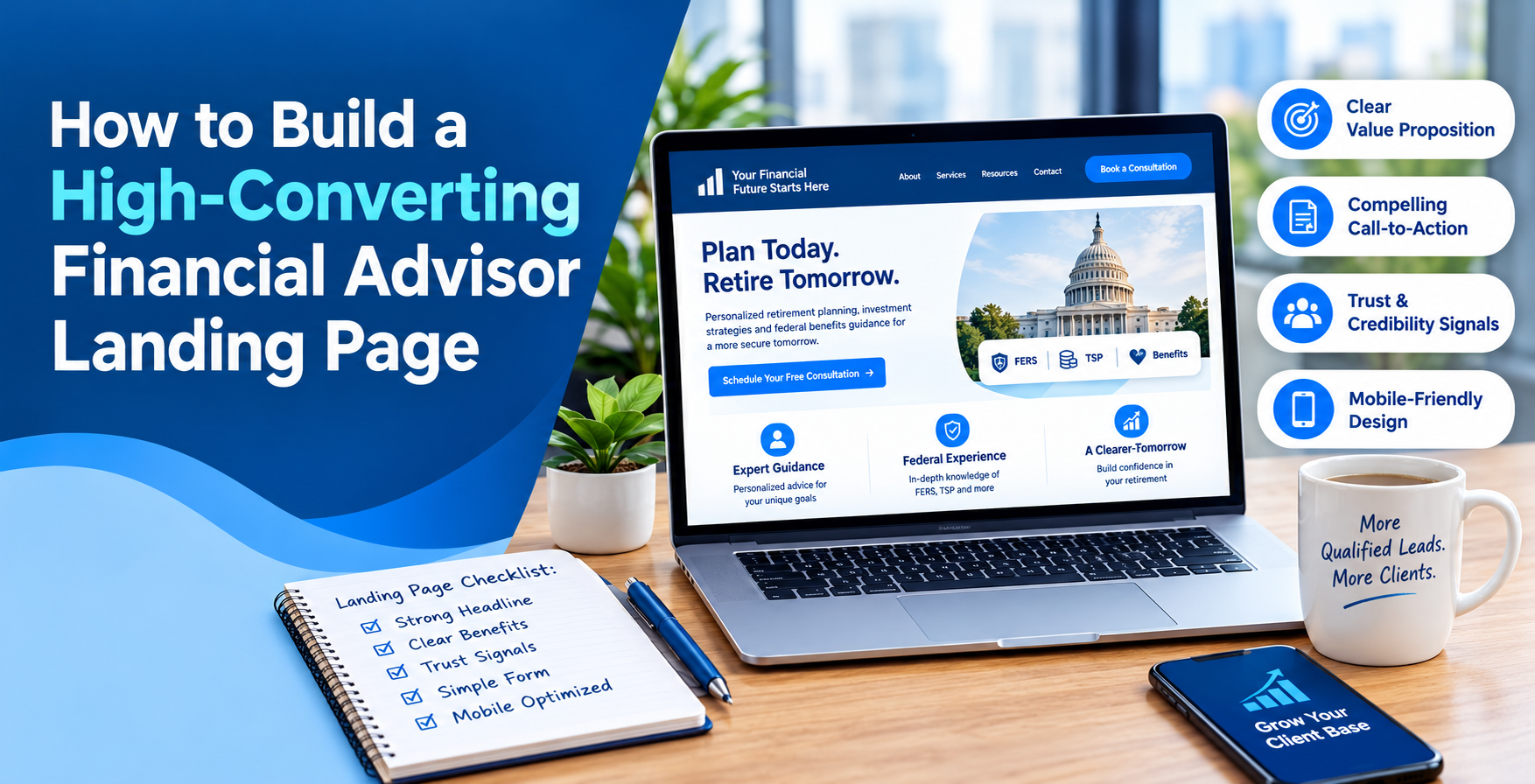
Build landing pages around specific services or offers. Use a clear headline, relevant information, simple forms, and one primary call to action.
Step 4: Set Up Lead Nurturing
Use email and CRM automation to deliver resources, share educational content, and follow up with prospects. Keep communication relevant and compliant.
Step 5: Simplify Appointment Booking
Make it easy for prospects to schedule a meeting. Provide clear appointment details, available times, confirmations, and appropriate reminders.
Step 6: Track and Improve Performance
Monitor each funnel stage to identify where prospects drop off. Review traffic, leads, bookings, and conversion rates, then improve the areas that need attention.
Which Marketing Channels Help Financial Advisors Convert Leads Into Appointments?
Different channels help attract, nurture, and convert financial advisor leads.
SEO and Content Marketing
Create helpful content around retirement planning, financial planning, and insurance questions to attract relevant search traffic and guide visitors toward service pages.
Email Marketing
Use educational emails, newsletters, and follow-ups to stay connected with prospects and encourage them to take the next step.
Paid Advertising and Retargeting
Use targeted ads to reach potential clients and retarget eligible visitors who showed interest but didn’t complete an action. Focus on qualified inquiries and appointments, not just clicks.
Webinars and Educational Events
Webinars can build trust by addressing specific financial topics. Follow up with attendees using helpful resources and a clear consultation CTA.
Financial Advisor Funnel vs. Traditional Lead Generation
Traditional lead generation focuses primarily on attracting inquiries. A complete financial advisor funnel goes further by managing what happens after someone expresses interest, including AI appointment setting for financial advisors to help move qualified prospects toward scheduled conversations.
Factor | Traditional Lead Generation | Financial Advisor Marketing Funnel |
Main focus | Generating inquiries | Moving prospects toward appointments |
Follow-up | May be manual or inconsistent | Uses a defined follow-up process |
Lead qualification | May be limited | Includes a process for assessing lead relevance |
Communication | Often focused on initial contact | Includes ongoing lead nurturing |
Appointment booking | Depends on the prospect taking the next step | Provides clear booking options and follow-ups |
Performance tracking | Often focuses on lead volume | Tracks leads, bookings, and conversions |
Long-term approach | Focuses on acquiring inquiries | Supports relationship-building throughout the prospect journey |
A traditional lead generation campaign can still be useful. However, without an effective follow-up and appointment booking process, some interested prospects may never progress further.
A funnel helps connect lead generation with the activities needed to move prospects toward a consultation.
How Does Lead Nurturing Improve Financial Advisor Appointment Rates?
Lead nurturing helps financial advisors maintain relationships with prospects who aren’t ready to schedule an appointment immediately.
Financial decisions often require research and careful consideration. Prospects may want to understand an advisor’s services, learn about relevant financial topics, or compare different options before making contact.
Educational content can help address these questions.
For example, a prospect interested in retirement planning might receive articles about retirement income, Social Security considerations, or common retirement planning mistakes.
Relevant content gives prospects useful information while helping them become more familiar with your firm’s expertise.
Lead nurturing can also help advisors identify prospects who are becoming more interested in a consultation. Someone who responds to an email or requests additional information may be ready for a more direct conversation.
However, nurturing should be based on the prospect’s interests and communication preferences. Sending frequent promotional messages without providing value can reduce engagement.
What Are the Common Mistakes in a Financial Advisor Conversion Funnel?
Even a well-designed marketing funnel can underperform if important steps are overlooked.
Here are some common mistakes financial advisors should watch for.
- Focusing on lead quantity instead of quality
A large number of inquiries may look encouraging, but not every lead will be relevant to your services. Focus on attracting and identifying prospects whose needs align with your firm’s offerings.
- Using generic landing pages
A landing page that doesn’t address the visitor’s needs may struggle to generate inquiries. Create focused pages that explain the relevant service or offer.
- Delaying follow-ups
When prospects submit inquiries, an unclear response process can result in missed opportunities. Establish a consistent way to acknowledge and respond to new leads.
- Sending too many promotional emails
Frequent appointment requests without useful information can frustrate prospects. Balance consultation invitations with educational content.
- Making appointment booking complicated
Too many steps, unclear instructions, or limited scheduling options can discourage prospects. Keep the booking process simple and explain what happens next.
- Ignoring leads that don’t book immediately
Some prospects need more time before scheduling a consultation. A relevant follow-up process can help maintain communication without applying unnecessary pressure.
7. Failing to track funnel performance
Without tracking, it’s difficult to identify where prospects are dropping out. Monitor lead quality, appointment bookings, and attendance to understand how your funnel is performing.
How to Measure the Performance of Your Financial Advisor Funnel
Tracking the right metrics helps financial advisors understand whether their marketing activities are producing meaningful results. This includes evaluating AI vs. human appointment setting for financial advisors and how each approach can support appointment generation and follow-up.
Instead of measuring success only by the number of leads generated, review the entire journey from the first inquiry to the booked appointment.
Metric | What It Measures | Why It Matters |
Lead conversion rate | Percentage of visitors who become leads | Helps evaluate how effectively your website captures inquiries |
Lead qualification rate | Percentage of leads meeting your criteria | Indicates the relevance of incoming inquiries |
Appointment booking rate | Percentage of leads who book appointments | Measures how effectively leads progress toward consultations |
Appointment show-up rate | Percentage of booked appointments attended | Helps assess appointment confirmation and attendance |
Lead response time | Time taken to respond to a new inquiry | Helps identify delays in follow-up |
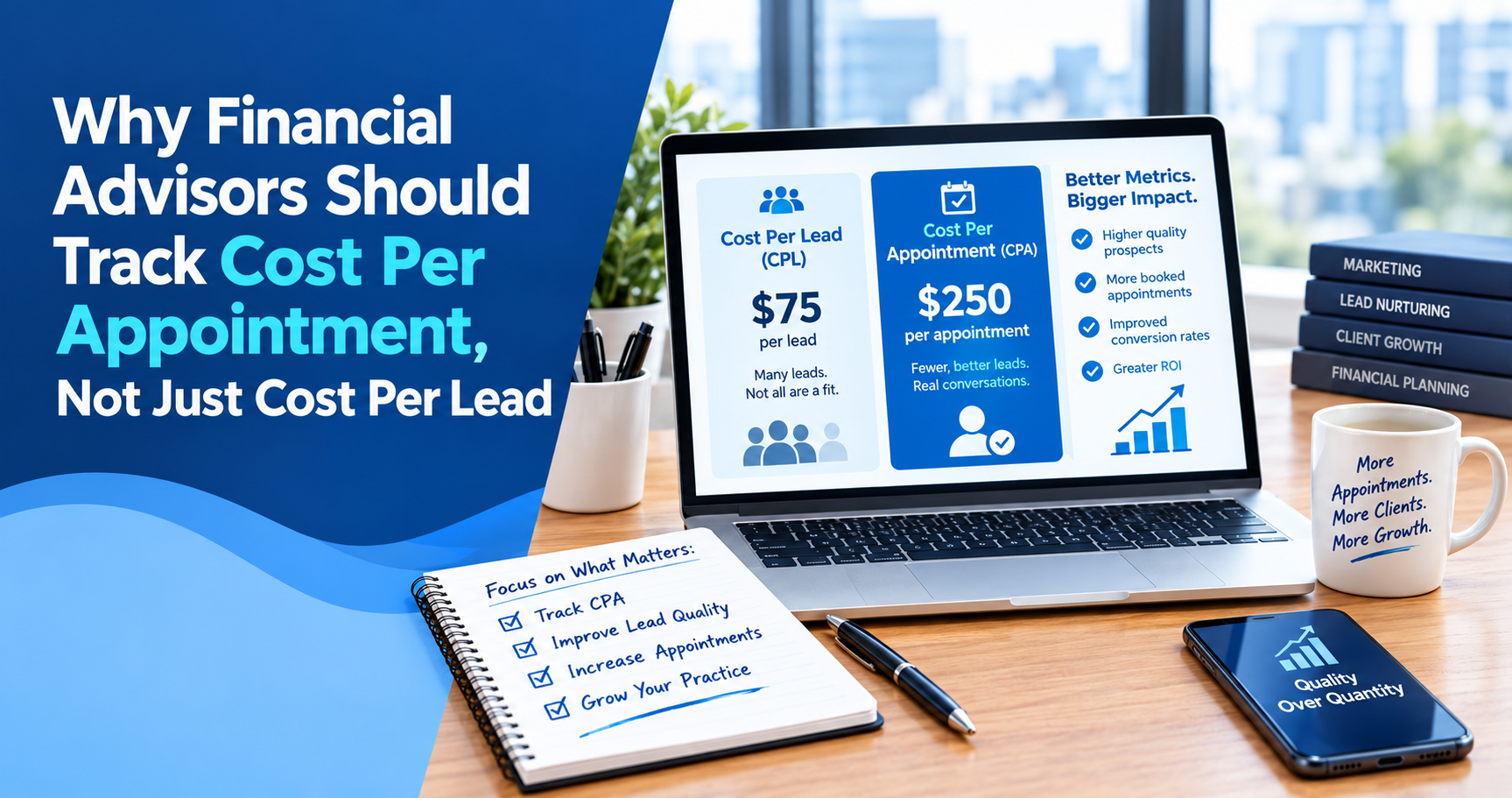
Cost per qualified lead | Marketing cost for each qualified lead | Helps evaluate the cost of attracting relevant prospects |
Review these metrics regularly to identify areas that need attention.
For example, a high number of leads combined with a low appointment booking rate may indicate a problem with follow-ups, lead qualification, or the booking experience.
Similarly, a high booking rate but low attendance may suggest that appointment confirmations or reminders need improvement.
Use these insights to test changes and refine your funnel over time.
How Can a Financial Marketing Agency Help Build Your Funnel?
Building and managing a financial advisor funnel involves several connected activities, including lead generation, content creation, email marketing, landing page optimization, and performance tracking.
A specialized financial marketing agency can help coordinate these activities.
Depending on its services, an agency may support your firm with:
- Financial advisor lead generation: Developing campaigns to attract relevant prospects.
- SEO and content marketing: Creating educational content and optimizing website pages for relevant searches.
- Landing page optimization: Improving page structure, messaging, and calls to action.
- Email marketing automation: Setting up follow-up sequences and educational email campaigns.
- CRM integration: Helping organize prospect information and track follow-up activities.
- Appointment booking optimization: Reviewing the process prospects follow when scheduling consultations.
When choosing an agency, look for experience with financial services, a clear understanding of your target audience, and a transparent approach to reporting.
Financial marketing also involves compliance considerations. Make sure your agency understands that content, advertising, testimonials, and email campaigns may be subject to applicable regulatory requirements.
An agency can support your marketing process, but your firm should retain appropriate oversight of its communications and compliance obligations.
When Should Financial Advisors Optimize or Rebuild Their Marketing Funnel?
Your funnel may need attention when marketing activity isn’t translating into meaningful conversations.
Some common signs include:
- Your website receives traffic, but visitors rarely submit inquiries.
- You generate leads, but few schedule consultations.
- Prospects frequently stop responding after their initial inquiry.
- Email campaigns receive limited engagement.
- Many booked appointments result in no-shows.
- Your team struggles to track inquiries from different marketing channels.
Start by identifying the stage where prospects are dropping out.
If visitors aren’t submitting forms, review your landing pages and offers. If leads aren’t booking appointments, examine your qualification process, follow-up messages, and agency and IMO appointment-setting strategies.
You may only need to improve one part of the funnel rather than rebuild the entire system.
However, if your marketing channels, lead management process, and appointment booking system aren’t connected, a more comprehensive review may be useful.
How to Turn More Financial Advisor Leads Into Appointments
Turning leads into appointments requires a consistent process that connects marketing with timely communication.
Start by attracting prospects whose needs align with your services. Give them useful information, make it easy to express interest, and use relevant follow-ups to help them understand their next steps.
A few practical actions can help strengthen your process:
- Review your target audience: Make sure your marketing speaks to the people your firm wants to serve.
- Improve your landing pages: Use clear messaging and simple forms to make inquiries easier.
- Respond promptly: Establish a consistent process for acknowledging new leads.
- Nurture interested prospects: Share educational content and relevant follow-ups.
- Simplify appointment booking: Make scheduling straightforward and explain what prospects can expect.
- Monitor performance: Track bookings, attendance, and lead quality to identify opportunities for improvement.
These activities work together. Improving only lead generation may not solve problems caused by poor follow-up or a complicated booking process.
A complete funnel gives financial advisors a way to review and improve the entire prospect journey.

Final Thoughts: Building a Financial Advisor Funnel That Converts
A successful financial advisor funnel involves more than attracting website visitors or collecting contact information. It requires a clear process for guiding interested prospects from their first interaction with your firm to a meaningful conversation.
By combining targeted lead generation, useful content, timely follow-ups, and simple appointment booking, financial advisors can create a more organized approach to client acquisition.
The key is to understand what happens at every stage of the funnel. Track where prospects lose interest, identify areas that need improvement, and make changes based on actual performance.
Whether you manage your marketing internally or work with a specialized agency, a well-organized lead-to-appointment process can help your firm make better use of website traffic and avoid missed lead opportunities.
Looking to improve your financial advisor lead generation and appointment booking process? Review your current funnel and identify the steps where prospects need clearer information, better follow-ups, or an easier way to schedule a consultation.
FAQs About Financial Advisor Marketing Funnels
1. What is a financial advisor marketing funnel?
A financial advisor marketing funnel is a process that guides potential clients from discovering an advisor’s services to booking an appointment. It includes lead generation, lead qualification, nurturing, follow-ups, and appointment scheduling.
2. How do financial advisors turn leads into appointments?
Financial advisors can convert leads into appointments by responding promptly, understanding prospects’ needs, sharing relevant educational content, and providing a simple appointment booking process. Consistent follow-ups can also encourage interested prospects to take the next step.
3. What is a good lead-to-appointment conversion rate for financial advisors?
There is no single conversion rate for every financial advisor. Results depend on lead sources, target audiences, services, and follow-up processes. Advisors should track their conversion rates to identify opportunities for improvement.
4. How does email marketing help financial advisors convert leads?
Email marketing helps financial advisors stay connected with prospects who may not be ready to book immediately. Educational emails, relevant resources, and consultation invitations can build engagement and encourage prospects to schedule an appointment.
5. Can marketing automation help financial advisors book more appointments?
Yes. Marketing automation can help financial advisors manage inquiries, send follow-up emails, organize prospect information, and provide appointment reminders. It supports a consistent lead nurturing process and helps reduce missed follow-up opportunities.
Disclaimer:
This article is for general informational and educational purposes only and does not constitute financial, investment, legal, or tax advice. Marketing strategies and results may vary based on your firm, audience, services, and compliance requirements. Financial advisors should review marketing materials and communications with their appropriate compliance or legal professionals before publishing or using them.