- Written & Reviewed by Jeremy
- Published
- Last Updated Jun 10, 2026
No-shows are one of the most common and costly challenges in financial advisory businesses. Even when leads are qualified and appointments are booked, a portion of prospects fail to attend.
This does not usually happen because of disinterest. It happens because there is no structured system guiding the client from booking to attendance.
In financial services, where every appointment carries high value, improving show-up rates can often be more impactful than increasing lead volume.
This guide explains how to reduce no-shows for financial advisor appointments using a structured, compliance conscious system built for real advisory workflows.
Why Financial Advisor Appointments Get Missed
Most no-shows are predictable and happen due to behavioral gaps in the client journey.
1. Weak commitment at booking
If booking is too simple or passive, clients do not fully commit psychologically.
2. Low perceived value
If the client does not understand what they will gain, the appointment feels optional.
3. Forgetfulness
Without structured reminders, even interested prospects forget.
4. Long gaps before the appointment
The longer the delay between booking and meeting, the lower the attendance rate.
5. Lack of communication after booking
Many advisors stop engaging after confirmation, which weakens intent.
Why Reducing No-Shows Matters for Financial Advisors
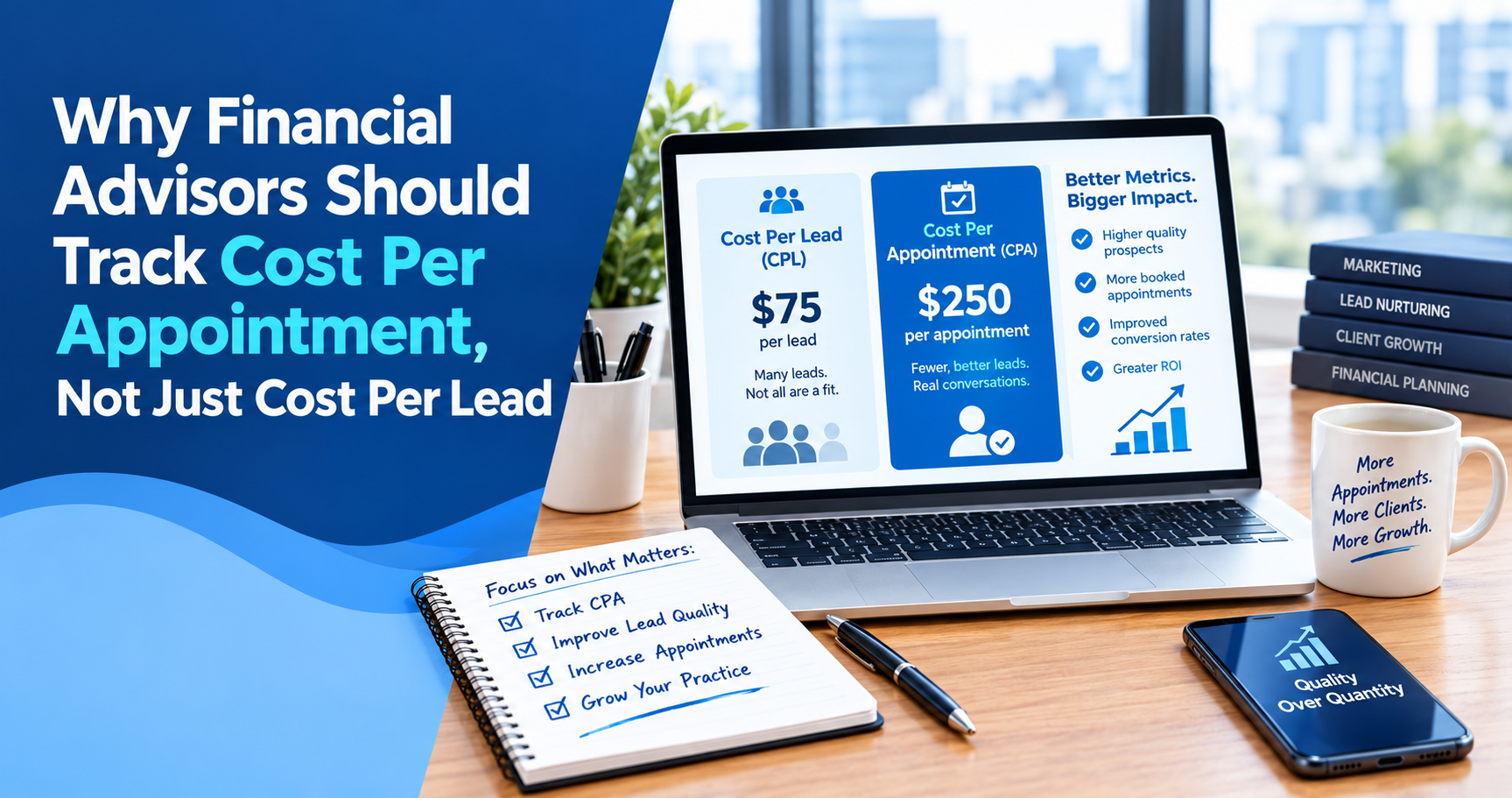
Reducing missed appointments directly improves business efficiency without increasing marketing spend.
High no-show rates lead to:
- Higher cost per acquired client
- Wasted advisor preparation time
- Lower conversion rates from leads
- Unpredictable calendar utilization
Even small improvements in attendance rates can significantly increase revenue efficiency.
This is why modern firms treat appointment attendance as part of their financial advisor lead generation system, not a separate task.
What Is a Healthy Appointment Show-Up Rate?
Typical industry ranges:
- High-performing firms: 80%–90%
- Average firms: 65%–75%
- Underperforming systems: below 60%
If your firm is below 70%, the issue is usually not lead volume it is process design.
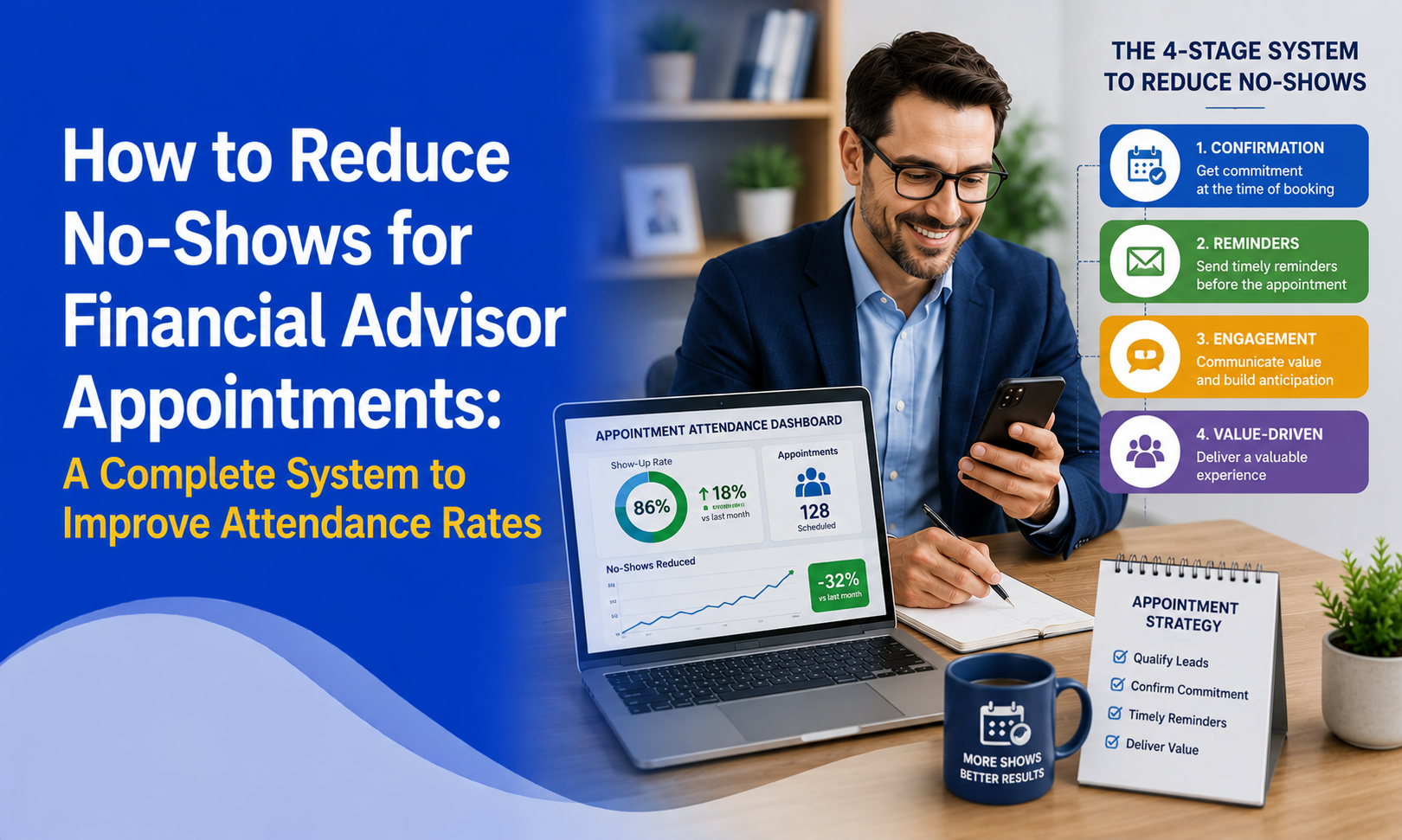
The Advisor Appointment Attendance System (AAAS)
Instead of isolated tactics, high-performing advisors use a structured system.
This system includes four stages:
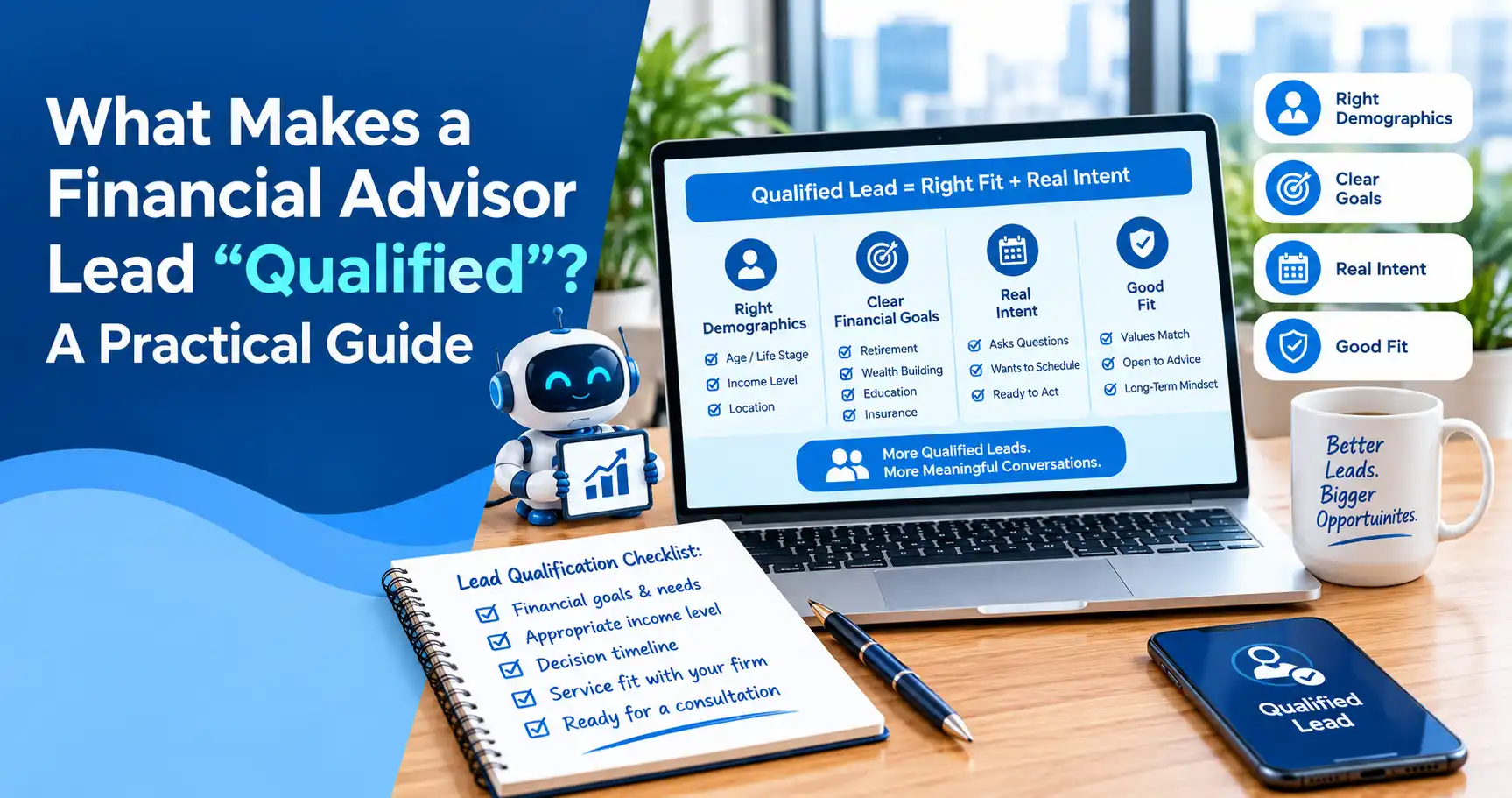
Stage 1: Lead Qualification Before Booking
No-show reduction begins before the appointment is scheduled.
Better-qualified leads are:
- more financially ready
- more engaged with your messaging
- more likely to value the consultation
This is where strong financial services content marketing and education-based funnels improve attendance quality.
Stage 2: Commitment-Based Booking Confirmation
The goal is not just scheduling, it is creating commitment.
Effective confirmation methods:
- “Reply YES to confirm your appointment” SMS
- Instant calendar invite with clear purpose
- Short confirmation message outlining expectations
This step increases psychological commitment and reduces drop-offs.
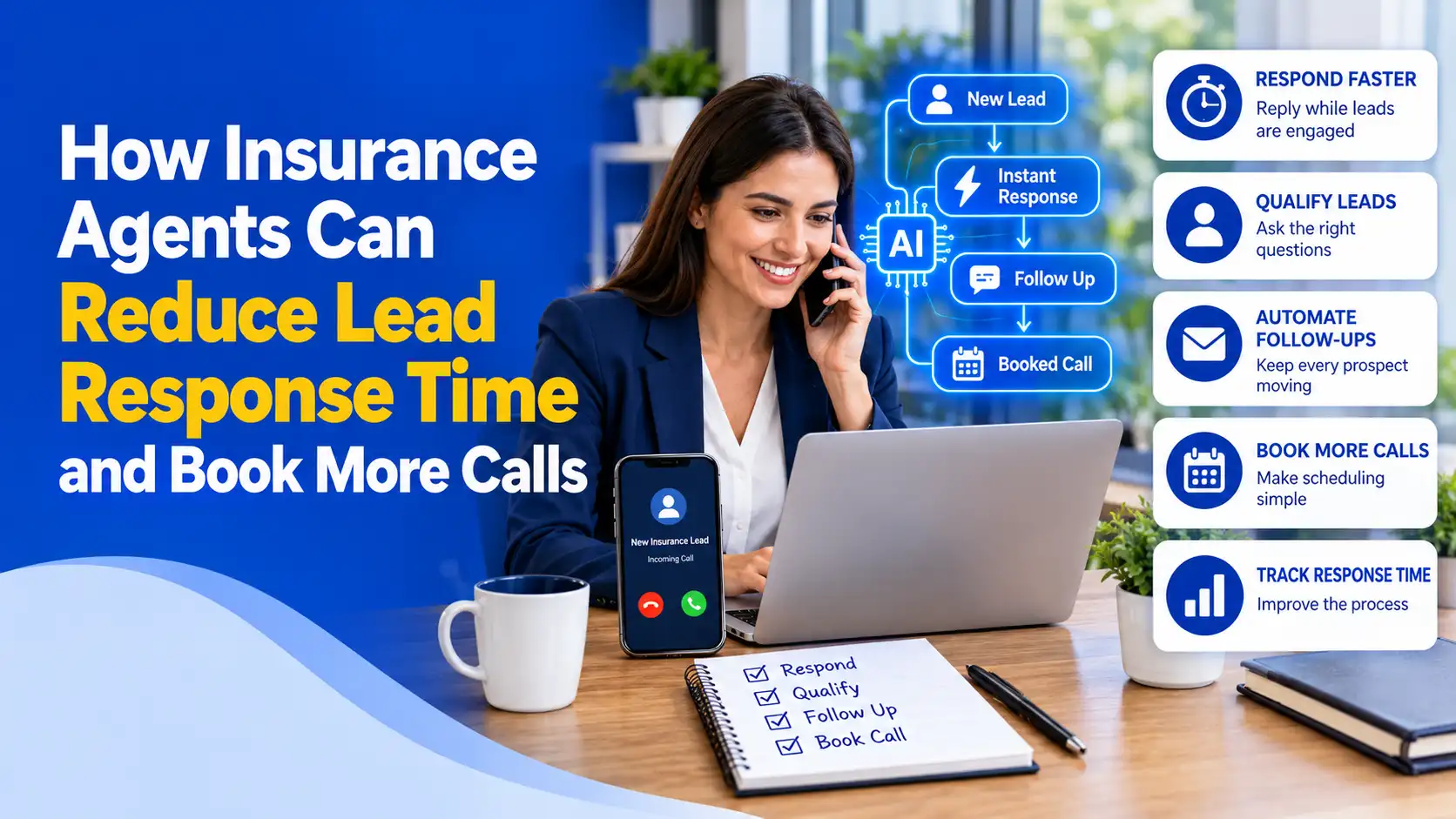
Stage 3: Structured Reminder System
A consistent reminder sequence is essential.
Recommended flow:
- Immediately after booking → confirmation message
- 24 hours before → reminder with value reinforcement
- 1–2 hours before → short attendance reminder
Example reminder:
“Reminder: Your consultation is scheduled for tomorrow at 3:00 PM. We look forward to speaking with you.”
In financial services, clarity and professionalism are more effective than urgency or pressure.
These signals help indicate intent strength before any conversation occurs.
Stage 4: Pre-Appointment Engagement
This is one of the most overlooked stages.
Before the meeting, advisors should send:
- A short video explaining the consultation
- A clear agenda of what will be discussed
- A simple checklist (if needed)
This improves perceived value and reduces drop-off rates.
It also aligns with best practices used in email marketing for financial advisors, where education improves engagement before conversion.
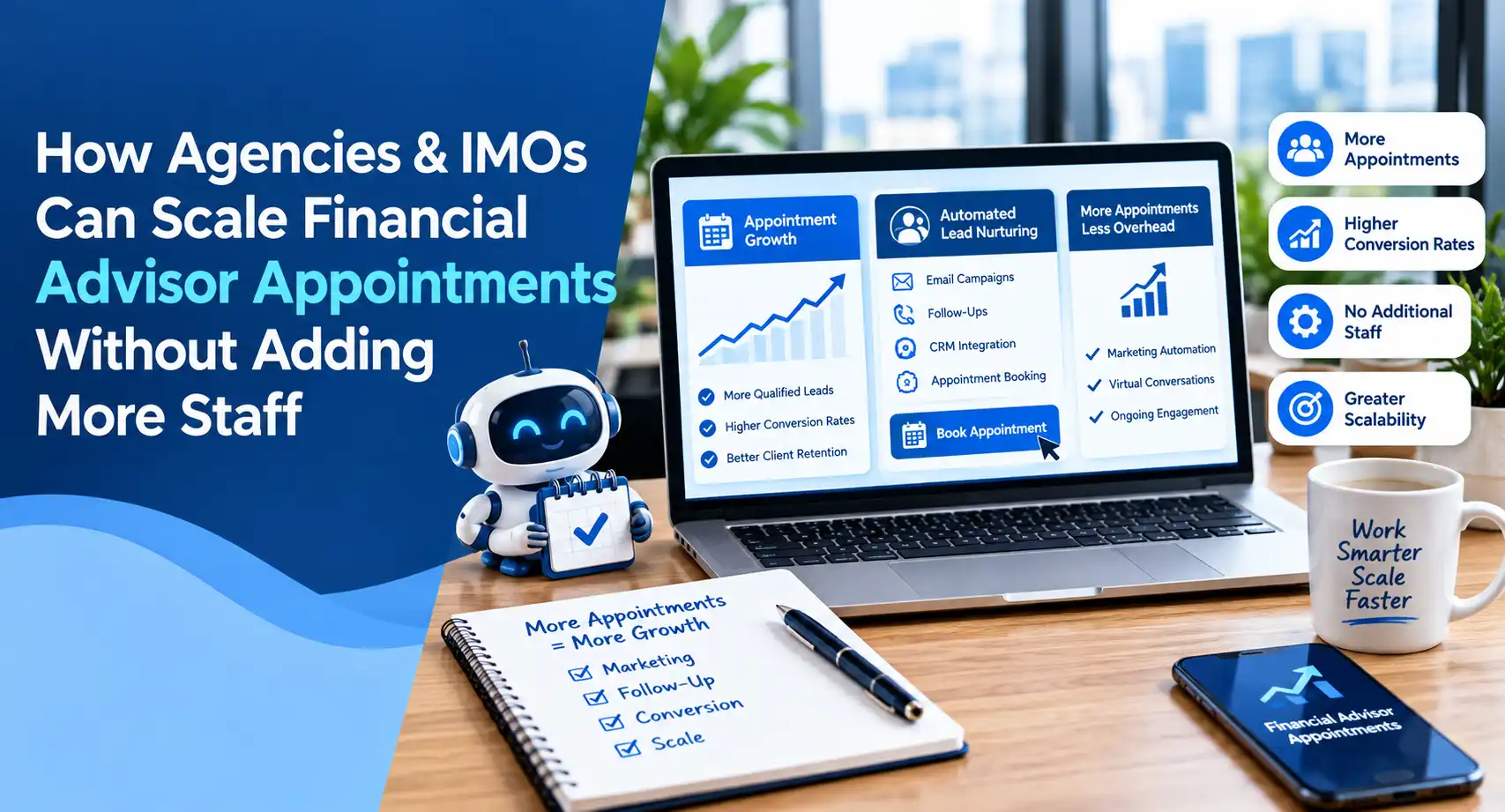
How Scheduling Systems Reduce No-Shows
A strong financial advisor booking system improves consistency and reduces human error.
Key features include:
- automated confirmations
- reminder workflows
- calendar synchronization
- time-zone detection
- structured availability rules
Automation ensures every client receives consistent communication.
Psychology Behind Appointment Attendance
Commitment effect
People are more likely to attend after multiple confirmations.
Clarity effect
Clear expectations reduce hesitation.
Loss aversion
Clients attend when they perceive they may miss valuable guidance.
Consistency bias
Once someone commits, they are more likely to follow through.
These psychological triggers work best when supported by structured communication.
Common Mistakes That Increase No-Shows
Many advisors unintentionally reduce attendance rates by:
- sending only one reminder
- failing to confirm after booking
- having long delays before appointments
- unclear communication about meeting value
- inconsistent follow-up systems
Even fixing one of these issues can improve attendance rates.
Manual Follow-Up vs Automated System
Factor | Manual System | Automated System |
Consistency | Low | High |
Time efficiency | Low | High |
Scalability | Limited | Strong |
No-show reduction | Moderate | Strong |
Lead engagement | Inconsistent | Continuous |
Automation improves reliability, not just efficiency.
When Should Financial Advisors Focus on No-Show Reduction?
This should be a priority if:
- your attendance rate is below 70%
- you rely on paid advertising for leads
- your calendar has frequent empty slots
- your team prepares for missed meetings
In many cases, improving attendance delivers faster ROI than increasing lead volume.
Compliance and Communication Best Practices (Important for Financial Services)
Financial advisors should ensure:
- communication remains professional and non-intrusive
- reminders are not misleading or pressure-based
- client consent is respected for SMS/email communication
- messaging aligns with regulatory expectations
This helps maintain trust and reduces compliance risk in communication strategies.

Final Thoughts: Building a Reliable Appointment System
Reducing no-shows is not about sending more reminders. It is about designing a structured client journey from booking to attendance.
High-performing advisory firms focus on:
- stronger lead qualification
- commitment-based booking systems
- structured reminder sequences
- pre-appointment education
- consistent client communication
When these systems work together, attendance rates improve naturally and revenue becomes more predictable.
Instead of asking how to generate more leads, a more important question is:
“How do we ensure the appointments we already booked actually show up?”
That shift is what separates average advisory operations from high-efficiency financial practices.
FAQs
1.What is the best way to reduce no-shows for financial advisor appointments?
A structured system combining confirmation, reminders, and pre-appointment engagement is most effective.
2. Why do clients miss financial advisor appointments?
Most no-shows occur due to forgetfulness, weak commitment, or unclear expectations.
3. How many reminders should be sent?
Typically 2–3 reminders: after booking, 24 hours before, and shortly before the appointment.
4. Does lead quality affect attendance?
Yes. Warmer leads from content, webinars, or referrals attend more consistently.
5. Can automation reduce no-shows?
Yes. Automation improves consistency and ensures no client is missed in follow-up.
Disclaimer
This content is for informational and educational purposes only and does not constitute financial, legal, or compliance advice. Financial advisors should ensure all client communication, appointment processes, and marketing practices comply with applicable regulatory guidelines and firm policies. Results may vary based on lead quality, systems used, and implementation consistency.