- Written & Reviewed by Jeremy
- Published
- Last Updated Jul 08, 2026
Growing a successful financial advisory business isn’t just about offering great financial advice anymore. Today’s clients research online, compare advisors, read educational content, and build trust long before they schedule their first consultation. If your business isn’t visible where prospects are searching, you’re likely losing opportunities to competitors who have invested in digital marketing.
A well-planned financial advisor marketing strategy helps you consistently attract qualified prospects instead of relying solely on referrals or unpredictable networking opportunities. By combining SEO, educational content, email campaigns, webinars, and a high-converting website, advisors can build a sustainable system for generating appointments and growing their practice.
Whether you’re an independent advisor, insurance agent, retirement planner, or wealth management firm, this guide walks you through a practical, step-by-step marketing strategy that focuses on long-term growth not short-term tactics.
Why Every Financial Advisor Needs a Marketing Strategy
Many advisors mistake marketing for running occasional ads or posting on social media. In reality, successful marketing is a structured process that guides potential clients from discovering your brand to becoming loyal clients.
Without a strategy, marketing efforts often become inconsistent. One month you publish blog posts, the next month you stop. You might try paid advertising for a few weeks, then abandon it because you don’t see immediate results. This stop-and-start approach rarely produces sustainable growth.
A well-defined marketing strategy helps you:
- Build trust before prospects contact you.
- Generate qualified leads consistently.
- Improve your online visibility.
- Reduce dependence on referrals.
- Create predictable business growth.
- Measure marketing performance effectively.
Rather than chasing every new marketing trend, advisors should focus on channels that consistently deliver results over time.
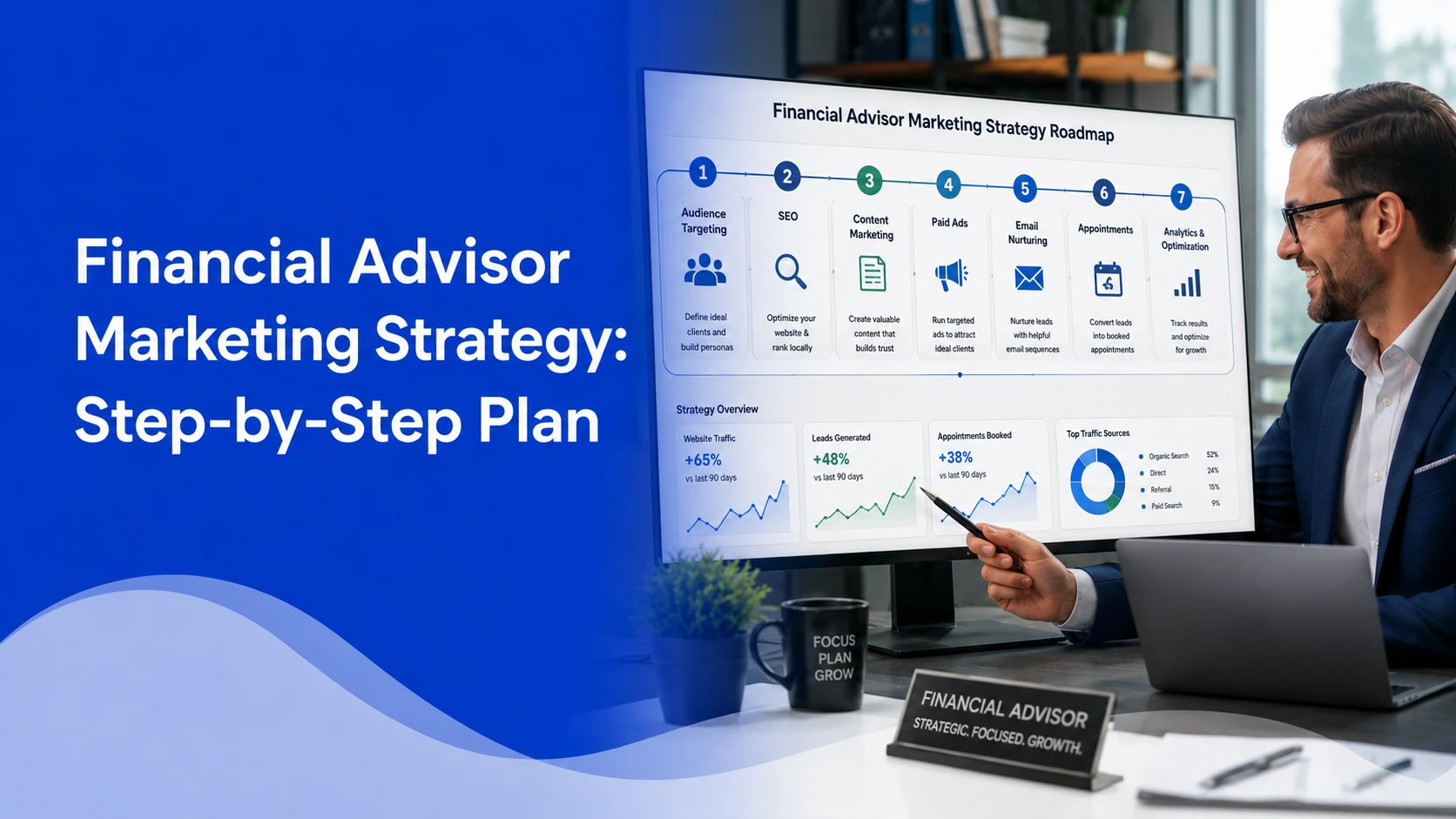
Step 1: Define Your Ideal Client
The first step in creating an effective financial advisor marketing strategy is identifying exactly who you want to serve.
Trying to market to everyone often means your message resonates with no one. Successful advisors focus on a specific audience and tailor their marketing around that group’s needs, concerns, and financial goals.
Some examples include:
- Federal employees
- Retirees
- Small business owners
- Physicians
- Executives
- High-net-worth families
- Young professionals
- Insurance clients
Once you’ve selected your niche, develop a detailed client profile.
Ask questions such as:
- What financial challenges do they face?
- What questions are they searching on Google?
- What keeps them awake at night?
- What financial goals are they trying to achieve?
- Which platforms do they use to research advisors?
Understanding these details helps create content that directly answers client questions while improving your website’s relevance for search engines.
For example, if your ideal audience is federal employees approaching retirement, your content should focus on pension planning, TSP strategies, retirement income planning, and healthcare benefits instead of generic financial advice.
The more specific your messaging becomes, the easier it is to attract qualified prospects.
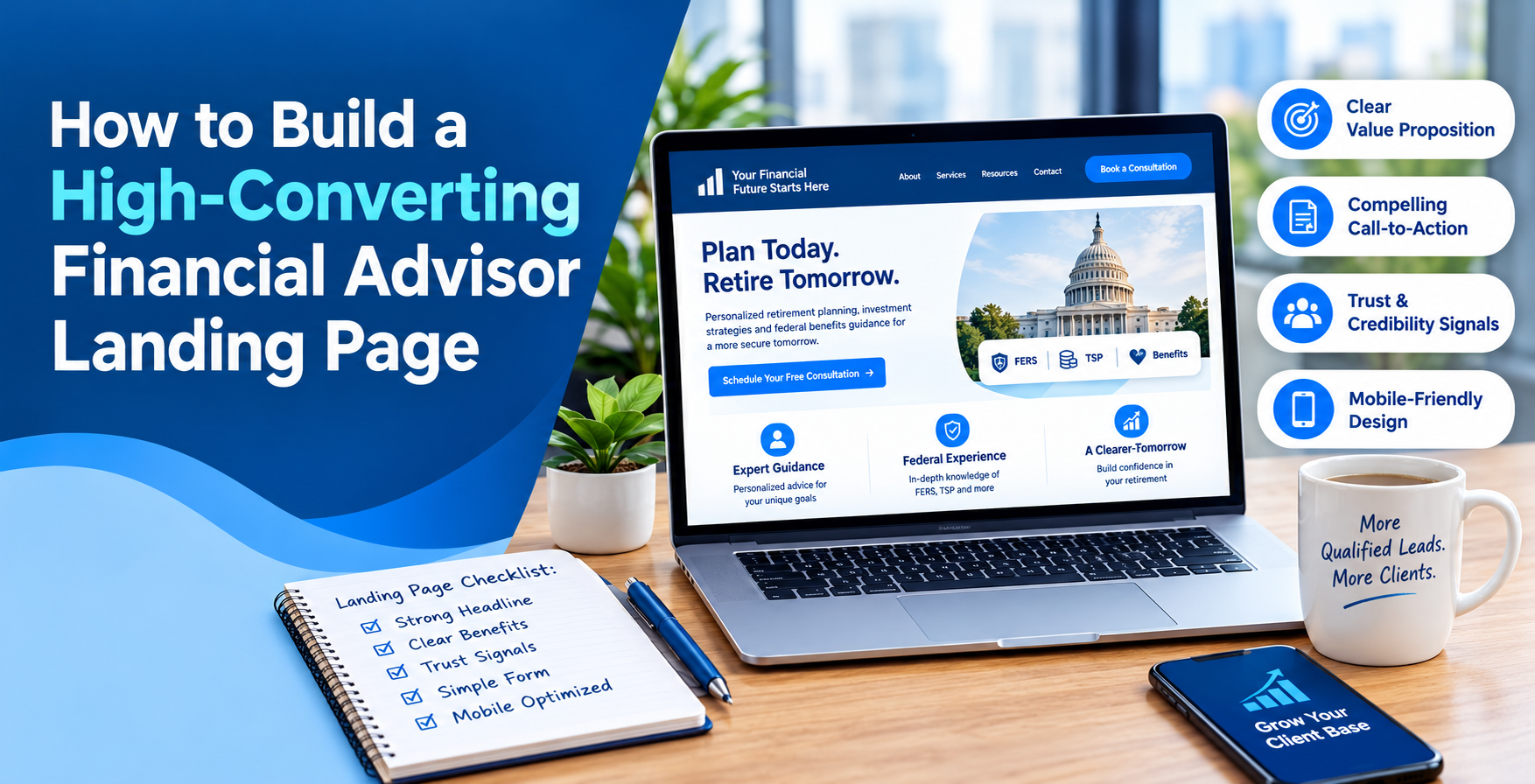
Step 2: Build a Website That Converts Visitors Into Appointments
Your website is often the first impression potential clients have of your business. Even the best marketing campaign won’t succeed if visitors land on a website that looks outdated, loads slowly, or fails to build trust.
A professional website should do more than explain your services; it should guide visitors toward taking the next step.
Key elements include:
Clear Value Proposition
Within a few seconds, visitors should understand:
- Who you help
- What services you offer
- Why they should trust you
- How to schedule a consultation
Avoid generic statements like “Helping clients achieve financial success.” Instead, clearly define your expertise.
For example:
Helping Federal Employees Prepare for Retirement with Personalized Financial Planning.
Specific messaging immediately resonates with your ideal audience.
Strong Calls-to-Action
Every important page should encourage visitors to take action.
Examples include:
- Schedule a Free Consultation
- Book Your Retirement Review
- Download Our Retirement Guide
- Request a Portfolio Review
Don’t make visitors search for your contact information.
Trust Signals
Financial services rely heavily on credibility.
Include:
- Client testimonials (where permitted by regulations)
- Professional certifications
- Industry experience
- Educational resources
- Secure website (HTTPS)
- Team introductions
- Frequently asked questions
Trust signals reduce uncertainty and encourage prospects to contact you.
Mobile Optimization
More than half of website visitors now browse using smartphones.
Your website should:
- Load quickly
- Display correctly on all devices
- Have clickable phone numbers
- Offer simple navigation
- Make forms easy to complete
Google also prioritizes mobile-friendly websites in search rankings.
Step 3: Invest in SEO for Financial Advisors
If you want prospects to discover your business organically, SEO for financial advisors should be a core part of your marketing strategy.
Search Engine Optimization helps your website appear when potential clients search for services like:
- Financial advisor near me
- Retirement planning advisor
- Investment advisor
- Medicare planning
- Wealth management
- Tax-efficient retirement strategies
Unlike paid advertising, SEO continues generating traffic long after content is published.
Keyword Research
Effective SEO starts with understanding what your audience is searching for.
Examples include:
- Retirement planning checklist
- Financial advisor fees
- Roth IRA conversion
- How to choose a financial advisor
- Social Security strategies
These topics become valuable blog posts that answer client questions while attracting search traffic.
Create Helpful Educational Content
Google rewards websites that provide useful, accurate, and trustworthy information.
Instead of writing promotional articles, focus on educating readers.
Helpful content includes:
- Step-by-step guides
- Financial planning checklists
- Retirement calculators
- Tax planning articles
- Investment education
- Frequently asked questions
Educational content builds trust before prospects ever contact your office.
Optimize for Local SEO
Many advisors primarily serve clients within a specific city or region.
Local SEO helps your business appear in Google Maps and local search results.
Focus on:
- Optimizing your Google Business Profile
- Collecting authentic client reviews (where compliant)
- Creating location-specific landing pages
- Maintaining consistent business information across directories
- Earning backlinks from reputable financial and local websites
This improves your visibility for local searches and supports financial advisor lead generation by connecting you with prospects actively looking for nearby financial professionals.
Build Topical Authority
Google increasingly rewards websites that demonstrate expertise across an entire subject rather than publishing isolated articles.
Instead of creating random blog posts, organize your content into related topics.
For example:
Retirement Planning Cluster
- Retirement Planning Checklist
- Roth IRA Guide
- Social Security Strategies
- Pension Planning
- Required Minimum Distributions
- Tax-Efficient Retirement Income
This structure signals expertise and encourages visitors to explore multiple resources, increasing both engagement and search visibility.
For more insights into what drives sustainable growth for advisory firms, explore our guide on Financial Advisor Marketing: What Actually Brings You Clients (What Doesn’t) and learn how effective strategies outperform one-off tactics.
Step 4: Build a Content Marketing System That Earns Trust
One of the biggest reasons financial advisors struggle to generate consistent leads is that they only market when they need new clients. A stronger approach is to create educational content that works for your business every day, answering common questions and building trust before a prospect ever reaches out.
Effective financial services content marketing isn’t about publishing as many articles as possible. It’s about consistently creating helpful, accurate, and relevant content that addresses your audience’s concerns at each stage of their decision-making journey.
For example, someone who is just starting to research retirement planning may search for general educational information. A prospect who is closer to hiring an advisor may be comparing services, fees, or investment approaches. Your content should support both audiences.
Types of Content That Financial Advisors Should Create
A balanced content strategy includes multiple formats, such as:
- Educational blog articles
- Retirement planning guides
- Downloadable checklists
- Case studies (where compliant)
- Frequently asked questions
- Short educational videos
- Infographics
- Market updates
- Tax planning resources
- Webinar recordings
Each piece of content should answer a real question that your ideal client is already searching online.
For example:
Focus on:
- How much money do I need to retire?
- When should I claim Social Security?
- What is the difference between a Roth IRA and a Traditional IRA?
- How often should I review my financial plan?
- How can I reduce taxes in retirement?
Answering these questions positions you as a trusted resource rather than someone simply promoting services.
Create Content for Every Stage of the Client Journey
Not every visitor is ready to schedule an appointment immediately. Some are just beginning their research, while others are comparing advisors before making a decision.
A strong content strategy guides prospects through each stage.
Buyer Stage | Content Examples | Goal |
Awareness | Educational blogs, videos, FAQs | Build trust and attract visitors |
Consideration | Guides, webinars, comparison articles | Demonstrate expertise |
Decision | Case studies, service pages, consultation offers | Encourage appointment bookings |
This structured approach helps move visitors naturally toward becoming qualified leads.
If you’re looking for a deeper framework, our guide on Content Marketing for Financial Advisors: A Complete Strategy to Attract and Convert Clients explains how to build an effective content plan that supports long-term business growth.
Step 5: Use Email Marketing to Nurture Prospects
Many website visitors won’t schedule a consultation on their first visit. That doesn’t mean they’re not interested it simply means they need more time and information before making a decision.
This is where email marketing for financial advisors becomes one of the most valuable parts of your marketing strategy.
Instead of losing visitors after they leave your website, email marketing allows you to continue educating and engaging them over time.
Build Your Email List
Offer something genuinely valuable in exchange for an email address, such as:
- Retirement planning checklist
- Tax planning guide
- Investment fundamentals ebook
- Estate planning worksheet
- Social Security guide
- Webinar registration
These resources attract prospects who are already interested in financial planning.
Create an Automated Welcome Sequence
Once someone joins your email list, they should automatically receive a series of educational emails.
For example:
Email 1: Welcome and introduction
Introduce your firm, explain what subscribers can expect, and provide immediate value.
Email 2: Educational resource
Share one of your most helpful blog posts or guides.
Email 3: Common financial planning mistakes
Provide practical insights that demonstrate your expertise.
Email 4: Client success story (where compliant)
Explain how your planning process has helped clients solve similar challenges.
Email 5: Invitation to schedule a consultation
Encourage readers to take the next step.
This sequence builds familiarity and trust without overwhelming subscribers.
Send Consistent Educational Newsletters
Your newsletter shouldn’t feel like a sales pitch.
Instead, include:
- Market insights
- Financial planning tips
- Retirement updates
- Tax reminders
- New educational articles
- Upcoming webinars
- Frequently asked questions
Consistency keeps your firm top of mind while reinforcing your expertise.
Stay Compliant
Financial advisors operate within a regulated industry, making compliance an essential part of every email campaign.
Before sending marketing emails:
- Follow applicable advertising regulations.
- Archive communications where required.
- Use appropriate disclosures.
- Obtain subscriber consent.
- Review content for compliance.
For a detailed overview, read our article on Financial Email Marketing Compliance: What Advisors Must Know before launching your campaigns.
Step 6: Educate Through Webinars and Online Events
Webinars continue to be one of the most effective ways to connect with prospective clients.
Unlike traditional advertising, webinars allow advisors to demonstrate their knowledge in a helpful, interactive format while answering real questions from attendees.
Topics that consistently perform well include:
- Retirement income planning
- Social Security strategies
- Tax-efficient investing
- Medicare planning
- Estate planning basics
- Market outlook sessions
- Financial planning for business owners
Educational webinars position you as a trusted advisor instead of someone simply promoting financial products.
Promote Your Webinar Across Multiple Channels
To maximize attendance, promote your webinar using:
- Email newsletters
- Website banners
- LinkedIn posts
- Facebook updates
- Google Business Profile posts
- Blog articles
- Paid advertising (where appropriate)
The more channels you use, the greater your reach.
Follow Up Quickly
Many advisors lose opportunities because they don’t have a structured follow-up process.
After the webinar:
- Send the recording.
- Share additional educational resources.
- Answer unanswered questions.
- Invite attendees to schedule a consultation.
- Continue nurturing them through email.
Remember, not every attendee is ready to become a client immediately. Consistent follow-up keeps the conversation going and increases the likelihood of future appointments.
Our guide, Financial Advisor Webinar Marketing: How to Turn Attendees into Qualified Appointments, explores proven follow-up strategies that help convert educational events into meaningful client conversations.
Why an Integrated Marketing Strategy Works Best
The most successful marketing strategies for financial advisors don’t rely on a single tactic. Instead, they combine multiple channels that work together to attract, educate, and convert prospects.
For example:
- SEO helps prospects discover your website.
- Content marketing builds credibility.
- Downloadable resources grow your email list.
- Email campaigns nurture relationships.
- Webinars showcase your expertise.
- Consultation offers convert engaged prospects into clients.
Each element strengthens the others, creating a marketing system that continues generating qualified opportunities over time rather than depending on one-off campaigns.
Step 7: Use Paid Advertising to Accelerate Growth
While SEO and content marketing are excellent long-term investments, they take time to build momentum. If you want to generate qualified inquiries sooner, paid advertising can complement your organic marketing efforts.
The key is to view paid advertising as part of your overall financial advisor marketing strategy, not as a replacement for SEO or content. When combined effectively, these channels support one another and create a more predictable lead generation system.
Google Ads
Google Ads allows your business to appear when people actively search for financial planning services.
Examples of search queries include:
- Financial advisor near me
- Retirement planner
- Wealth management services
- Retirement income planning
- Financial planning consultation
Since these users are already looking for professional guidance, they often have strong intent compared to audiences reached through interruption-based advertising.
To improve campaign performance:
- Target service-specific keywords.
- Create dedicated landing pages for each campaign.
- Use clear calls to action.
- Highlight your areas of expertise.
- Track phone calls and form submissions.
LinkedIn Advertising
LinkedIn is particularly effective for advisors who specialize in serving professionals, executives, business owners, or corporate employees.
You can target users based on factors such as:
- Industry
- Job title
- Company size
- Seniority
- Geographic location
Instead of promoting your services directly, consider offering educational resources, webinar registrations, or downloadable retirement guides. This approach often generates warmer leads and supports relationship-building over time.
Facebook and Instagram Ads
Although users on social platforms may not be actively searching for a financial advisor, these channels can still play an important role in your marketing strategy.
They are especially useful for:
- Promoting educational webinars
- Sharing retirement planning resources
- Retargeting previous website visitors
- Building brand awareness
- Growing your email list
Educational content typically performs better than overly promotional messaging because it provides immediate value while helping establish credibility.
Don’t Forget Retargeting
Many prospects visit your website without taking action. Retargeting allows you to reconnect with these visitors by showing relevant ads after they leave your site.
For example, someone who downloads your retirement planning guide might later see an invitation to attend a webinar or schedule a consultation.
Retargeting helps keep your firm visible throughout a prospect’s decision-making process and can improve conversion rates by re-engaging interested visitors.
Step 8: Measure Your Marketing Performance
Marketing without measurement is simply guesswork.
One of the biggest advantages of digital marketing is the ability to track what is working and identify opportunities for improvement. Rather than focusing only on website traffic, advisors should monitor metrics that relate directly to business growth.
Key Performance Indicators (KPIs)
Some of the most valuable metrics include:
- Organic website traffic
- Search engine rankings
- Google Business Profile performance
- Consultation requests
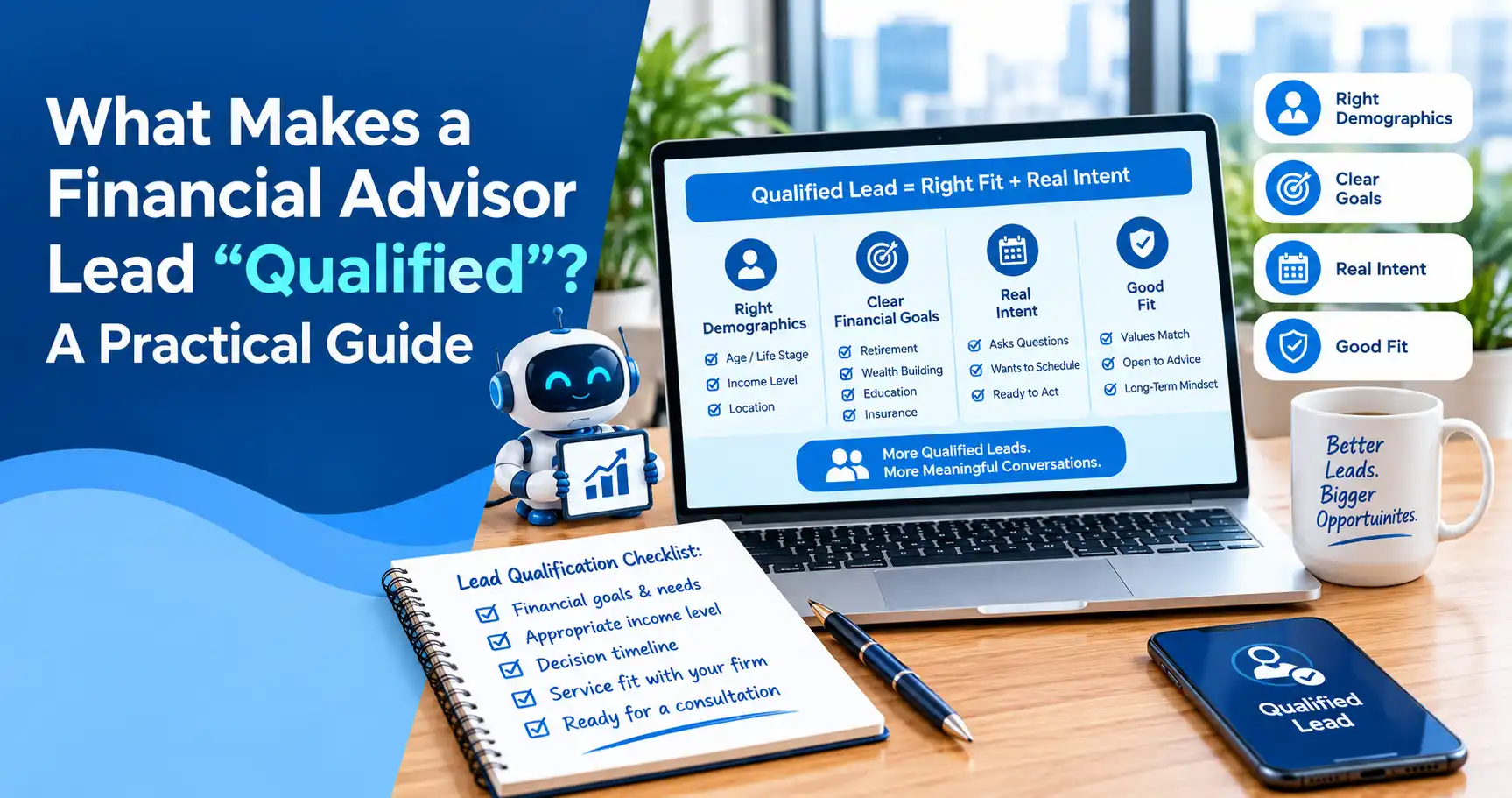
- Qualified leads
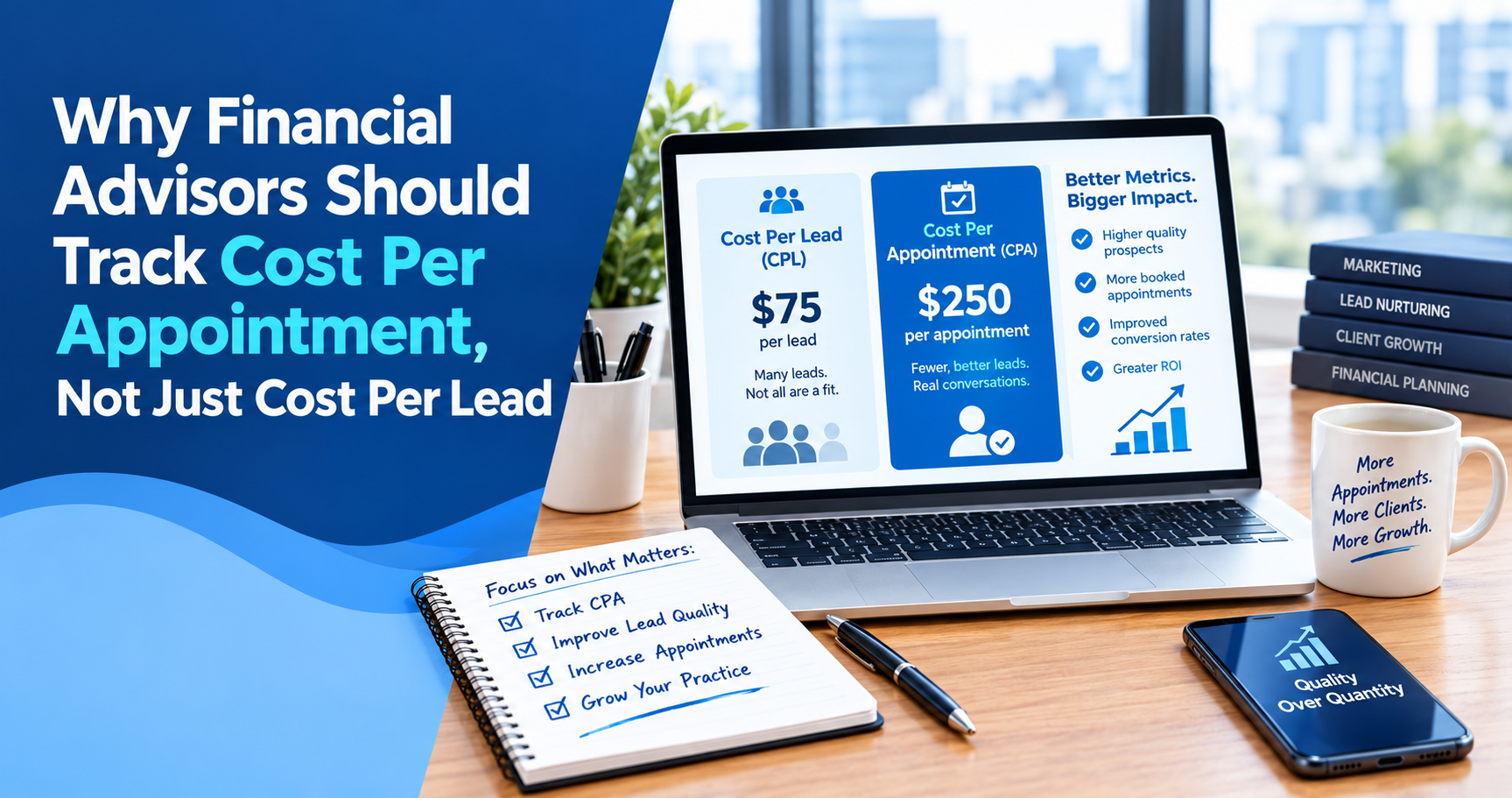
- Cost per lead
- Email open and click-through rates
- Webinar registrations
- Landing page conversion rates
- Client acquisition cost
- Return on marketing investment (ROI)
Reviewing these metrics regularly helps you make informed decisions and allocate your marketing budget more effectively.
Set aside time each month to:
Continuous Improvement
Digital marketing is not a one-time project. Search algorithms evolve, client behavior changes, and new opportunities emerge.
Set aside time each month to:
- Review website analytics
- Update older blog posts
- Improve underperforming landing pages
- Refresh email campaigns
- Test new calls to action
- Evaluate advertising performance
Small, consistent improvements can produce significant long-term results.
Small, consistent improvements can produce significant long-term results.
DIY Marketing vs. Hiring a Financial Services Marketing Agency
Many advisors begin by managing their own marketing. While this can work in the early stages, growing firms often find that marketing demands more time and specialized expertise than they can realistically provide.
Many advisors begin by managing their own marketing. While this can work in the early stages, growing firms often find that marketing demands more time and specialized expertise than they can realistically provide.
DIY Marketing | Hiring a Financial Services Marketing Agency |
Lower initial investment | Access to experienced marketing specialists |
Requires significant time commitment | Allows advisors to focus on serving clients |
Learning through trial and error | Proven processes and industry expertise |
Limited access to advanced tools | Professional SEO, analytics, and automation tools |
Marketing may be inconsistent | Structured, long-term marketing strategy |
Growth often depends on available time | Scalable campaigns designed for sustainable growth |
Partnering with a financial services marketing agency can help advisors implement integrated strategies across SEO, content, email marketing, paid advertising, and lead nurturing without managing every detail internally.
Common Marketing Mistakes Financial Advisors Make
Even experienced advisors can unintentionally limit their growth by making avoidable marketing mistakes.
1. Depending Only on Referrals
Referrals remain valuable, but relying exclusively on them can create unpredictable business growth. Diversifying your marketing channels helps build a steadier pipeline of qualified prospects.
2. Treating Marketing as an Occasional Activity
Publishing content or running campaigns only when business slows down rarely produces lasting results. Consistency is essential for building visibility and trust.
3. Ignoring Search Engine Optimization
A website that isn’t optimized for search may never reach the audience it’s designed to serve. Investing in SEO for financial advisors helps increase visibility among people actively looking for financial guidance.
4. Publishing Sales-Focused Content
Prospects are generally looking for answers not advertisements. Educational articles, videos, and guides often perform better because they address real concerns and establish credibility.
5. Failing to Follow Up
Generating leads is only part of the process. Without timely follow-up through email, phone calls, or educational resources, many promising opportunities can be lost.
6. Not Measuring Results
Marketing decisions should be based on data rather than assumptions. Tracking key metrics allows advisors to identify what is delivering results and where improvements are needed.
How to Choose the Right Digital Marketing Partner
Selecting a marketing partner is an important decision that can influence your firm’s long-term growth.
Selecting a marketing partner is an important decision that can influence your firm’s long-term growth.
Rather than choosing an agency solely based on price, evaluate whether they understand the unique challenges and compliance considerations of the financial services industry.
Look for a financial services digital marketing agency that offers:
- Experience working with financial advisors or insurance professionals.
- A strong understanding of industry regulations and compliance considerations.
- Proven expertise in SEO, content marketing, and lead generation.
- Transparent reporting and measurable performance metrics.
- A clear strategy tailored to your business goals.
- Ongoing communication and strategic support.
The best marketing strategies for financial advisors are never one-size-fits-all. Every advisory firm serves a different audience, operates within different markets, and has unique business objectives. A good agency will develop a customized plan based on your ideal clients, services, and growth goals rather than relying on generic templates.

Final Thoughts
Building a successful advisory business requires more than occasional marketing efforts. It requires a structured system that consistently attracts, educates, and converts the right prospects.
An effective financial advisor marketing strategy combines several complementary channels:
- Search engine optimization to improve online visibility.
- Educational content that builds credibility.
- Email marketing that nurtures relationships.
- Webinars that demonstrate expertise.
- Paid advertising that accelerates lead generation.
- A professional website designed to convert visitors into consultations.
When these elements work together, marketing becomes more predictable and sustainable, helping your firm generate qualified appointments and build long-term client relationships.
If you’re looking for a partner that understands the financial services industry, Revenx specializes in creating customized digital marketing strategies designed to help financial advisors and insurance professionals grow with confidence. From SEO and content marketing to email campaigns and lead generation, our team focuses on building marketing systems that support measurable, long-term success.
Frequently Asked Questions
1. What is a financial advisor marketing strategy?
A financial advisor marketing strategy is a structured plan for attracting, nurturing, and converting potential clients. It typically combines SEO, content marketing, email marketing, webinars, paid advertising, and referral strategies to generate consistent, qualified leads and support long-term business growth.
2. What are the best marketing strategies for financial advisors?
The best marketing strategies for financial advisors focus on building trust and long-term visibility. These include:
- Search engine optimization (SEO)
- Educational content marketing
- Email marketing campaigns
- Local SEO and Google Business Profile optimization
- Webinar marketing
- Social media engagement
- Paid advertising
- Client referral programs
The most effective approach is to integrate multiple channels into one cohesive marketing plan rather than relying on a single tactic.
3. How does SEO help financial advisors get more clients?
SEO for financial advisors improves your visibility in search engines when potential clients look for financial planning or wealth management services. By optimizing your website and publishing valuable content, you can attract qualified visitors who are already searching for the services you offer, resulting in higher-quality leads over time.
4. Is email marketing effective for financial advisors?
Yes. Email marketing for financial advisors helps build relationships with prospects who may not be ready to schedule a consultation immediately. Regular newsletters, educational content, market updates, and automated email sequences keep your firm top of mind while nurturing leads until they are ready to take the next step.
5. Should financial advisors hire a digital marketing agency?
Many advisors benefit from partnering with a digital marketing agency financial services specialist, especially if they lack the time or in-house expertise to manage SEO, content creation, advertising, and analytics. An agency with financial services experience can create a customized strategy aligned with your business goals and compliance requirements.
6. How long does it take to see results from digital marketing?
The timeline depends on the marketing channels you use.
- SEO typically begins showing meaningful improvements within 3–6 months, with stronger long-term growth over time.
- Paid advertising can generate inquiries much sooner when campaigns are well-targeted.
- Content marketing and email marketing build momentum gradually, often delivering stronger results as your library of content and subscriber base grow.
A consistent, long-term approach generally produces the best outcomes.
7. What is the best way to generate financial advisor leads?
Successful financial advisor lead generation combines several proven tactics, including:
- SEO
- High-quality educational content
- Landing pages with clear calls to action
- Downloadable resources
- Webinar registrations
- Email nurturing
- Paid search campaigns
- Referral programs
Using multiple channels together creates a more reliable and sustainable lead generation system.
8. How much should a financial advisor invest in marketing?
There is no universal budget because every firm’s goals, market, and growth stage are different. Rather than focusing only on cost, advisors should evaluate marketing investments based on measurable outcomes such as qualified leads, booked consultations, client acquisition costs, and overall return on investment.
Disclaimer
This article is for informational and educational purposes only and should not be considered financial, legal, tax, or investment advice. Marketing strategies should be adapted to your firm’s goals and applicable regulatory requirements. Always consult appropriate compliance professionals before implementing financial marketing campaigns.